

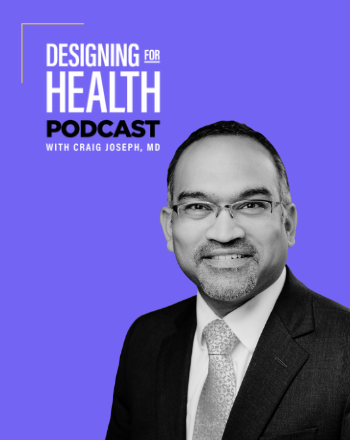
On this episode of Designing for Health, Craig Joseph, MD is joined by Sachin Pawar, MD, facial plastic and reconstructive surgeon, Enterprise Surgical Medical Informatics Officer, and faculty member at the Medical College of Wisconsin. Together, they explore the unique intersection of surgery, informatics, and emerging AI technologies.
Dr. Pawar shares his unconventional path from software development to medicine, discusses the challenges of designing technology for complex perioperative workflows, and explains how AI-assisted development helped his organization tackle a large-scale procedure library cleanup. The conversation also examines clinician-led innovation, governance, AI literacy, and the growing opportunities for healthcare organizations to safely empower domain experts with modern technology tools.
The Designing for Health podcast is available on all major platforms including Apple Podcasts, Amazon Music, iHeart, Pandora, Spotify, and more.
Subscribe for updates. If you enjoy the episode, please leave a five-star rating and review.
Want to learn more from Craig Joseph, MD?
Order a copy of his book, Designing for Health.
SHOW NOTES
[00:00] Intros
[01:01] From Information Systems to Medicine
[04:56] Discovering ENT and Facial Plastic Surgery
[10:09] Why Surgeons Are Rare in Informatics
[14:28] The Complexity of Perioperative Workflows
[17:20] Designing Better Surgical Experiences
[28:16] Navigating AI Governance in Healthcare
[32:47] Sachin’s favorite well-designed thing
[34:14] Outros
TRANSCRIPT
Intro:
Hello and welcome to the In Network podcast feature, Designing for Health. I’m Nordic’s Chief Medical Officer, Dr. Craig Joseph.
What happens when a software developer becomes a facial plastic surgeon and then returns to coding with an AI copilot? My guest, Sachin Pawar, MD, did exactly that.
We talk about why surgical workflows are especially complicated, why surgeons remain surprisingly rare in clinical informatics, and how he used AI-assisted development to help clean up a sprawling library of more than 4,000 procedures.
For health system leaders, the larger lesson is not simply that AI can write code. It’s that clinicians who understand the work can now build tools that once required major development teams. That creates enormous opportunity, along with some mildly terrifying governance questions. We explore both, including AI literacy, protected time for clinician innovators, and why technology still cannot rescue a fundamentally broken process.
Let’s plug in.
Craig Joseph, MD, FAAP, FAMIA:
Doctor Sachin Pawar. Welcome to the podcast. How are you today, sir?
Sachin Pawar, MD:
I’m great. Craig. Thank you.
Craig Joseph, MD, FAAP, FAMIA:
And where are we speaking to you from?
Sachin Pawar, MD:
So, I’m in Milwaukee, Wisconsin, at the Medical College of Wisconsin. And with ThedaCare, which is our health system.
Craig Joseph, MD, FAAP, FAMIA:
Now, would you agree that, and I think you will definitely agree that Madison is a much better city than Milwaukee. I just want to throw that out there just to get.
Sachin Pawar, MD:
Your, you know, Madison. Madison holds a very close spot in my heart because is where I did my undergrad and spent five years there. So I think if I had to pick another city in Wisconsin to live, it would it would definitely be Madison.
Craig Joseph, MD, FAAP, FAMIA:
All right. And that was a trick question. And you did quite well. I’ve lived in Madison. I don’t live there now, but I used to live there, and there was always a big Madison versus Milwaukee kind of vibe. Well, so tell us a little bit about yourself. I know you’re a physician, and I know that you are at Frater in Milwaukee, you know. How did you come to be where you are now?
Sachin Pawar, MD:
Yeah. I’m facial plastic and reconstructive surgeon in the Department of Otolaryngology at the Medical College of Wisconsin. I’ve been here on faculty since 2013. Milwaukee is home. And this is. I’m kind of an lifers. I like to say it. So I did my med school here, stayed on for otolaryngology residency here, and then spent a year in Portland, Oregon at Oregon Health and Science University for my facial plastics fellowship, and then returned here in 2013. So, you know, we have a wonderful department. Family is here. My wife’s family is here. So this has always been home. So it was kind of a no brainer to come back here to this great department and institution.
Craig Joseph, MD, FAAP, FAMIA:
You actually didn’t have the kind of what I would say is most common route to being a physician, at least of the people that I’m aware of. Most of us go from college right into medical school. And you took a little time out, did some interesting things. Tell us more about that.
Sachin Pawar, MD:
Yeah, kind of kind of funny. I said, you know, life deals its hand in different ways. And I think it, you know, this is maybe my, my path that was always meant to be. But I, I started undergrad with thoughts that I would be pre-med and go on to medical school. And then kind of about my junior year, I think I just started hating my science classes for whatever reason. And at that point, you know, I decided, you know, I kind of contemplated things. I’d always been kind of a tech nerd at heart and had entertained computer science in the past, but at that point, I was already a junior and so decided based on what it would make without having to stay in other 4 or 5 years at Madison, I was able to switch into the business school, where I ended up with a degree in information systems at that time, so did that.
I graduated in 2001. June of 2001, had taken a job with a small software consulting firm development firm in Chicago, and moved down there in August. And that’s kind of when the whole com bubble had burst or was bursting, and the economy was starting to really change from what it had been just six months prior. And although I had a great job lined up, I was called by the company the Friday before I was supposed to start and told me not to come in on Monday. So here I was. I had moved to Chicago and unemployed suddenly, never having started. So and unfortunately, then nine over 11 happened just, you know, about a month later and totally, totally changed the world. And so I had actually worked at UW Health in Madison, the health system there on the PeopleSoft team as an undergraduate, and had written some of their first web applications at the time to interface with PeopleSoft.
So they actually had reached out. Ironically, to me, to ask if I could help develop an internal pharmacy ordering system that would interface with their back end PeopleSoft system. And since I had done some of that as an undergraduate, I sent you worked that year on a contractual basis to do that. But then along the way, I kind of got tired of sitting at a desk behind a computer. At the time, it was in my little bedroom in the condo that I was renting with a roommate there. And so and I think with the events of 911, I just kind of maybe had an epiphany. And I’m like, I started questioning if I really wanted to do this for the rest of my career, even though I enjoyed it. But I think under the circumstances, it was a little isolating and working on my own, and had met a friend there who was going to medical school. So kind of reinvigorated my idea of going back to medical school and finished up some pre recs. And long story short, I ended up starting at the Medical College of Wisconsin a few years later in 2003.
Craig Joseph, MD, FAAP, FAMIA:
I think it’s funny that you, you know, you were kind of bummed out by all the science classes when you were in undergrad, switched into business school, which is difficult to do. And then, you know, kind of were cut down right at the beginning of your business career, but you were able to kind of pivot a little bit and make it. And then you decided, boy, this isn’t what I wanted. And moving back into the science. So it was okay. Med school you survived.
Sachin Pawar, MD:
Survived. Had had a blast. You know. Interesting. I came into medicine thinking I want to do emergency medicine. Kind of. My second year, got introduced to ENT and met some wonderful mentors and that ended up being my career path, which I wouldn’t have expected going in. I didn’t know anything about ENT coming into medical school, so that’s kind of where my path landed me. And then the decision to subspecialties in facial plastics made that kind of halfway through residency and just kind of everything fell into place. After that.
Craig Joseph, MD, FAAP, FAMIA:
You and I had similar paths. I actually went to medical school. I got my undergraduate degree in computer science, very similar to your degree, but I went right into medical school to become an emergency medicine physician. And then I did emergency medicine as a third year medical student and said, no, this is not for me, and ended up in a different specialty altogether. So I think that’s common. Tell us a little bit about some of the things that you work on now, because it seems like with that, with that tremendous background in technology and IT, things are probably moving faster than, than you could keep up because you’re practicing full time and doing other things. However, once you have that kind of basic understanding and, and lack of fear of technology and doing some developing and, you know, kind of being in that world, it gives you the ability to do things outside the box. So tell us about what some of the things that you’re doing now that leverage some of your background in technology and it.
Sachin Pawar, MD:
Sure. Yeah. So for the last four years I’ve had a formal role as our enterprise surgical medical informatics officer. So I’m part of our clinical informatics team. And I report up through our CMI. Oh, and that and that hat that I wear. And that’s after having kind of gone through the epic physician builder training back in 2014. So now over ten years and I kind of fell into that a little bit, you know, with my background, I’d always I came into even medical school and thinking like, oh, at some point I could there’s probably a way to apply kind of my technical interest and background to healthcare and medicine, not really knowing how to do that. And, you know, I started my medical school training. It was still paper charts and, you know, electronic systems were just coming online. And so I came into medical school and in the health care space, I guess, after having been kind of on the business side of things, kind of shocked at how, you know, behind healthcare was at the time.
And so it’s been interesting for me to kind of see the rapid evolution as we, you know, brought in electronic health records and, and everything has started to become digitized and see that. And even along the way, I just kind of always felt that maybe I had a skill set in my back pocket that I think I could hope to leverage. When I first started off, you know, even as faculty here at, I didn’t really know exactly what that was going to look like or how I would do that. I had a very early grant that I had done internally back in the day to kind of develop templates, and the idea of being able to extract data from the air. And how do we use that for maybe outcomes research and big data research? And that was, I think, back in 2015, which was still, you know, just now, I look back at the very early days of electronic health records, at least an hour organization. But then fast forward to now when I was asked to take on this role, you know, I was the first surgeon in this capacity in the perioperative space to have a leadership role in helping guide our informatics strategy around this.
So my current role, I help oversee and guide a lot of our informatics efforts, primarily around electronic health record and Epic. But even as it relates to other digital efforts and technology efforts within the operating room and procedural areas, chair our governance committee, where we kind of help guide kind of the projects initiatives that we’re going to have rolling out in those areas. And then once we get those up and running, I’ve been very hands on in those projects to help keep them moving and kind of get them to the to the finish line with our analyst team. So I have a point four FTE in that capacity right now while maintaining a pretty busy surgical practice as well. But I spend it’s a great way to break up the week. I spend a lot of time talking to our epic uptime analyst during the week. As much as I do our end users and sit on other operational committees and work on both the operation and clinical side as well. So it’s been a lot of fun to be in this space, kind of impact the health system in a different way rather than an individual patient level.
And then I feel like now I’m finally able to realize kind of the value of some of those skills that I developed over 20 years ago and bring that technical knowledge to be able to kind of really bridge that gap. You know, as we like to see in informatics between the, the clinical, the operation and IT teams here.
Craig Joseph, MD, FAAP, FAMIA:
So all of that’s fairly unique. And then to add another unique spin to your career arc is your a surgeon. And so let me count on one hand how many surgeons I know who are really deep into informatics. They’re there, but they’re infrequently seen. So let me ask, why do you think that is? Or first of all, do you agree with that assessment that, you know, we don’t see a lot of procedural lists in in the informatics world, you don’t see a lot of gastroenterologists who are … They’re there, but they’re a little less common.
Sachin Pawar, MD:
We’re definitely, definitely in the minority. And although I think it’s increasing, and as I’ve been in this space now and spending time at conferences and interacting with others in this area, I think they may not have formal roles, but I think they are. They’re out there and interested, and I think we bring a unique perspective since, you know, our practice is really traverse, you know, ambulatory inpatient, the operating room. And so we kind of have a, I think, come to the table with a different set of perspectives because our the nature of surgery really traverses kind of all those care venues. So I think, you know, I think part of the challenge is, you know, with, with incentive models and financial stakes and, and even leadership within some of the departments.
I think for many leaders in departments that surgeons work under may not value surgeons being in some of those roles or feel like time is better spent doing those procedures, doing those surgeries. I’ve been very fortunate to be in an environment where I have a very supportive chair who’s encouraged and promoted me to help, you know, kind of get out and do this, this work for the organization. And I think see the value in it. And I think now being in this role and I think talking to other surgeons in this role, you know, I think we it helps, I think for us to bring that perspective that we have to the table to the organizations and also really to just be able to speak to our peers and others in the operating room as well, because I think we can come to them with a nuanced understanding of kind of their day to day struggles and problems that others may not, especially when they’re, you know, if you have someone from it coming to them to help them solve some of these problems.
Craig Joseph, MD, FAAP, FAMIA:
So I think you said the key for some of your success was having a supportive leader. Let’s assume that we have some CME and kids that are listening and say to themselves, but I’d love to have a couple of surgeons and procedural as either associate or others with protected time like you have for FTE of your time is spent doing it stuff. Are there any ways, you know, besides kind of duplicating your department chief? How does one get the message through to folks who say, listen, he’s a surgeon. He spent a lot of time learning how to surgeries. Let’s put him in. He needs to be in the O.R. full time. We can’t have him. You know, spending time on the on the computer. I see all the benefits. But how do you. How do you think one can communicate that to more questioning leaders?
Sachin Pawar, MD:
I think there is. You know, some of that grows out organically to some degree. I think getting involved in these projects and kind of showing how, you know, having someone like me, you know, in this role can help drive some of these things forward by being able to talk to my peers. I think there’s a bit of street cred that you get when, you know, I can go in front of a department of other, you know, another clinical department, get in front of other surgeons and talk to them because I’m coming to them as a peer, you know, and not necessarily someone who’s an outsider who doesn’t understand. And so it’s not always successful. Certainly there’s always challenges. Change Management is certainly hard. But I think coming from that same level of understanding and speaking to them, I think that’s where some of the value lies. And I think we also see problems and see opportunities that others don’t because we’re living it. We’re doing it every day seeing the patients.
And so I think me maintaining a busy clinical practice is just as important in this role. You know, I’m not necessarily giving up one for the other. Yes. My maybe clinical volume is not as much as it would be if I wasn’t, you know, doing a 3 or 4 in my other hat that I wear. But I think it’s because of maintaining that clinical practice makes me more effective and successful in my other role in for because it keeps me at the front lines. And, and I think that’s important because it’s easy to identify problems quickly. And even when we implement things, it gives me an opportunity to get real time feedback from the teams that I’m working with. So, you know, I’m always in the are asking them. And if they complain about something, I keep probing them a little bit. And we, you know, we can uncover things.
So I think it’s super important. You know, I think not obviously not just in surgery, but, you know, getting practicing clinicians in these roles, it is important as well. And I think having the technical background is just that added benefit because I can help translate, you know, what we need with our other teams.
Craig Joseph, MD, FAAP, FAMIA:
So what is it about the operating room and the periodic workflows that make them so unique? We know they’re different, but they don’t seem, from the outsider, kind of even the outsiders, a physician who’s not a procedural or a surgeon. Why? Why is it so different? Is it the culture? Is it the stress and acuity level of the patients, some combination thereof What do you what do you think? How do you why is the or so complicated for us technical folks to try to understand and make work?
Sachin Pawar, MD:
Yeah, I think it’s you know, it’s like this amalgamation of, I mean, so many different things and patients from really, you know, you can go to a single specialty clinic and you kind of get, you know, you have similar types of patients with similar problems. And here now you’re bringing in, you know, patients of all, all different types of problems, walks of life coming in for a, you know, what many feel is a risky situation from the to be in or apprehensive into an environment that they’ve never been in before. And you have, you know, surgeons with all different types of personalities. You have nurses with all different types of personalities. And I think the stakes are sometimes a little bit higher, just with the sheer, the volume, the throughput. And I think there’s there can be such a domino effect of things that occur in the operating room. You know, we have this kind of pathway where patients come into pre-op and they go to surgery, then they go to the recovery room, and then they get discharged.
And there can be just a number of cascading things that can happen to derail kind of the whole process along the way. And so and even before they even get to the Or we have, you know, peer clearance and making sure they’re safe to get to the Or. And I think there’s just so many steps in these workflows that so many people touch. You know, any point along that interaction can really, you know, derail, derail that process from happening. But all of those are also very important because many of them are safety checks to make sure that we can deliver the best care in the safest manner possible to those patients. And in the background, there’s a lot of process things that happen as well.
You know, operationally it’s, you know, very costly operation, you know, to run within the hospital that relies on good data. And so I think from, from, you know, from an informatics lens to it adds a whole nother dimension. You know, you find sometimes is that people develop workarounds and workflows that you didn’t even know existed or wouldn’t necessarily be the standard, but they do that just as a way of just getting the work done sometimes. And so how do you uncover some of those things? So I think the change management, as I’ve discovered, is one of the biggest challenges because I think culturally, you know, there’s a very unique culture in the Or, and many people who’ve been working there a long, long time have been doing it a long time and have their ways of doing things. So if you come in and disrupt what they do, it can be be hard for them to change. And I think we see that everywhere. But I think particularly in the Or, you know, it can be a challenge.
Craig Joseph, MD, FAAP, FAMIA:
If we talk about the operating room or maybe even periodically. Are there are there design aspects of of the way we kind of do surgeries that that you would change if you had a magic wand? What would be different at the at the way we do things here? What are some of the things that you might change to make things work better?
Sachin Pawar, MD:
I think, you know, in general, I think there’s there’s a lot of handoffs, there’s a lot of exchange of information and a lot of that, you know, it feels like sometimes it doesn’t go well or, you know, and it the job gets done. But, you know, you just see so many inefficiencies sometimes in that and especially with the demands on the staff right now to, you know, we I think everyone is feeling those pressures of of staffing and everyone feels spread thin. So I think, you know, what could create, you know, and I don’t have the answer to this, but like the most seamless experience kind of start to finish, not only for the patient but for the the people taking care of that patient throughout. Because at every stage, you know, if I go talk to a nurse, I talk to our circulating nurses or the text or the anesthesiologist.
I think everyone has kind of their pain points along the way. And I don’t know that I can really identify one specific thing, but I think there’s several points of friction that people have during their days, and a lot of times just comes with you. No simple things like, you know, the number of minutes it takes to log into the workstation to get into epic, to be able to get to the page you on an epic or to pull up the consent or so. How can some of these things you know where my hope is at some point in the near future? You know, some of the tools with automation and things like that. How can we start to make that a little more seamless experience for everyone on both sides? You know, so that exchange of information, patient handoffs, all of that can happen without that friction, you know, because I think that’s what stresses people out.
I think all of us in healthcare, right. We really enjoy delivering the care. We enjoy doing surgery, enjoy being at the patients. It’s all those other things that kind of can be a grind on a on a would otherwise be a busy day. And so how can we just make the rest of that experience kind of fade into the background a little bit and just have it work, you know? And so again, I don’t have the answer for that. But I think that’s that’s like the utopian dream here.
Craig Joseph, MD, FAAP, FAMIA:
Let me switch gears a little bit and talk about something that when we were preparing for this, for this podcast episode, you had mentioned procedure, the procedure library, you were talking about a list of procedures, a list of of things, operations, surgeries. So let’s let’s talk about, you know, you would mentioned, hey, our list was not awesome, not optimal for a long time. And we had trouble getting our arms around it. And it sounds to me like you figured out how to make it better by just fixing all of it at once, and I’m just keen to hear this story in detail.
Sachin Pawar, MD:
Yeah. So this is, I think more recently, you know, it brought me back to my roots from 20 plus years ago because I honestly, I haven’t coded anything since I left that world back in the early 2000. I can tell you, at least with the current state of AI and the tools that are out there, I’ve never had so much fun in my career so far. I think over the last couple of years. I came into my role about four years ago, and this was a project that it was just kind of getting underway to start looking at how can we clean up our procedure library and epic. It had been essentially littered with duplicates and incorrect CPT code mapping and all this kind of fluff and garbage that had kind of come in as we had migrated from an old surgical information system into epic, and we had worked with a third party vendor, and just after two years, we just weren’t getting anywhere.
And I think there’s a variety of reasons for that. What I kind of just started to do as an experiment, as we started to pull some reports and things like that, as I started using some of the newer AI coding tools to start looking at our procedure library. And I think one of the things I was able to do is combine that with looking at actual how we build these procedures to understand kind of how we were using these procedures. And after, I’d kind of, you know, we had struggled through just not making much progress. I had spent a lot of time thinking about this. I’d run kind of full day sessions with our nursing staff in various areas. We started with ENT because I was very familiar with it, and it just kind of came to mind that this wasn’t going to be sustainable to do this over, you know, the way we were trying to do it as one off.
And prior efforts have been done in our in our surgical areas to do procedure cleanups. I think they spent over a year just doing one specialty in orthopedics. And so, it just to get through our 4,000 plus procedures that we had at the time; it wasn’t going to be sustainable. So fast forward, I, you know, started using a lot of coding tools. I guess I started vibe coding now as a term that obviously gets thrown around. I was doing it before that term got thrown out by Andre Karpathy. I think that was in early 2025. I started doing that with cursor, which is a coding development environment and some of the tools that were out there, and I was just blown away by the ability of these tools to help start, you know, kind of just initially just start with generating Python code to process some Excel files.
And then I thought, well, what if I could turn this into a web application? Unfortunately, fortunately, I had actually sustained an injury. I had broken my leg skiing, and I was down and out. I was non weight bearing and couldn’t practice clinically, and so it actually gave me a little extra time and honestly maintained my sanity because during that time, over those few months, I was able to essentially pull together a full web application, much like I’d done back in my information system days, for us to look at all the procedure data and provide our analysts with enough information for them to make an initial pass at the cleanup. And so we were able to do the full cleanup once we roll this out to our teams in about six months. And, you know, got our procedure library down from, I think, over 40, almost 4,300 procedures, down to about 2,800 procedures and got better CPT code mapping and everything and rolled it out. So yeah, it was a lot of fun.
It was a lot of learning. I mean, I think this kind of brought me back to my days of coding. I learned web application development 20 years ago, kind of on the fly. They weren’t no classes at the time because it was kind of such an early thing in the late 90s. And so I kind of felt like I did back in my undergrad days, I had kind of learned this from the ground up again, but I had enough, enough knowledge from before to to facilitate that and get it going. And, and I continue to be amazed now because the tools are are exponentially better now. You know, about a year, year and a half beyond when I first started this whole whole journey. So it was a lot of fun, but really made me think about kind of the kind of where things are going. And this, you know, the tools are now making it possible for end users, clinicians or domain experts like me to do things that, you know, if you had asked me to do this two years ago or three years ago, it would have taken a lot more time. So I think we’re going to start to see an increasing need, you know, in our systems and opportunities as well for these tools that are out there. How do we let individuals kind of harness these tools in a safe environment, governance environment and provide the infrastructure? And I think it’ll unlock quite a few capabilities that we didn’t have before.
Craig Joseph, MD, FAAP, FAMIA:
Wow, that’s an amazing story. Let’s kind of continue along the AI line. One of the things that I think that a lot of people are thinking about is clinical versus operational in healthcare, using AI to help solve clinical problems versus operational problems. Which camper you in or are you in? Hey, we can do both.
Sachin Pawar, MD:
I think both are certainly important. I think given maybe where I spent a lot of my time, I’ve seen so many opportunities on the operational side. And, you know, I just every day you see so many inefficient processes that happen and even think about my nurses every day, just filling out paper FMLA forms for all the patients undergoing surgery and the amount of time they spend doing that. And and I think there’s just so much of that that happens. And again, people do it because that’s what they’re familiar with. Their familiar with Excel, they’re familiar with, you know, working in spreadsheets and pivot tables and things like that. But I think these tools now are just unlocking so many more opportunities and potential to to take the data that we have and work with it in different ways.
And I think but the challenge that we have right now is, is just like, how do we roll these tools out across our organizations in a safe way, in a governed way, you know, to to our employees, and how do we get them upskill? And I think that’s the other challenge I think I’m kind of living in. I sometimes get a little bit spoiled a little bit, you know, maybe naive in terms of how I think about things because I kind of live in this world of, of X and LinkedIn and we’re, you know, I’m kind of in surrounding myself with like minded people who I think are all kind of doing the same thing. But then you start talking to other people and you realize that I think there’s many out there, especially even leaders in our own organizations who who may not fully appreciate the true capabilities of some of these tools that are out there. And so I think this this concept of AI literacy and upskilling is a big one. And how do we do that?
And part of it. Right. I think it just I mean, I’ve learned what I’ve learned just through tinkering and doing it. But I think with clinical AI we can’t do that. We have to do that in a governance process. And there’s a lot more guardrails that we have to put up to make sure we can ensure safety around that. And same with operation because operational things can have impact, obviously, on patient care and and finances and things like that. But I think it’s just it’s it’s moving so rapidly. I think we need to figure out a way to build that infrastructure, to kind of take harness the power of those tools in a safe way.
Craig Joseph, MD, FAAP, FAMIA:
When you were talking about upskilling, you would said, hey, I think there’s a lot of people who have no clue about the amazing things that some of these tools can do or some of their potential. I thought you were going to say, hey, I think some people overestimate how intelligent the artificial intelligence really is, and I’d be fearful that at least this is something I’ve heard often makes sense to me. Fearful that because it’s very confident it generative AI. You know, if you read the text, it’s confident, but it can be confidently wrong and kind of understanding where it’s good at and where it’s bad at. It’s much easier if you’re an expert in the field, right? To me, it always reminds me of being a resident and having either a medical student or a trainee.
Yeah, you know, I knew more than they did about the field that whatever we were talking about typically. And so if they said something that was wrong, I could be like that doesn’t that doesn’t seem right. But it’s really hard because if I, if an AI tells me something about my my car, I know nothing about my car and it could make up total terms. And yeah, that makes complete sense.
Sachin Pawar, MD:
Part of literacy is also using it so you understand its limitations. Yeah, as well. And I think you aren’t, you know, blindly trusting, you know, an output from an LLM or any AI tool that you get. And so that is certainly part of it. I do also sometimes challenge, I think a lot of people now with AI think like, oh, AI will just solve that. And, you know, I think I deal with a lot of, I say process and people problems that aren’t necessarily going to be fixed by technology. And I think we’ll get asked for things. Sometimes we’ll get end users or people out who will come to us with a solution already for what they perceive their problem to be. And the solution is a technology problem.
But the more you start probing, it’s actually won’t necessarily be solved by technology, because there’s fundamental problems related to the people, the processes around it that need to be addressed. So I think that that’s also, I think in my role, I spend a lot of time, you know, sometimes tempering expectations and just bringing forward, you know, the the other perspectives that they need to have in order. How can we best make this successful?
Craig Joseph, MD, FAAP, FAMIA:
You reminded me of a slightly funny, slightly pejorative term that I picked up one time at a at a go live. Someone called the helpdesk and and was complaining about a problem. And then we were discussing this problem with one of the analysts and someone throughout the world. This was a picnic problem. Have you ever heard this term? No. Yeah, and I probably will get in trouble for talking about it this way. But I said picnic. What’s picnic? I had never heard that term. And the analyst looked at me and said, problem and chair, not in computer. So you can imagine that’s not the nicest way of saying, oh, you know what? This is a this is a user, a specific kind of personality person.
This is a, you know, a person who’s who wants it to work a different way, but knows it’s not going to work that way or it’s a training problem. You know, we didn’t do a good job in training the folk in the person that started with the expected workflow was. But to your point, some of these problems are never going to be fixed with technology. It’s a it’s a workflow issue. It’s a personality issue. It’s a training issue. And let me ask, just put a kind of exclamation point on on the AI conversation. Talk about governance. How does is it do you think that the governance is going to be for AI? Is going to be the same or similar to just it in general?
So someone by governance, I’m talking about. Hey, I went to this conference and I saw this. There was someone in the exhibit hall and they this company is doing the most amazing thing. We need to buy the software. I have the money. Can we just buy it and let’s go. How do you say no to that? How do you kind of try to set limits so that users understand, like we were talking about before, some of the output is makes complete sense. Sometimes it’s garbage in, garbage out. Poor data on the on the intake is going to give us bad decision making on the outside. I know there’s no answer. What are you all kind of heading in? What direction for AI.
Sachin Pawar, MD:
Yeah, I think much like other organizations, we are also learning as we go along. I think it was I was just at a AI symposium that one of my surgical colleagues ran here over the weekend, and our chief data and analytics officer, you know, come to, you know, we’re essentially, you know, building the plane as we fly. And and that’s very true. But I think, you know, we are seeing this now as, as a lot of the vendors are at conferences and pitching to various end users and leaders. And so I think, you know, governance, I think is going to be very important moving forward. I think part of it is for for the team. And, you know, I sit on our governance committee.
You know, I think we’re the challenge that we’re faced with right now is is the one around. Certainly. Does your EHR vendor provided. So for our case epic. You know there’s the the internal you know do you just go epic first. Do you you know partner with a vendor or do you I think now, you know, there is an opportunity now as well to consider build, which is going to be an option internally have the right capabilities. And so I think having a group that can really look at these requests and from these vendors that come in, it’s easy to see the shiny object in the marketing can look really good. And sometimes you just need enough folks with with the clinical and the technical background to really understand what’s happening, you know, in the background so that, you know, transparency, you know, with the vendors understanding that.
And so we have a whole team that looks at that. We have a model registration process and a team that looks at that, and it goes through a pretty hefty governance review. With that said, you know, we’re still figuring out how to be nimble and be rapid so things don’t get hung up in review for years and years, because sometimes that can happen as well. And if you have too many layers, but there is a degree of, you know, unknown to this, that we don’t know how a model will perform in our environment versus how it may in another environment. And I think the other piece we’re trying to figure out along those lines is, you know, once we deploy something, then who’s going to continue to manage that, you know, in terms of operations and having an operational owner around that.
And, you know, I know there’s more and more tools being developed to help do some of the ongoing monitoring, but I think this is something we’re trying to figure out. Well, this whether governance will fall to a centralized function. Right now we have a centralized committee. But as AI features, functionality and technology just essentially becomes pervasive in just about everything that we do and everything that a vendor offers or even our hardware, you know, equipment manufacturers are going to have this embedded into their tools. So I think that’s the piece we’re trying to figure out is how what’s the right level of oversight and governance without, you know, getting bogged down so much that we can’t get any work done. And I’m sure, you know, this is I enjoy going to these sessions that a lot of the conferences and hearing from others on how they’re doing it, because I think we’re all kind of all in this together a little bit in terms of, you know, figuring these pieces out. And I don’t know that any one organization has figured out the magic bullet yet on this.
Craig Joseph, MD, FAAP, FAMIA:
And if they have figured it out, does it matter? Because two months later, the the software is has new functionality that it didn’t have previously, and you have to go back and and reexamine the rules? Well, I have a ton more AI questions, but we are running out of time. So I wanted to kind of jump to the question that we asked all of our guests on the podcast. We always end with a design question. And so what is something in your life that is so well designed? It brings you joy whenever you interact with it? What do you think?
Sachin Pawar, MD:
So, I’m a big cyclist, I do a lot of lot of road biking and a little bit of mountain biking. But I would say my road bike, it is just, you know, there’s something, you know, simple about the design of a bicycle, right? I always say that you’ve never seen anyone unhappy while they’re riding a bike. Get on the road bike. And there’s just something it just kind of works. And it’s, you know, the design, you know, it’s comfortable if you have the right bike and everything just kind of works. Generally speaking, short of a flat tire.
Craig Joseph, MD, FAAP, FAMIA:
Well that’s great. Is there is there a particular shout out to a particular bike model that you want to give? Have you or is it just the bicycle in concept?
Sachin Pawar, MD:
I think bicycle and concept I have, you know, I have probably more bikes and my, my wife would like me to have. So I like them all for different reasons.
Craig Joseph, MD, FAAP, FAMIA:
Fair enough. Well, this has been a great conversation. Thank you so much. Really appreciate it. I look forward to kind of seeing some of the things that come out of froedtert, and I love how lucky they are to have someone like you can combine that technical background from even before medical school with your understanding of how the O.R. works. It’s great. They’re lucky to have you, so look forward to some of the new things that you you do in the next, next 5 or 10 years.
Sachin Pawar, MD:
Thanks for having me on. This was a lot of fun.
Outro:
Thanks for tuning in. We hope you enjoyed today’s episode. For more on Sachin Pawar follow him on LinkedIn. Don’t forget to explore our show notes for more information on the topics we discussed today.
Check back for more episodes of Designing for Health wherever you listen to podcasts or on NordicGlobal.com. We’ll see you again next time on Designing for Health.
LinkedIn and other web links:
LinkedIn profile: https://www.linkedin.com/in/sachinpawarmd/
AAFPRS update: https://www.linkedin.com/posts/sachinpawarmd_facialplasticsurgery-aafprs-cosm2026-ugcPost-7454382996939255809-MwXy/
Research database: https://fcd.mcw.edu/?faculty/view/name/Sachin_S._Pawar_MD/id/5504