

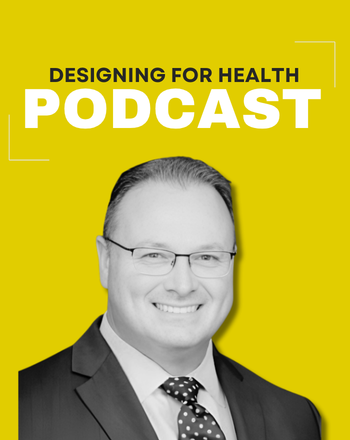
In this episode of Designing for Health, Nordic’s Chief Medical Officer Dr. Craig Joseph sits down with Stephen B. Williams. Urologist, urologic oncologist, and Associate Chief Medical Officer at the University of Texas Medical Branch (UTMB), to explore the evolving role of physicians in healthcare leadership.
Dr. Williams shares his personal journey from clinical practice to system-level leadership, discussing how purpose, curiosity, and a passion for improving care led him into administrative roles. Together, they unpack the challenges physicians face when stepping into leadership, especially around risk tolerance, change management, and standardization and why healthcare transformation depends far more on people and culture than technology alone.
In Network’s Designing for Health podcast is available on all major platforms including Apple Podcasts, Amazon Music, iHeart, Pandora, Spotify, and more.
Search for “In Network” and subscribe for updates. If you enjoy the episode, please leave a five-star rating and review.
Want to learn more from Dr. Joseph?
Order a copy of his book, Designing for Health.
SHOW NOTES
[0:00] Intros
[2:18] From Clinician to Leader: Steve’s Career Journey
[6:21] Physicians, Leadership & Risk
[12:50] Real-World Transformation: Observation & Capacity
[19:50] Standardization, Design & “Why Healthcare Isn’t Chick-fil-A”
[29:30] Developing the Next Generation of Physician Leaders
[37:40] Dr. William’s favorite well designed tool.
[42:00] Outros
TRANSCRIPT
Intro:
You’re listening to in Network Nordics podcast series, where we explore health care and technology with experts from around the globe.
Physicians are trained to avoid risk. Leaders have to embrace it. That tension is at the heart of today’s conversation.
My guest is Stephen B. Williams. Urologist, urologic oncologist, and Associate Chief Medical Officer at the University of Texas Medical Branch. Steve’s career arc mirrors something I see more and more: a clinician who discovered, almost accidentally, that he loves the work of making systems better.
We talk about what it actually takes to move physicians into leadership roles, why change management is 80% of every transformation project, and how Steve tackled a real-world capacity and observation status challenge using real-time dashboards and more importantly culture change.
We also get into standardization: why healthcare wants to be Chick-fil-A but keeps falling short, and what ownership has to do with it.
If you’re trying to build a pipeline of physician leaders, this one’s for you.
Let’s plug in
Craig Joseph MD, FAAP, FAMIA
Dr. Steve Williams, welcome to the pod. Where do we find you today?
Stephen B. Williams, MD, MBA, MS, FACS, FACHE:
So you find me just outside of Houston. University of Texas Medical Branch in Galveston.
Craig Joseph MD, FAAP, FAMIA:
Okay. And if you could just give us your address and maybe the combination code to your house so that we could come in. No, don’t do that. Don’t do that. Well, let’s start at the beginning. You are a urologist, and you and I met at a conference that we were not talking about Urology we were talking about other things and those other things kind of focus around some of the administration aspects of, you know, kind of running a hospital, running a medical practice, running a large group of physicians.
You’ve been involved. You’re involved more and more in that. So can you kind of tell us how did you go from always wanting to be a urologist? I don’t know if that’s true. I just made that up to kind of spending a significant amount of your day now doing administrative work, which many physicians find anathema to what they want to do. How’d that happen?
Stephen B. Williams, MD, MBA, MS, FACS, FACHE:
Well, first off, I want to thank you for the kind invitation. For what it’s worth, we definitely have a lot of fun. You know, at our last meeting where we got to present. But I think that really into, you know, my past is really trying to find your purpose, your passion and then more importantly, just doing something that you truly love and enjoy.
And I’ve just been so fortunate. You know, whether it be, you know, as a physician, a urologist, and then the leadership path is almost to the sense to where you don’t feel like you’re working, but you’re just doing something that you love so much. Now, there are certain components, right of day in and day life that yes, it’s not exactly what you would like to do.
But getting back to your question, you know, I knew earlier on, I guess in my life, as my mom remind me, shows me this little piece of paper that I wrote, I believe, when I was 7 or 8 that I wanted to be a doctor, but I think I was trying to win her over because I said I wanted to be a plastic surgeon, so she was really excited.
Yeah, I can take care of her later. Yeah, yeah. She wasn’t too enthralled at the time that I decided to do urology. Well, I guess everything comes in full circle, but with that, with that being said, that my father actually was a urologist. You know, he passed away, but he was in academia for a little bit. And then later, led into private practice, for quite some time.
So I knew urology was a surgical subspecialty versus where others even, you know, in medical school. You know, I was very much interested in anatomy, and everyone thought that, of course you’re going to be a surgeon, right? You know, so, yes, I’m going to go into urology. But what about surgery? Yeah. So I knew it was a surgical subspecialty.
So one thing leads into another. I didn’t really think that I would choose urology, but I just love the versatility. You know, clinical operative. And then for whatever reason, the urologists seem to be some of the happiest folks in the hospital. So I said there was something to it that one way or another with research, academics and so on.
You know, I pursued that. But then, you know, moving forward, you know, I did actually after residency, complete some time in private practice, which was great to be boots on the ground, but I knew I enjoyed urologic oncology. So I actually pursued a fellowship in urologic oncology, University of Texas M.D. Anderson. So that brought me to to Texas specifically.
And, you know, in doing so, I guess earlier on, even in residency, my chief resident would always joke that, oh, here comes Chief Williams, as I was an intern coming in and I don’t know whether that was good or bad, but I always, I guess, had a lot of things organized. And then also too, at the same time, I always wanted to continuously learn, right, and challenge people.
So I guess that’s where I guess I started managing and then learning about leading earlier on. So I had a lot of spotting. My research bit was value based care. So in doing so, the organization I’m out now, then, you know, eventually became chief of the Division of Urology, which allowed me to, what I truly enjoyed was growing other people’s careers.
And, you know, in doing that, then working with the health system, I also became medical director, high value care for the health system. So I loved working with just outside of urology, you know, and the impact in opening my eyes, if you will, and I guess led to my prior value based care research. You know, it’s just be all encompassing, as you know as well, you know, that’s so critical in the work that we do.
And then now I’m a show associate chief medical officer at one of our four campuses. And the campus that I’m at as well, I love is because we work with faculty and then community doctors, but really aligning with our common mission to provide the best care possible for our patients in the environment that you want to work at. And then providing the resources so they can do it, you know, exceptionally well.
Craig Joseph MD, FAAP, FAMIA:
So that’s a that’s a great kind of talk, you know, a great story about the shift that you’ve kind of made very slowly over time. What was the first what was the first inkling. Was it when you were chief resident that you thought, okay, this is kind of this is management or this is getting admitted into administration or did it did it come later? I mean, did you really have your whole life kind of mapped out there at the very beginning?
Stephen B. Williams, MD, MBA, MS, FACS, FACHE:
Absolutely not. But I think others, you know, the one thing is, you know, as you have mentors and coaches and it’s funny when you’re speaking and they’re listening, they give you a lot of retrospective insight, but you didn’t know that was there. So I think having the opportunities earlier on, you know, whether it be in residency, developing my research program and then even now, day in, day out, you know, I think we all have, the exposure to being a physician.
You’re a leader, but yet we don’t have that formal leadership training. But I knew that I definitely enjoyed bringing teams together, for whatever it’s worth, bringing people to the table that otherwise didn’t know of each other, but perhaps also, you know, really helping them see value of the work that can come together when we’re all working towards our common goals.
But sometimes it can get muddled with whatever people’s preconceived notions are. But I found, you know, to be honest, you know, in healthcare, we just have just such a wonderful industry, some of the biggest hearts and biggest minds. But it is highly stressful. And I think, you know, we have to do our best as leaders, eliminate that right fight and flight response so that we can get to, you know, the higher cerebral thinking that, you know, we really want to do so that we can provide the best care that, you know, for our patients.
Craig Joseph MD, FAAP, FAMIA:
Well, you bring up a good point about you’re a physician and your in hospital and health care system leadership. Well, one of the things that people have noted about physicians is that they’re often risk averse. Right? We first do no harm that that’s, I think, kind of inculcated in us during all of our training. Yet leadership often requires taking a risk that might not work out.
And kind of acknowledging ahead of time like this might, might not work. How do you kind of deal with that? Do you find yourself going out in and pushing the envelope in terms of your comfort, or are you not as risk averse when it comes to non patient care as many physicians are?
Stephen B. Williams, MD, MBA, MS, FACS, FACHE:
You’re absolutely right. You know I think we’re trained in myself as a surgeon right. Do no harm avoid risk. Minimize risk to our patients, to ourselves, to our people we work with. And it was a great conversation I had with Doctor Robert Grossman. You know, he’s the former CEO and dean of NYU and just such a wonderful example.
And he has a great paper he wrote of how physicians are, in fact risk averse. And we need to, as you’re embrace or thinking about leadership positions, leaders as we know, we take risks all the time now. We test them through pilots and rolling out programs. And obviously there’s more that goes into it, but it truly is changing your mindset.
And it’s about being comfortable, being uncomfortable. It’s about just continuous reading and learning. Which physicians do you know? So I had that already embedded in my soul, if you will. Now I have an entire different bookshelf of, I call it right sided brain. I literally have it to the right side of my desk. I have a bookshelf that has all my, you know, you know, medical books and text and anatomy and so on.
So but it’s really trying to it’s like training, right? Developing your muscle and your right sided brain muscle. Dan Pink as a great, you know, book I read as well. Phenomenal lecture. If anyone has the time to listen to I don’t know if you have, but he has done a great job actually, in our conceptual age that we’ve entered now is really developing our right sided brain.
And that’s where leaders are truly going to be innovative, you know, as we move forward with artificial intelligence and so on. But that is something that we don’t get exposed to, though, in medical school, in residency or any of that. Those are, I think, sometimes considered soft skills. And then not only are we being risk averse, we’re not training ourselves with, you know, you know, emotional intelligence, social skills.
Right. Self-awareness, recognition, all the components that are so integral to getting ultimately where we want to go. I think about the notion of being a frustrated surgeon. You don’t have your instruments. Well, the worst thing you could do is yell and throw things at people. What are they going to do? You know, kind of shut down. But what we could do, right?
If why not say all surgeons do that? Right. You know, is, you know, not raising the voices, having shared discussions, creating an environment, understanding the process. Because more often not the people. It’s the processes that have allowed them to maybe not have your instrument, to not have your surgical card appropriate. So on and so forth. So I think, you know, risk, you know, being risk tolerant, aware or something that are we can embed within our physician training and exposure to then also to be integral stewards sitting on the same side of the table as we, you know, roll out whatever broad health system initiatives and something that’s beautiful that I’ve seen over time.
And knock on wood, you know, is more often than not, whatever metrics or goals or, key performance indicators that we’re looking to shoot for as a system and be achieve if you allow your people to develop the work that needs to be done, but then also to, when they own it, understand why we’re pursuing it. We’re not just looking to decrease costs to do whatever things that we we’re looking to actually improve the care that coincidentally, will hopefully decrease costs so that then we can expand whatever service lines and things that ultimately we want to do as an organization, and then to decrease the myopic thinking and think more broad scale.
Look at the entire canvas of the environments that we want our patients to be treated, where you would want to be treated, but then also to probably the most important, where you want to work.
Craig Joseph MD, FAAP, FAMIA:
Yeah. Well, I love that. Let’s move into some of the, you know, actual real world stuff that you’ve done. So we were talking in preparing for this interview about a transformation project that you had had worked on. And so basically, kind of often it involved looking backwards, you know, 30 days after an event happened and doing postmortems and, and switching into kind of dashboards, can you kind of set the set the stage for what was the problem and how were you trying to solve it.
Stephen B. Williams, MD, MBA, MS, FACS, FACHE:
Sure. Well, first is the opportunity, right. So the opportunity as most organizations are having capacity constraints in the E.R. on the floors, the wards, is patients potentially being inappropriately placed, whether that be more likely, an observation status or patients are placed in observation on the floors that the health care teams, doctors primarily, whether it be in the ER consultants, do not feel the patients are safe enough to be discharged home and they feel they need to be observed overnight in the hospital.
And as we all know, with CMS and other constraints, it’s much more challenging to become an inpatient, if you will. So and then observation has its own caveats. You know with to midnight stays is basically what, you know, you can be reimbursed for. And not all the tests that one would get during that time period, or even thereafter may necessarily be also reimbursed.
So it presents a unique caveats. And I think most important is a culture change. You know, and I think, you know, one thing as as the opportunity was or challenged by the organization is can we do better? Can we not just reduce observation? Patients across our health system, which is a national concern when you go into any emergency room these days, the boarding hours, the even you go on the talk or the shows, they have the pit, I think now is a nice show that everyone has. Reminds me of E.R. except we’ve all aged.
Craig Joseph MD, FAAP, FAMIA:
Yeah, Noah Wiley’s a little older now.
Stephen B. Williams, MD, MBA, MS, FACS, FACHE:
He still looks pretty darn good, though. Kind of like Clooney, but he’s not a part of it anyway. And I’m no Clooney, although you may.
Craig Joseph MD, FAAP, FAMIA
Thought I am. A lot of people, actually, a lot of people confuse me with George Clooney. I some of them say it’s because we were, you know, he played a pediatrician and I am a pediatrician. I think it’s the looks that people.
Stephen B. Williams, MD, MBA, MS, FACS, FACHE:
I wouldn’t hold that against you. I think you’re right.
Craig Joseph MD, FAAP, FAMIA:
Yeah. Thank you. Thank you for agreeing. And the $5 is in the mail. All right. I’m sorry. I think we’ve gone off track here. Let’s get back on track. So. Yeah. So talking about observation, you know, essentially getting patients where they, where they belong in the hospital.
Stephen B. Williams, MD, MBA, MS, FACS, FACHE:
Correct. And I like to call it transformation because if you call it a reduction right. It’s a one way street. And we’re just looking to get patients out, you know, not to keep them in the hospital, which potentially may be inappropriate. Right. So I think transforming how we’re thinking and ultimately getting patients. And I love it because I get to work with ambulatory, I get to work with the not only our emergency department teams, our inpatient teams, but then also critical as our access center teams to really get everyone aligned because one cannot move without the others.
And for instance, a patient coming into the emergency room and some of the work we’re doing are focusing on chest pain, because a majority of our patients that we, when we looked at our analysis, are actually patients that had chest. And it could be a variety of etiology. And, thank God not everyone has an MRI. But more importantly, the workups that can happen.
And, you know, we learn quite a bit, not only, you know, with certain criteria, heart scores, but that we’re able to pilot. So developing pathways, a real time dashboard. But then probably the most critical component. And I’m a firm believer change management is that 80% of all of this work, 20% is whatever technologies you can put forth is our observation command centers where the leaders respectively from in this instance would be emergency department cardiology.
And then, you know, as needed. We have our hospitalist teams engage in evolved as well, but help drive a lot of this information that is now real time because as you mentioned before, majority of our data was about 30 days behind. We would sit in the meeting, review and then wonder what happened. A great instance of this work that we’ve done.
You know, as a more recent holidays, we found an increase in real time, you know, the number of patients that were taking up really across our system, but at certain campuses. And then through this dashboard, we’re able to actually not only reach out to the respective leaders, but even work with our marketing team to make sure that the information of our urgent care clinics, our clinics that we do have open and available, that information is getting to patients versus, oh, it’s the holiday and it’s going to go to the, you know, and often is our culture, right, you know, becomes a default or de facto primary care clinic.
So and luckily we had another round of holidays that actually we were able to decrease observation during that time. Now I can’t put our cause and effect because this is observational data, but I can say that the leaders own this work. I celebrate the wins, which I think are so critical, and then we’re really helping transform our culture and how we’re understanding even what observation patients are.
You know, and it’s funny, as I just explained it, some people and I guess if I could look at myself 3 or 5 years ago, I would go, oh, wow, I wish someone really explain what that meant. But what’s key is to our patients so that they don’t think when they put on a gown, oh, I’m an inpatient, I’m going to get everything that I needed, including that colonoscopy that I needed to have done or whatever other MRI and this and that and the other, and then allowing our health care doctors to really be empowered so that they can have real, meaningful discussions with our patients.
But it’s also my job as well, to make sure that they all have the resources, that they have the appointments available, that working with the teams, the imaging, radiology, so on and so forth. So and I guess that’s that like getting back to like why you choose to what you do, you know, really fills your heart because you feel like you’re truly making a change, not only in the lives of our patients, but our health care teams, our doctors, and then in turn, to I’m always a proponent for trying to, you know, groom succession planning or whatnot, the next group of physician leaders.
So, you know, American College of Health Care executives, where we met, you know, luckily now and hopefully in the future as well, we’ll get more physicians to become members and really help develop that right sided brain, but then also work, you know, with administrative leaders, clinical, non-clinical, and then really and probably the most important is the frontline teams that we interact.
Craig Joseph MD, FAAP, FAMIA:
Well, you know, you the name of this series is designing for health. And a lot of people say, well, you know, I don’t know anything about design and it’s not it’s not important to what I do. You just mentioned a bunch of things I want to kind of call out that I would put in that kind of design category.
One and you really made me happy is you talked about change management, 80% of any project. Right. It’s actually not the technology configuring it, getting collecting all this, all the information, getting all the information out to the right people. It’s change management, which often boils down to the why. Why are we doing this? One of the things that you mentioned was, you know, I don’t like to call these.
We’re not trying to decrease observation. What we’re really trying to do is rightsized it or transform it, and just using those kinds of the different, slightly different words gives the, the whole feeling of the project. Just a, you know, kind of twists a little bit and, and you’re being actually more accurate. I got by being transparent and, and kind of explaining this is what we’re trying to do.
We’re not trying to of course, no margin, no mission. We need to have a hospital so that we can have all these pretty buildings with nurses and therapists and lab techs who work in it. We need all of those things, but just kind of giving people the, the rationale in a way that’s understandable, not a lie. But, you know, very clear is really design and, and you’ve incorporated a lot of that either purposefully or accidentally.
I suspect a lot of it you just learned over time is, oh, it works better when we are more accurate and transparent about what we’re trying to do so that people don’t ascribe the worst intentions to us. One thing I wanted to pick up on, and that, you know, we’ve kind of talk about is, is when you do a project like this, you’re trying to get, kind of a standard workflow or standard nomenclature.
It’s the s-word that standardization. And, when we were preparing for this interview, you mentioned or I mentioned Chick-fil-A, like, why can’t healthcare work like Chick-fil-A? It’s reliable, it’s predictable. The quality is there. It’s just, you know, it’s works over and over and over again. So let me ask you that question. Why can’t health care be more like Chick-fil-A?
Stephen B. Williams, MD, MBA, MS, FACS, FACHE:
Yeah. So I think it’s a good notion. And yes, like you mentioned, you know, whether you’re in Texas, California, New York, Chick-fil-A, it’s the same great chicken sandwich. Nice, crispy. It’s a standard. And I think there is different. And it is a product and a service industry as well. Much as health care is right. But health care is has such a myriad of complexity that even some of the other great companies that we all love, Amazon and so on and so forth, I’ve not been able to fix as elegantly as they would like and quickly understood the complexity.
I think, though, what gets into why can it be like Chick-fil-A is we have our visible architecture, which are nice buildings, all the tools we probably have, the most expensive tools on the planet to manage health care, but we don’t do as well as good of a job. And I believe as well not just the United States.
But even in my, you know, other adventures globally is our invisible architecture, you know, taking care of our people, ensuring that they’re actually a part of the equation and how we are going to fix health care, but truly optimize. And sometimes I think, you know, as we experiment or I have experience, we’re an afterthought. We being you know, clinicians, especially physicians, as we’re very busy managing patients.
And more often sometimes we wonder who made this decision in the clinic, whether that be a drape that is somehow when you open the door, it flings with the door or something. So was anyone that manages a human patient there or are they a part involved?
Craig Joseph MD, FAAP, FAMIA:
Yeah.
Stephen B. Williams, MD, MBA, MS, FACS, FACHE:
You know, but I think that’s where we could do better, you know, and then also to in doing that, like I mentioned before, the observation where I didn’t go in there, as you know, this narrow minded urologist saying, okay, now we’re going to do this for observation because it was a really I mean, I can’t even put the number of hours and time that I spent truly trying to understand the whys, truly, not from what I perceive, but from the front line and not just the leaders, you know, nurses looking at, you know, environmental services as well as also to, of course, you know, physicians, nurses, assistants, so on and so forth from radiology,
laboratory, ambulatory, you name it, because I think those are the critical components that you need to have and understand first. And then develop those necessary metrics and areas and ideas that then you could test and then hold yourself accountable as well as them, that these are this is the path forward. But it’s such a critical element and then can lead to waste, lead to the outcomes that, you know, we’re not celebrating enough.
Pointing out a lot of the defects. But luckily, through myself and, you know, I’ve been exposed to a great number of, health care leaders, whether it be through ACH or, you know, just other venues or even just cold calls. Misery loves company. A lot of the top organizations, they love sharing their standard work, their standard processes.
And I love it because then with all those relationships, I’m able to share, you know, our trials and tribulations, I call them learning opportunities. And then we not, you know, throw the baby out with the bathwater. But what did we learn? And as a team, what have we learned? You know, so not just with those leaders but from the front line. And I think that’s truly been the exciting component of a lot of the work that, you know, that I’ve been able to do.
Craig Joseph MD, FAAP, FAMIA:
Okay, that and that makes sense. You know, how do you let me pivot a little bit and keep pushing. Although on this kind of standardization question, there are times in health care, there’s lots of times in healthcare where we see for specific procedure specific a specific disease process. If you do a lot of that and in a standard way, you just get better at it than everyone else.
I think I read about an outpatient procedure area in Canada where they all they did is fix inguinal hernias, right? That’s all they did, which is a pretty simple, straightforward surgical operation. But they their quality was much higher because that’s all they did. Just the nurses, the doctors, the techs. Everyone knew how to do that. And you know, work is a great team.
So how do you find that kind of sweet spot where you say, well, there’s going to be some differences between our campuses. So you mentioned I think UT is four campuses. Are there going to be some differences? But hey, this campus is going to be really good at taking this problem. We’re going to make sure to send patients there if they have this problem. Is that is that something that you’ve worked on or, or thought about?
Stephen B. Williams, MD, MBA, MS, FACS, FACHE:
Yes. So exactly. And thank you for triggering that memory with the hernia factor. Right. You know it’s that’s all they do. And as a surgeon, you know, one thing that we’ve done as well and urology is, you know, really focus areas whether it be urologic oncology, men’s health, men’s health experts, so on and so forth. And now with each of the campuses, you’re right.
You know, we would like to cover everything at each campus, right. And do it exceptionally well each. But then we have to realize our strengths and also our limited bandwidth. We can’t, you know, have, you know, our world class best neurosurgeon at all four campuses at all times. But what we can do is create centers of excellence. And luckily, like at our Clearlake campus, happens to be our neurosurgery team.
Also too, we have a level two trauma center. So it’s our trauma center team. And really a lot of our higher, more complex procedures are actually being performed, actually our Clearlake campus. But that’s been also to, you know, really a strategic focus. It’s also a footprint that’s close to Houston. So we wanted to provide our patients, our customers, the opportunity to have the world class care right in their backyards versus drive down to
It’s an island about 45 minutes or so off as you drive from Houston, to Galveston, one of our other campuses. It’s, a league city campus is where urology, plastic surgery and some of the other services have also become centers, you know, of expertise. And I think then, you know, it’s granted, we can’t have Chick-Fil-A at each of the campuses, but when you go there, hopefully you’re going to be able to see, you know, what world class care could be and more importantly, be really nearby.
And I think it’s repetitive action, too. So the teams get better, not just the physicians. There’s more standardization that we see in embed. And then some of the more common, what we call bread and butter type cases in healthcare in general, then we can share those best practices across each of those campuses and create more alignment versus, oh, I’m going to this campus.
Okay, great. Well, they never have my tray or some of this other one. And, you know, it’s a whole different team. It should be really. Yes. Chick-fil-A of how we’re caring. And you feel as equally excited. And I think that’s the other component. You have to be really excited about your work when you’re going to different places that you know, you’re going to get that same high level of care, you know, across our system.
But that’s a concerted effort with clear, consistent communication, expectations, accountability. And I think the secret sauce is ownership, not just by the leaders but by the front line. You know, you rent a car, right? You know, and we all rent cars, but we don’t treat them quite the same as a car that you all, you know, you don’t get oil changes, you don’t check the fluid.
You always you just expect it. You’re going to do your job. You’ll hopefully remember to fill the tank before you get it. Take it back. You certainly will if you get charged for it. But I think, you know, the key is ownership, you know, and you manage things a lot different when you have this sense of this is my pride, this is what I want to do.
And this is our one UTMB Health. And I’m really just excited, you know, I get to work with truly remarkable people that, you know, have developed that. And that is our culture here.
Craig Joseph MD, FAAP, FAMIA:
I love that idea of ownership kind of being secret sauce. I’ve certainly seen it. I recall one time where when patient portals were first kind of a thing, and we were trying to get a lot of the physicians at a particular medical group to encourage their patients to use them. And what we found is that certain doctors, significantly higher chunk of their patients were using the patient portal, as opposed to others.
And when it came down to it, it was, hey, if the doctor said, hey, this is a tool, it’s really makes it much easier for you and I to communicate. You should sign up for it and use it instead of, you know, calling on the phone. That was what it was. And it certainly it was kind of like, hey, I think this is an important tool.
And as opposed to when the nurse and the medical assistant and the front office ask, asked and recommended that a patient sign up for the patient portal not nearly as effective, it really was much more important when the physician, you know, acted like this was something that was important to them because it was important to them and help them to care for the patient.
That’s when they got kind of movement. Well, that’s so that’s great. Let’s keep kind of talking about physician physicians as leaders. How do we kind of design. And it sounds like you’ve already said that you’re working on that. How do you design programs or ensure that there will be folks after you specifically, you know, doctors and nurses to take over some of these leadership spots?
How do you make it more palatable? Because oftentimes at many places, physicians specifically and in administration are called, suits in a way they mean that in a completely derogatory way. You know, you’ve taken off your white your white jacket, white coat, and now you’re a, you’re a suit. How do we change that?
Stephen B. Williams, MD, MBA, MS, FACS, FACHE:
Sure. Well, I think the notion is, is it’s also not replacing our succession, but growing because I think, you know, and someone, you know, quoted, I think 5 or 15% of hospital CEOs are, in fact, physicians. The remainder, 85 or 95%, in which time period. Or, you know, who’s referring which data source? I believe Becker’s mentioned, I think it was 85.
But more importantly, our non physician leaders. So we have to change on how we are training physicians. And in doing so and developing leaders, it needs to start really at the point I see it prior to med school. But we’ll start with med school at least. You know we have the biochemistry still where we learn the Krebs cycle and all these wonderful other things.
And sure, it helps prepare your brain, maybe, to handle a lot more of just the memorization that sometimes you just you need to embed and develop that muscle, you know, in your brain. But I think really integral. And they do this very well in the military and the nurses I learned through actually presenting to Congress, got to work with our chief nursing executive as probably know my personality.
I like to reach out, learn as much as I can. Nurses have this embedded in their nursing program, you know, leadership course formal. And that’s just nationwide. There’s no big surprise. Then why there’s so much nursing managers. There’s a constant, you know, you see, you know, a shift where there’s more leadership roles, perhaps more then I think physicians and physicians.
And, you know, it’s going, you know, becoming a chair chief or medical director and then a CMO, maybe. But I think what we can do a better job is at least exposing leadership skills. And you don’t need to be any of those. To be honest, I think physicians are the CEOs of their own practice. Yeah, their own microcosm.
You know, whether we like it or not, I think we do like otherwise we wouldn’t want to be physicians. We wanted to own. On how we’re actually managing and caring for a patient. But then also, too, I think it’s on stress that you also lead teams. And in doing so, that’s a tremendous responsibility. I think equal or more so to managing the patient because the teams are what leads to the best outcomes for our patients.
As much as I like to think my hands are, you know, world class and I’ve been trained by the best doctors and this and that and the other, you know, really it’s the teams that have helped lead to the outcomes. And it’s with me overall, you know, helping provide standardization instructions. But, you know, really it’s been shared developing our pathways that have led to the outcome.
But we need to have formal leadership training. You know, at least it starts in med school residency. And we all know different health systems, including, UTMB have our leadership institutes, you know, for physician leaders themselves and then existing physicians. So you know, early mid career, you know, we have a great, you know, program here, you know, that has been instilled to help develop those skills.
But I’m not talking about you need a formal MBA or anything like that. I think definitely we need some exposure. And I know that the award money was in something that was really celebrated when one wanted to pursue being a doctor. You know, never say that, you know? But we’re not talking about personal finance, but it does lead to personal fire, because I think if you if you take care of your own personal, you know, wealth and finance, I think that will lead to less burnout, less of this creep of feeling that you are, being controlled and, you know, you walk with a different step if you have control more of your one’s own life.
But I think also two, it’s important to understand, you know, from the suits as people perceive, you know, why we’re concerned about margin. What is margin. Right. You know, what is are the concerns. What are our costs? What is price? What is value. You know, what which is something that is, you know, we have embedded in our urology, you know, program that, you know, is, a formal instruction.
It’s over four years, you know, where our, our residents are actually exposed to. No more not just the definitions, nomenclatures, but research studies and then real live case examples that’s taught by UT, Dell Medical School in Austin. So I think those are critical elements. You know, another thing too is it’s not prescription all, but the medical students have an option of actually shadowing administration, you know, administrative leaders, physician administrative specifically.
So they actually spend time, once again, you know, and I do it for two separate, cycles. But it’s eight week period where they actually get to exposed to what this entails, this being, you know, being a physician, obviously, you know, the clinical, you know, demands and then balancing the administrative, you know, tasks and then seeing, you know, ultimately exposing, you know, what that can be.
And hopefully it’ll be more meaningful and attract more people to want to participate. I think physicians do. I think the one thing we don’t have is infinite amount of time. No one knows. And then I think if we’re able to truly own that, we need more physician leaders. We need to also own that. We need to give the necessary resources and skill sets so that they can be optimize and be contributors to the future path forward in our health care system so that we get to chick fil A’s, all around of health care and, you know, led and brought forth by physicians with physicians as partners, with administrators, as well as also to, you know our frontline teams.
Craig Joseph MD, FAAP, FAMIA:
That is the way forward. Love it. Well, this has been a great conversation. We have unfortunately run out of time. As you may be aware, I always like to ask the same question at the end of our of our podcast, which is, is there something in your life that’s so well designed? It brings you joy whenever you use it? Is there is there something like that?
Stephen B. Williams, MD, MBA, MS, FACS, FACHE:
Yeah. Well, yeah. And it is a good that’s a great question, by the way. You know, and I think the one thing that, you know, I use as a walking reset as really a component to my standard leader rounding that I actually think is so critical. What does that mean? Yeah. You know, really it’s getting out of your office, going to the front lines and seeing the work that we’re doing, being proactive.
Initially when I started actually my role and actually learned this through Quinn Studer, you know, leader rounding as well. And it made sense to me. Right. You know, being a physician, we round all the time, you know, clinically on our patients. And I loved it. That leader rounding is actually going to the frontline being proactive first going there.
And I love the the standard walk reset. And I have this every week, you know, and oh, multiple days a week, you know, we’re actually I put it as a part of my schedule with respective different departments, clinical, non-clinical. We’re actually actively round and seek out things that they’re most proud of. And I think that’s the key question.
It really stimulates, you know, those endorphins. What are you most proud of? What’s the work that you’re most proud that you want to share with. And sometimes it’s often because now I had so many leader rounds. And with all these teams, they know I’m going to ask it much, just like you just asked me this question. And sometimes they just, you know, it’s just the our health care.
So chaotic, right? They never get that moment. You know, I’m finding what that joy is. What gets you excited. And in doing that it also stimulates and gives a moment a pause. Sometimes I’ll be honest, they can’t find something specific. But if you let it sit for a while, you know, and you make it a point like, I have time, all right, you know, I’m going to talk to whoever else by the time it’s funny, I never have to.
I’ve never had to go back to that person and ask them again. They end up coming in whenever, like there’s a slight moment. You know, what we’re most proud of is, you know, we just had a, you know, whatever, you know, Nick, you survey, you know, and Kathy and Steve over here, they really stepped up. It allowed them time to think about that and the joy and then appreciation.
Then I get the opportunity, which is great, to actually personally celebrate them, you know, and sometimes not just through an email. Hopefully it’s personally, you know, through meeting those people. I love it because it gets me out of that office. And a lot of the wonderful meetings that we have now on teams and zoom and whatever else to really see the work that we do.
And for me, that’s been truly a great joy for myself. It also gives me an opportunity to find out really what’s happening on the front line. You know where things are. You know the copy machines are working. I look over, I see it’s not working. Why is not working well? Hasn’t been working for a week. We now go to the set of four or whatever.
Oh, okay. Well let me do that. And then suddenly of all the things that, you know, you end up doing that you think may be most impactful, you fixing that copy machine. You now are such a hero. Yeah. To that unit. But to all the teams like holy cow, he actually listen right. He got whoever I don’t I’ll be honest I don’t know who makes the copy machines but I find out who can help.
Right. You know, and then, it gives another opportunity to celebrate that service, and then it gives them the connective connectivity and then gets back to the ownership. So for me, I really have loved, you know, those standard, walking reset, you know, I like it for me. And sometimes it’s a challenge, right? You know, because we’re all bogged down in our own tasks that we’re set to do.
But then it gives me and my heart and my mind the why? Why am I here, you know? And I get to go see these people. I get to change, hopefully health care in a more meaningful way. And also, do I get to help that even better by potentially identifying things before they surface and bubble up? Yeah. And, I keep a stoplight report because the worst thing you can do is listening to people and not do anything about it, then they won’t tell you.
So the accountability piece is so huge. And I think as physicians were innately, you know, task oriented. So I had no problem creating, you know, that is the standard work. And, you know, over time it’s only just made things better and better. That’s actually from one of our Ed physicians. I asked, you know, when our leader rounds, you know, what was how, you know, how are things going here?
You know, you know, Doctor Williams, you know, I just want to say thank you. You’re doing a great job. I’ve learned. And I’ll accept it and say thank you versus I don’t do anything. And that’s something you got to do for yourself. Quinn Studer is a big proponent on that. It’s okay to accept the positivity, but then also it’s just things are just getting better and better.
And thanks for sharing. You know, with whether it be a dashboard, whether it be, you know, follow ups, follow through and those people end up knowing that the place is getting better not by me, but by what they’re doing, and then they’re catching up. So that’s kind of what brings me joy, you know, that in my work life, you know, and then obviously it’s a circle.
So family and work I think is it it’s not a trade off. You know, I love coming home and I love, you know, kind of what I do. I go to work energetic. I leave sometimes work maybe a little less, you know, deeply, but more excited that I get to go do it again. So I think, you know, I’m living my best life as it is, and it has to do with the people that we get to work with.
Craig Joseph MD, FAAP, FAMIA:
Love it. Well, let us end on that. That was great, Doctor Steve Williams. Thank you so much and I look forward to all the kind of great insights that we can steal from you in the future.
Stephen B. Williams, MD, MBA, MS, FACS, FACHE:
Well, thank you very much, Craig.
Outro:
Thanks for tuning in. We hope you enjoyed today’s episode. For more on Dr. Steve Williams follow him on LinkedIn.
Check back for more episodes of Designing for Health wherever you listen to podcasts or on NordicGlobal.com. We’ll see you again next time on Designing for Health.
If you enjoyed this episode, please leave us a five-star rating and a review. This helps others find the podcast as well.