

Designing for Health: Interview with Dr. A Jay Holmgren [Podcast]

Decades after their introduction, EHR capabilities continue to expand. However, ease and functionality can still be challenging hurdles to overcome. The ‘productivity paradox’ shows that doctors spend quite a bit of time working on something that isn’t actual patient care. Real-world datasets are essential for discovering actionable insights for optimizing the clinical use of applications.
Making Rounds: The hopes and promises of AI [Podcast]
With generative AIs like ChatGPT, Dall-E, and Bard crossing the line into practical utility in recent months, every industry is closely watching to see how what changes AI will bring. Healthcare is no exception. For some, the influx of news promises a revolutionary new way of obtaining and utilizing clinical and operational data. Others are […]
Designing for Health: Interview with Dr. Manish Patel [Podcast]
Generative AI has been all over the news in recent months and is already making waves in the world of healthcare, especially when it comes to data analysis and clinical diagnosis. But how helpful AI actually is and how quickly it’s adopted depends greatly on its transparency, usability, and the specificity with which it’s deployed. […]
Making Rounds: Optimizing implementations for a stronger business [Podcast]
At this point, most U.S. health systems have adopted the use of electronic health records (EHRs). But there are still circumstances under which a health system might see a new implementation (or de-implementation). And even for the majority of health systems that utilize an EHR, they will inevitably eventually need an upgrade, and will always […]
Designing for Health: Interview with Denise Worrell [Podcast]

Companies like Starbucks, Chick-fil-A, and Culver’s consistently rank highest on guest satisfaction not simply because of the quality of their product, but because of the overall experience they provide. If health systems work with only the “product” in mind (i.e., the care they provide), important as it may be, they may unintentionally create a cold, […]
Making Rounds: Turning data into insights with managed services [Podcast]
Historically, IT has been treated like a commodity — a necessary but relatively simple function of the business that runs in the background and keeps the lights on. A handful of managed service providers handled IT services for a wide array of businesses across multiple industries. But with little data optimization, healthcare systems were leaving insights […]
Designing for Health: Interview with Dr. Allison McCoy [Podcast]

Nothing is more important than placing, at the center of the design, the people who will be using the technologies being implemented. While new advancements in AI and predictive modeling are exciting, they won’t truly work unless the people who interact with them are involved in the building process. Incorporating physician feedback into the tools […]
Designing for Health: Interview with John Whalen, PHD

When it comes to human-centered design, we aren’t left guessing what might or might not work for the end user. The field of cognitive psychology offers rich insights into the way people think, feel, interact with, and make decisions within the environments in which they move. This research, combined with real-world observations, gives healthcare organizations insights into how to design experiences for caregivers and patients, as well […]
Designing for Health: Interview with Adam Wright, MD

Without open feedback from end users, any implementation will fall short of its full potential. The implementation of clinical decision support tools is no exception. Hands-on interaction with the intended audience will avoid designing for a theoretical user, not real humans using the tool. Designing with people in mind without falling prey to design-by-committee is challenging, but […]
Designing for Health: Interview with Chris McCarthy, Part 2 [Podcast]
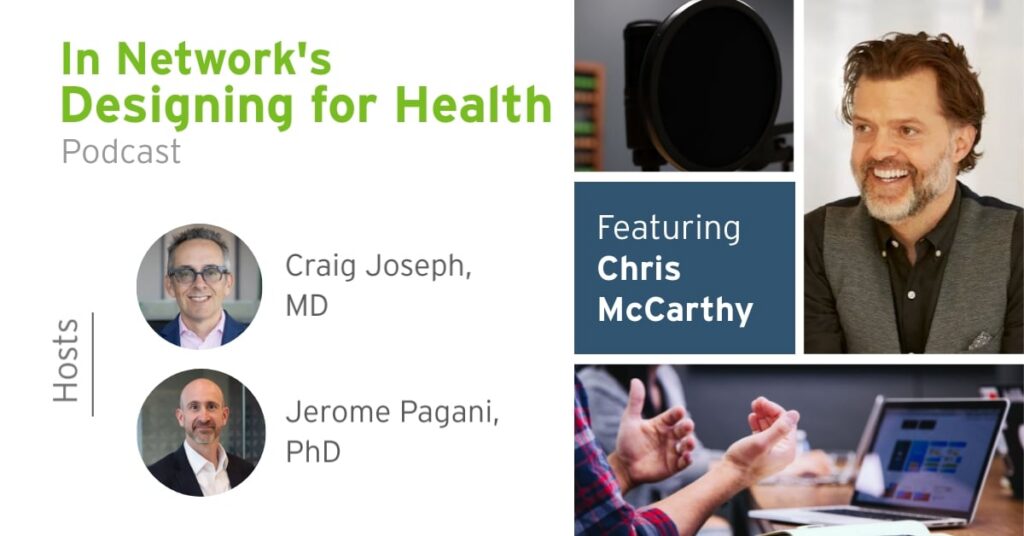
When we think of innovation, we often gravitate towards new digital solutions. Even when well designed, the technology and workflows associated with it may create obstacles to efficiency (and the dreaded “workaround”). In certain use cases, analog, old-fashioned designs can be more powerful than new digital innovations. Whether digital or analog, incorporating human-centered design principles […]