

Primary care physicians are facing growing demands to improve patient access, reduce administrative burden, and maintain high-quality care, all while navigating workforce shortages and increasing complexity. As healthcare organizations search for solutions, many are turning to technology. But sometimes the biggest gains come from redesigning workflows, empowering care teams, and eliminating inefficiencies that have become accepted as part of everyday practice.
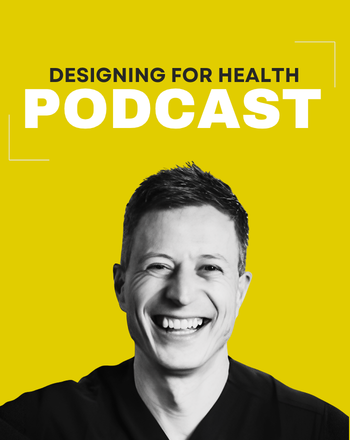
On today’s episode of Designing for Health, Nordic Chief Medical Officer Craig Joseph talks with Dr. Bart Kaczmarek family physician and healthcare innovator based in Windsor, Ontario. They discuss how Dr. Kaczmarek transformed a traditional paper-based family medicine practice into a highly efficient, team-driven care model that serves nearly 4,000 patients while maintaining same-day access.
The Designing for Health podcast is available on all major platforms including Apple Podcasts, Amazon Music, iHeart, Pandora, Spotify, and more.
Subscribe for updates. If you enjoy the episode, please leave a five-star rating and review.
Want to learn more from Dr. Joseph?
Order a copy of his book, Designing for Health.
SHOW NOTES
[00:00] Intros
[03:23] Taking Over a Paper-Based Practice
[11:01] The Power of Delegation in Primary Care
[16:29] The CRAFT Framework for Practice Transformation
[21:55] Serving 4,000 Patients While Working Less
[24:34] Building the Right Team and Clinic Environment
[29:16] Creating Doctor Flow from a Real Clinical Need
[35:12] Bart’s Favorite Well-Designed Thing
[37:24] Outros
TRANSCRIPT
Intro:
In this episode, I sit down with Dr. Bart Kaczmarek, a family physician in Ontario who has built one of the most unconventional and efficient primary care practices I’ve encountered. By rethinking workflows, delegating work to the top of each team member’s license, redesigning clinic flow, and obsessing over details as small as who peels the Band-Aids, Bart cares for roughly 4,000 patients, sees 80 to 100 patients a day, maintains same-day access, and still works fewer than 25 hours a week.
We explore what healthcare leaders and physician executives can learn from his approach, including team design, operational efficiency, practice layout, workflow automation, and why many healthcare organizations focus on technology before fixing broken processes. Whether you agree with all of Bart’s ideas or not, his story is a fascinating case study in challenging assumptions about capacity, access, physician workload, and the future of ambulatory care.
Let’s plug in.
Craig Joseph MD, FAAP, FAMIA:
Doctor Bart Kaczmarek. I said your name correctly?
Bart Kaczmarek, MD:
Yes, That doesn’t happen too often. That was great.
Craig Joseph MD, FAAP, FAMIA:
You have. You have coached me effectively. Dr. Kaczmarek. Tell us where we are talking to you from today.
Bart Kaczmarek, MD:
I’m, right now in my, family practice office in Windsor, Ontario, Canada.
Craig Joseph MD, FAAP, FAMIA:
And so you speak Canadian? I assume.
Bart Kaczmarek, MD:
Fluently.
Craig Joseph MD, FAAP, FAMIA:
All right, that’s good. That’s good. I know a few words. I can, say a few words. My. My mother was born in Toronto, so I have some Canadian expertise, but it’s, it’s very minimal. I can mostly just say a. And so that’s that doesn’t help me a lot when I’m in Canada, but it’s, it’s a little bit of something.
So I’m very excited about this conversation. You and I met on LinkedIn of all places. And I’m fascinated by your story. I’m fascinated by what you’ve done, both without technology, just kind of setting up how you set up your office and your thoughts about how to run a successful solo practice office. But also, I’m excited about some of the technology that you’ve created and that you leverage. So why don’t we start back at the beginning. Tell us about yourself, how you got to be a family practice doctor in Canada?
Bart Kaczmarek, MD:
Yeah. So that’s a, interesting story. I was actually a resident in urology in Poland a long, long time ago where I met my wife. She was a Canadian studying medicine in Poland. And surprisingly, I didn’t meet her in the medical school. We met in the gym, but it was completely random.
Craig Joseph MD, FAAP, FAMIA:
Okay.
Bart Kaczmarek, MD:
And then, you know, we decided that we, you know, should live together, and we decided to where to go, and we decided, let’s go to North America. And, you know, I, I was I came here, almost finished my residency back home, but not quite. So I had to restart my career. And I was looking for to get in with a new urology.
And it was difficult. I didn’t realize that it was so, so, so difficult and challenging. Much more challenging then back home and at one point we were flying. She was a resident Atlanta in family medicine herself. And we’re flying back home to Detroit, which is, you know, how you land often the closest to the Windsor area. You then you across the border.
And they said beside a pathologist from Henry Ford, we started chatting and then he said, hey, you’re looking for this. Maybe I’ll get you in contact with someone. And then he contacted me with a urology doctor, Craig Rogers, who is actually now a, you know, head of urology at that Henry Ford Hospital. And he got me into like a fellowship, research fellowship, them two years of a clinical fellowship in urology.
And then from there I realized it’s a long, long road before I would start residency again. So I switched to family medicine. And that’s kind of how it started, that I, I find myself here at the beginning. I have to say, I was quite disappointed that I am a family medicine doctor, not the urologist. Like I always. My mind was set on the sets that set and it was hard to follow.
I felt like supporting myself, everybody else. But now actually, from the perspective of time, I’m actually grateful because this is the it’s the specialty that allows me the most flexibility and the, you know, the most control over what they do at work, how I work and how I organize my work, which is kind of what brings me brings us here together.
Craig Joseph MD, FAAP, FAMIA:
Yeah. That’s a that’s a great story. Is your wife from the Windsor area? You said she’s Canadian?
Bart Kaczmarek, MD:
Yes, she’s Canadian from Windsor area and kind of came back to where her home area is.
Craig Joseph MD, FAAP, FAMIA:
Okay. Again, I, you know, I was born in Detroit and so I’m very aware of Windsor. I think when we were preparing for this episode, I, I mentioned to you which something you already know, but most of our listeners probably won’t know. Windsor is the one place Detroit going from Detroit to Windsor is the one place where you go south to good.
And from the United States to Canada. It’s a it’s a it’s a weird kind of geographic oddity. But yeah, you’re it’s we think of Canada as always north of us and Windsor is not at least not a, not north of Detroit. All right. So you were going to become a urologist. You almost became a urologist.
But now you’re a family practice doctor. You inherited an office. Like, how did you start practicing with did you join a larger group or did you just go right into being a solo practitioner?
Bart Kaczmarek, MD:
So first, after my residency at Henry Ford Hospital, I became a staff doctor there at Henry Ford, one of the satellite locations that was the for about a year or two years, it was I was I was there and then the pandemic came. And then I realized I actually wanted seemed like the doctors here in Canada had been more free and more I’ve seen them all biking and hiking and talking about their lifestyle more.
And I felt like something’s missing. Why am I not doing it? Maybe it’s the grass is greener on the Canadian side. So that made me maybe switch to Canada and try to and try to, you know, first I start as a, as a as a urgent care doctor because it’s easy to get. You can have buy and hire everywhere quickly.
And then and then I took over a practice in the model it’s called for. It’s more of like a capitation model. There’s a little bit of, for those who don’t know, a little bit of a fee for service, like a 15% of regular fee for service in the majority of income is from the competition model. That’s kind of how I started my Canadian Valley practice.
Craig Joseph MD, FAAP, FAMIA:
And is that is that pretty typical for Canada for primary care doctors that it’s mostly kind of capitated from the is it from the state or from the province?
Bart Kaczmarek, MD:
Yes. I think it’s becoming more and more popular. There’s a clear push towards that model rather than a fee for service. The clear fee for services is rather the least common, I would say the the pure capitation is one extreme, and there’s something in the middle that has like half and half a little bit. You still have to do volume.
So there’s three actually this is Ontario model. This is all can be different okay. But the capitation become more and more popular okay.
Craig Joseph MD, FAAP, FAMIA:
And so and you’re in your first office in, in Windsor when you kind of went from urgent care to family practice, it was a pretty traditional office. Right. And paper charts, regular numbers of staff tell us how that was.
Bart Kaczmarek, MD:
So here’s the yeah, I had the opportunity to take over this fall, which is the capitation fee model. After the doctor who wanted to retire. Someone let me know it quickly around there, make sure because I didn’t lose that opportunity. And, so the model was right. But then I walk in the building that looks like it’s 1950s.
The office was like two rooms, with the carpet from, I think, at least 1950s unchanged. And the rubbed off. It really looked like a travel in time, like almost 100 years. And then to supplement the travel in time, there was this the paper charts piling on the desks and everywhere. So it was kind of very traditional.
I think less and less of this exists right now, but there was some computer to mainly think submit billings only. But there was it was just paper, pure paper and lots of lots of those, those, those cabinets with drawers and all that. So that was my first experience. It was like 1300 patients. I took over from the retiring doctor, and there was one secretary taking care of everything, and she had it under control.
But I think that was the top capacity of what that building with that office and what that single person could have ever done. This was like this engine, you know, you pressed to the bottom and just keeps on making funny sounds, almost breaking. That’s kind of what probably was the capacity of the old doctor. Plus the sicker they end the building.
Craig Joseph MD, FAAP, FAMIA:
So there were this doctor didn’t have any nurses or medical assistance or anything.
Bart Kaczmarek, MD:
No, he was solo. Wow. He dedicated his own one full day to follow his charts to fill his, his gaps in paperwork, to review things. So I think Wednesday was his full day where he just said all day from nine till 4 or 5 and kept on writing gaps in his charting pen, pen work and that that’s what the school day.
Craig Joseph MD, FAAP, FAMIA:
Okay. And so you kind of decided to get new carpet sounds like. Tell us about how you went about kind of modernizing not only the infrastructure and the physical plant, but also the way it functioned.
Bart Kaczmarek, MD:
Yeah. So definitely, I knew that that paper charts, I actually had experience with paper charts in urgent care, and there was a the story is very, complex and you just do one problem at a time that’s actually pretty, pretty good, decent way to manage things. But if family medicine is so complex that the coordination and looking back, you know, as much as I okayed paper charts for urgent care, that just became just too complex and would never be a viable long term expansion there.
And, and I couldn’t work from home if I wanted to because charts were in there. So in that environment, they realized right away that that’s something that can continue. And I know, this your EMR that’s here in the group I joined had so we had one server and they bought what was a one, two, three, three four computers at the time.
You know, that that was that was exciting and a very pioneer time was like, you know, you go into punk or something and the, you know, someone that you and foot never, never set there. There was the feeling that you’re discovering him up here a little bit like restarting everything from scratch. Yeah. And then I didn’t actually change the carpets they moved to took over another doctor’s practice swinging.
There was the same group doctor in the same floor in the, in the, in the office that it for patient rooms actually there was used to and the other ones were storage. I took over his practice. Now I took over another 1600 patients. So I was about close to 3000. And they took over at this doctor’s practice and then office.
And now I reorganized those two rooms to be in total for patient rooms, and I could use four rooms to be more efficient. That was my second step.
Craig Joseph MD, FAAP, FAMIA:
Okay, so you are sounding more and more like a surgeon to me now. You basically took two full practices and was like, yeah, we’ll do that. So how did you kind of take that leap from, well, okay, I think I can see all of these patients and manage their care, over time. And it’s not just the technology.
So, yes, you had an electronic health record, but it sounds like you’ve done a lot more like when. How did this evolve? Did you start with just, you know, four rooms and what kind of staff did you have? And, you know, I’m just interested in the evolution, how long it took you to figure out, oh, I could hire a lot more people and I can support them by seeing these patients explain that to us.
Bart Kaczmarek, MD:
Yeah, that’s exactly what kind of I eventually realized that the, you know, you can make more money by hiring more staff to help you as long as you delegate things on the way. And that was my first experience. I initially hired someone because I realized I don’t want to do blood pressure cuff checks. I don’t want to do simple reviews like everybody else is doing is a standard in medicine.
But I always was feeling like, why am I doing it? Why is it on my plate? Like even when I worked at the Henry Ford, I felt like there was some medical system, but there was 1 or 2 doctors and they seemed to be always somewhere else. And I couldn’t reliably have her to do the standardized prepping for a room for me.
So. And I realized that when I worked at Urgent Care, there was a nurse who was, like, so helpful to me, you know, she was like, doing things for me out of her own kind of anticipation. And before I had my practice, I thought to myself, if I ever have my own practice, I’ll hire her. And she became my first hire, actually.
Oh, happened. And so she was kind of open to doing things for me and being available and kind of crossing a little bit of a role of a nurse into other fields and doing more. And I realized this when I realized it is quite possible. And in the first office, we had her help me prep patients. But then we realized we have capacity now, with paper charts being on the side with the biggest kind of concerns being already taken care of.
Now I can have her just prepare all the patients for me and do simple prepping and maybe review prescriptions, refill things, start refilling prescriptions for me with guardrails so I don’t have to, you know, set to something very simple like, you know, I don’t know, I’m looking refill, for the next three months. That doesn’t require me. I thought so I can tell her if patients being seen here within a year or two years, you can refill this.
And I don’t have to see it. So that’s how things started that we started using this delegation model, the nurse helping me out. And that’s why I realized I can increase my capacity to a bigger, bigger clinic and doubled my double my patient roster. And we did. And it went pretty smoothly.
Craig Joseph MD, FAAP, FAMIA:
And so how did you get any feedback from patients that they were people concerned? I guess, like if you had tried this at a traditional, you said you would worked at Henry Ford, which is a a huge medical group, multiple many hospitals in the Michigan area. If you would kind of propose something like this, you would have been laughed out of the out of the, area, I think. But since you’re, you’re a solo practitioner, you could do it. How were the how do the patients respond?
Bart Kaczmarek, MD:
You know, it was I think patients get used to anything you do at one point, at one point, a few people would be surprised. They kept on changing how we see patients for follow ups. And then we kept on, like drastically having them do things differently as they remembered. And I realized that there’s a lag of few months where you can just retrain your patients to accept that this is a new thing, and it’s just consistency.
And, and then you have new behavior and just having some, some good explanation if they ask. But there was never really, really a concern. And when you say that, you know, I’m thinking, I don’t know. I don’t know the reality in the US right now. I’ve been out of out of, US medicine for a while. But in Ontario right now, a pharmacist can prescribe medication, including antibiotics for things like UTI is and such.
So that was unheard of a year and a half ago. But now it’s a reality and you could say is equally shocking. So if I’m seeing pharmacists taking care of UTI, antibiotics for the patients, why wouldn’t the nurse refill medications or have the same guardrail protocol in the medical office? With me not being gone forever and not being available, but me being available, if there’s any question that’s I think is the key here.
Craig Joseph MD, FAAP, FAMIA:
Yeah, I you know what you’re describing it and what larger groups have done is created the protocols. Right. And just like you had said, hey, you know, a nurse is not practicing medicine and nurses making a decision based on criteria that I’ve set out, which is, hey, has the patient been seen in the last year? Is patient stable on their, you know, their blood?
Where are they coming for their blood pressure checks? Is the medicine working then? Yeah, just go refill it. I don’t want to know about it. I don’t need to know about it. If they fail any of these measures, then now we have a situation. And now I do need to be involved. And so having that protocol again, you know, you don’t you’re not asking people to work above their license.
You’re asking to work at the top of their license. And I love it. I’m a I’m a huge fan and, and I, one of the things I see is oftentimes people think they need technology to solve all of these problems. And no, they don’t. You need some technology. As you pointed out, this wouldn’t work with paper.
However, maybe it would, but it wouldn’t work as efficiently or as, conveniently for you. You wouldn’t be able to catch up on any paperwork that you wanted to do at home, because, again, the charts are all centrally located in your office, but you’re still able to kind of make it work with minimal technology. And I know you’ve been thinking about this, and this is kind of how we met each other, at least online.
You’ve kind of come up with this framework called craft. Tell us a little bit about, you know, why did you kind of come up with this. You’ve done you’ve done videos to talk about it, which are pretty awesome. And we’ll, we’ll put some links into the at the end of the podcast for you. But yeah. Tell us a little bit about craft.
Bart Kaczmarek, MD:
Yeah. So the craft was this idea because I was thinking, how can I make this thing that works for me reproducible. Right now I’m taking care of 4000 patients. Right now I’m working actually less than 25 hours a week, and I’m billing about five times average of Ontario family medicine doctors. With less work and quality metrics that are reflected in and lower antibiotic use than average and higher screening rates than the average family doctor.
So my quality metrics derived from this, I think it’s at least above average with everything I do. And I wanted to show that this is not something that only works for me, but this is something that should work for everyone. So I designed this. This I was analyzed like back engineering. What works for me? How is it that things are working for me like this?
And how could I show it to anyone that could reproduce that system and any of their practices that they are completely in charge of? So if you work for a huge system, you may have less leeway to do this. But if you are a solo practitioner in Canada specifically, it’s the most common model. That’s something that you’ll be able to do.
So I figured out first, like what would be the easiest things? Not the list of things, but what would be as stages. So the craft is the acronym for stage five stages that can follow one another. So first one I thought it was two. I call it C for clean, which is what can you do without any spending to increase your budget because of several things that that can make you more money with very little effort.
And one of them is, you know, some of some of them, we all do. But all of them together gave me the capacity to hire my first employee. And they wasn’t not only I wasn’t losing money on it, but I was actually making money on every employee that I did I hire. My return on investment is 2.1 on every dollar I’m spending on my on my entire staff, and they just bring me money.
So this is the way to, to kind of to, to do it. And so a few ideas from the list is that, you know, guilt free visit mandatory kind of intake forms. So you don’t have to ask the patient for what are you here for, how long is your headache? It does it does it give you dizziness. Are you losing consciousness.
And all this will be taken care of before you walk in the room. And a lot of software now exists to send patients JavaScript forms. And if you’re still on paper charts, send them paper checks before they walk in the room. Then you have everything kind of verified. You could just copy this to your chart to then what I what works for me in my EMR is I build like the assessment and plan templates for that.
It’s one template that includes five most common assessment and plans, so I don’t have to type it. If there’s some of them on the existing or one, I just delete the rest. But the most common defaults are there, which is kind of like for a good example is if I’m having someone with a with a cold or cough, the treatment is it, you know, most awkward most likely is going to be reassurance.
So I just keep it. This is an A template. And if the cold comes 99% is going to be reassurance. Like what do you have it written for or that then use all those EMR shortcuts. You could not just the basic ones, the advanced ones, that can be helpful. I think the big thing that works for me is learning how to touch, type, fall in line, and learn how to type super quick by five minutes a day for like three months.
I believe you can get to the typing mastery that, you know, I talk to patients and type if they tell you to talk to me. So I look at them in that and they type to know if I have to. So that kind of makes me really efficient. I move that a follow up to be on the phone visit.
So I don’t stock my days with just regular follow up visits. You could just go up on the pricing of the different service things that you do in your office. So I wasn’t an average price things for paperwork. I just went to the to the to the top. I doubled or tripled my fees for for extra paperwork things because we hate paperwork so much and then we charge so little for it.
It’s not a must write if someone needs paperwork. I want to make feel that I’m not upset doing it. I feel, oh yeah, I’m doing it. It’s not something I like, but hey, at least I get that $20, but $100 for it and that’s already a win here. Then what also works for me here is I, I advertise my services that are kind of extras.
I have a TV in the waiting room, and I just advertise stuff that the patient’s patients may not know about. They may make money on it. So this is a, you know, just use a buy TV for 200, $300 and that’s almost no cost. What else? I also practice binary decisions. Like I don’t try to not dwell too much in the room.
That’s a bit of a skill. If someone you know, if someone comes for this cost, then my thinking is it pneumonia or not? If it’s pneumonia, antibiotics, if it’s not pneumonia, I do over-the-counter and reassurance. I don’t dwell on like it was your runny nose for three days or five days. It doesn’t look like pneumonia. You’re going to get over the counter treatments or whatever you like, but if there’s comes, I can really get into biotics so I don’t spend time on things that are to me binary, either left or right.
And a lot of things get sorted out pretty quickly in the room, and that’s most common things that are on the table for most of the doctors, that could be. But to be done more efficiently for and with higher satisfaction.
Craig Joseph MD, FAAP, FAMIA:
Okay. Are those so those together are some of the things that you’ve done to kind of increase throughput. And so you’re seeing five times the average number of patients. Right. Is that what you said.
Bart Kaczmarek, MD:
Yeah I’m saying 80 to 100 patients per day with me being in the room for less than five minutes because we measure everything. It’s a part of the left protocol craft, the throughput measurement. It seems like I’m really not doing a job as a doctor. How can you do five minute appointments? But if it’s all stripped from yeah, I love to do and then visit that five minute is certainly not a short visit.
It’s a visit where you’re interacting with the patient naturally, where you don’t spend time reviewing and checking and digging in the chart. If everything is done for me by my and in my prepping team at five minutes, extra meaningful, that yesterday I left the room. I think I was there for so longer counts that they looked at my timer.
It was 11 minutes, I think. Oh my goodness, what was the last time I spent the level of the patient? It felt like forever for both of us. We connected. It was it was really we talked about multiple things. So, so five minutes a regular visit, including counseling and complex patients when it’s everything’s taken away, the doctors doesn’t have to do. It’s actually more than most doctors did.
Craig Joseph MD, FAAP, FAMIA:
And so how many how many more staff do you think you have than the average family doc. Is it twice as much or is it the same number of staff like. Or is it three times like? How does that work?
Bart Kaczmarek, MD:
I think your average model is one doctor has one secretary and I know it. Doctors who are married like a wife and husband together in the office, and they usually share a secretary. So it’s either half to one secretary for her doctor. The model I’m seeing here, I have three secretaries and three nurses just for me. And that seems like.
What the. What are you. How are you getting this paid? How is who pays for it? And the answer is my increased throughput plans them with an ROI of $2.1 spent on every dollar I’m spending. So that’s the secret to this. And I could cut them down to say if I fired them tomorrow. I just would have to do a lot of.
Cut to my volume in like a quarter and half my appointments, which are available up tomorrow. You can see me tomorrow. Everything’s open. I can fit anybody in. There’s never a problem. And I would just have to cut down the volume. My availability for the patients will drop, and, it just doable. But come on, it will be a proof of how. How what I’ve built so far would not work if you take away the stuff.
Craig Joseph MD, FAAP, FAMIA:
Yeah. And so how do you find the staff? Like, oftentimes it’s difficult in private practice to find reliable folks who are medical assistance and nurses. And it sounds like you’re giving them more work to do, or at least higher. And you know more, you know, they have to follow protocols. They really have to work at the top of the license. Do you have difficulty finding these people?
Bart Kaczmarek, MD:
You know, we just had to hire a secretary because I had another medical building, I had equity, and I was managing this for a little bit. So we suffer or the secretary staff, it isn’t so challenging because they typically do their regular things that they requested because everybody would request from them. But for the nursing slash rooming team, it’s way more than they ever done.
Now, my thought is to look for it because I have 2 or 2 nurses that are working in the hospital environment and one nurse that worked in urgent care, my first nurse, and she’s just way more fast with patient processing. And the other two nurses are very good. And they actually help me with counseling. They’re very patient.
I love them and they’re very sensitive, but they don’t tend to be so fast and so well organized. The and if there was my observation was I learned just I would look for someone from like urgent care walking clinic setting that they used to a pace and the fast movement and then they just always the same thing.
You look for someone who’s teachable, who wants to learn because excited to switch and feel elevated with the with the extra responsibilities that you wouldn’t usually belong to a nurse rather than scared by them. And then the key is to be, you know, a team leader where you communicate. It’s not just dumping a set of set of guardrails or rules on the team is just being available.
Having the regular team meets every week. We meet and say, hey, what, what, what went wrong this week? Is there anything I can do for you better? And I tell you what I saw from your end and that kind of constant honing up of a relationship and showing that I supportive of them and that they never thrown in on their own. I think that’s the big, big piece there. Yeah, I love it.
Craig Joseph MD, FAAP, FAMIA:
What about the physical design? How does the space look so that you’re able to move as quickly? I mean, this has got to be like a ballet of getting patients in and getting them groomed and getting them ready. And then after you decide what needs to happen to make that all happen and check them out, is it have you gone through, you know, various designs or is it pretty standard.
Bart Kaczmarek, MD:
Yeah. So that’s a good question. A year ago I moved to an office that I designed for myself. I use seven rooms or myself, plus the procedure rooms if I have to, and it’s all was designed with a thought of efficiency. If I come back to the craft manuscript series for the first lean to things that are little throughput, then you have the are for release.
Then a is assemble your team. Then F is for flow. So the flow part of the craft framework includes organizing your physical space while your team is already assembled. And running for you. If I was in this four room office before I realized we we limited by geometry. So we moved to a place that allowed us to be more efficient with more rooms.
My ideal day is when. When actually I have 100% flow, where my prepping team prepares everybody and me leaves me, leave me a message on the door that they’re ready for me and in specific order. I walk in and I can communicate. We communicate through the electronic kind of system we have built for ourselves. And that that allows to us to move, move along.
They know where to go next. I know where to go next. It allows handoffs between the teams, and everything is based on like a fishbowl, like ICU style, where there’s a central station, where there’s two computers for the nurses and two other computers for the doctors, and we move on from this, from this central place to see all the rooms.
We don’t travel much and we keep on walking short distances and everything’s available. No one goes to the room. I don’t go to my office to take notes because I’m with them. And if they want to ask me a question, I’m there. So the design is more of like a fishbowl ICU style that that’s kind of really what what’s been helping a lot.
Craig Joseph MD, FAAP, FAMIA:
I love it. So talk about that. You said that you’ve designed, an electronic kind of queuing system to tell you where to go and what to do. And I think you’ve named it Doctor Flow. So tell us about Doctor Flow. How did that come about. And how’s it work.
Bart Kaczmarek, MD:
Yeah. So that’s a system that we, we where we need of something different than when we used in our first two offices. Flags on doors next or goes next where some people I know created some sort of like an electronic green red light. They built it or it for themselves. And then I realized I need something more reliable with it being able to get more signals.
There’s the relays. Why don’t we use a tablet of the doors and then have someone design a software that would allow every room to have a status? And by pressing in, you say what key members in what room? And when patients are room, the order will be kept. So the my nursing team goes in order and when they leave, they leave me an order.
And if you want a hand between each other, they let me just know on a tap so I don’t have to look for anybody gets help. So those and increase the efficiency. So I hired an engineer on Fiverr the year and a half ago for $250. And he designed me the first, the first prototype, which I use in my office for the first six months.
And then someone noticed it and said, hey, what is this? Who built this? They I use it as mine. And then someone, I thought, you know what? This is something you could consider, like selling to other people. And then I realized, I mean, I dismissed it at the beginning, but then I realized maybe it’s not a bad idea.
And I embarked on this journey of, of building kits for others, which actually made me realize how this is how complex that is. Many aspects of, of business, of promoting and building a code that the replicates that has separate accounts, how to do marketing, how to do sales. Everything just was unraveling it from my eyes, and I didn’t realize it was so complex.
So now we’re quite advanced on the journey. We have seven clinics that use it and a few others are signing up. So it’s been it’s been going well. But I just want to say that the it was very humbling to not know how much is there to learn to.
Craig Joseph MD, FAAP, FAMIA:
Yeah. It’s it’s always easy from the cheap seats and then you have to go do it. Well that’s great. We will definitely include a link in the show notes so that people can look for it and see how it works. And I just love it that you kind of just created something for yourself and for very little money and just was like, well, let’s see if it works.
It would be great. If not, I didn’t spend very much time or energy on it. And and it’s worked. And then I love the lessons that you’re learning. Hey, it works great. It doesn’t need to be doesn’t need to be tweaked at all until you encounter other people’s workflow or what kinds of patients that they’re saying, you know, like, okay, maybe it does.
Let me ask you this just to one thing. And we’ve talked about efficiency and we’ve talked about how important it is to kind of take all the work that you don’t absolutely need to do, and you could send to someone else who’s skilled and is within these guardrails of doing one thing that we talked about when we were preparing for this, for this talk, was you said that your nurse peels the Band-Aid for you.
Bart Kaczmarek, MD:
Yes.
Craig Joseph MD, FAAP, FAMIA:
And I think you just you mentioned this as a as a one off. And I want to focus on it a little bit. How does that help?
Bart Kaczmarek, MD:
Maybe that defines me. How I kind of, how I want to just delegate the slightest thing is that the don’t feel comfortable for me, like, the slightest rock in my shoe, I realize, oh, do I really have to work with this rock on my shirt? Can I just give it to somebody? And that’s one of the ideas.
I realized that the bandage, because I use a lot of joint injections, the local doctors refer to me for about 40 to 50 joint injections as a council service in addition to my practice, and we have lots of room. You’ll see me next week for that. So I realize that everyone in the room might may need injection.
Takes me less than a minute, but peeling the Band-Aid takes me about 10s sometimes from the from the outer white layer. You know, before you get to the to the bottom white parts and the top brown one. So there’s a in my nurses. Thank you. Once a few weeks you just sit still. The band is and peels them peels deals.
Just looks like just being a potato. But it’s. And then she just distributes in every room. So every room has been this that is peeled I think that’s the. Yeah. That defines how I just don’t want to do stuff that don’t belong to me.
Craig Joseph MD, FAAP, FAMIA:
Yeah, well, it’s, you could say it that way, or I, you know, I think that just talks about the level of detail that you want to get down to and how it actually 10s here. And 10s there actually does contribute to you seeing us. I mean, 4 to 5 times what the normal family doc is seeing, number of patients at least.
And, and, and still being able to get out early and all your documentation is done and all of that. So it’s amazing what you’ve kind of built for yourself. And I, I’m fascinated by watching what happens when you try to make some of these ideas more, more global and, and see if doctors will, will adopt them not only for themselves.
Because you said, hey, this is financial. It makes a lot of sense. But also it’s, it’s it’s kind of unbelievable that you’re telling me that I could call you up this morning and see you this afternoon, and that’s a tip. That’s a typical day. Like, your patients would be shocked if you if they called and couldn’t be seen the same day.
Bart Kaczmarek, MD:
No, this is true. If patients some there’s some parts of the year where we get backed up. And there was a moment that my second, my, my main manager said to me, say we got to sit down, patients are calling and we don’t have room for one week. Oh, and they said, oh, that’s not good. Then what happens?
So let’s open up some more, some more slots. And but this was a real thing. It’s like one week that this is like is the world what happened. Like this is like, you know, the sun is falling down from the skies on us. Like, what are we waiting for? My patients a definitive. So I said, okay, let’s just open up extra, extra afternoon slots and we’ll, we’ll see them. So that’s how my patients are used to it. Seeing me next day or in two days is usually usually a very everyday thing.
Craig Joseph MD, FAAP, FAMIA:
Yeah, that is not the experience that most of us have here in the US, either as the as the provider or as a patient. Well, I could go on and on, but we have run out of time. And so I’m going to ask you the question that I always end with and ask the same question, which is what is something that is so well designed, kind of like your practice that it brings you joy whenever you use it. Now, maybe I have an idea that you’ve already thought this through.
Bart Kaczmarek, MD:
You know, I was if I think of this, I, I want the original. What comes to my mind first with such question is, is an iPhone? Oh, because iPhone is this example of how everybody thought of phones for many, many years. Wrong way with adding features, with making smaller buttons and more of the smaller buttons, with increasing security, with creating designs.
But suddenly someone came. And I’m not trying to convince everybody that Apple is better than the something else. Not. It’s not the idea about this. Someone just came and thought, well, let’s make it usable. Let’s put a user in the center. So the experience is completely different. And that’s what I’ve thinking a lot about health care design, our tools and health care.
We need someone to come and take those images and rebuild them to the same extent, where suddenly a doctor would feel like it’s built from the usability standpoint, and there’s a bunch of cluttered feature lists put together somehow, and we all feel that is just not intuitive to use. I think that’s what medicine needs.
Craig Joseph MD, FAAP, FAMIA:
All right. So iPhone I was going to I was going to go with Doctor Flow. I thought you were going to tell me about this amazing product that you do use though every day. And it does bring you joy. All right. Well, it has been a pleasure speaking with you today. I’ve learned a lot. I, I look forward to some of your non-conventional ideas, yet brilliant ideas getting out into the universe and finding, you know, giving doctors more and more ways of of maybe improving access and also improving their daily lives and maybe even improving the bottom line.
Craig Joseph MD, FAAP, FAMIA:
So awesome. Thank you. I look forward to kind of seeing when you take over the world. And I want you to think positively of me when you are in charge of the world.
Bart Kaczmarek, MD:
Thank you, it’s was a pleasure. Thanks for having me.
Outro:
Thanks for tuning in. We hope you enjoyed today’s episode. For more on Dr. Bart Kaczmarek
follow him on LinkedIn, YouTube, or at Doctor Flow.
Check back for more episodes of Designing for Health wherever you listen to podcasts or on NordicGlobal.com. We’ll see you again next time on Designing for Health.
LinkedIn and other web links: