

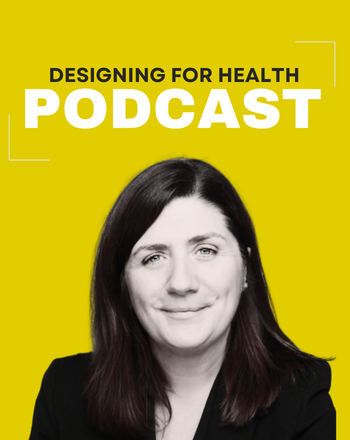
In this episode, Sarah Hanbridge shares her journey from bedside nursing in the early 1990s to leading large-scale digital transformation across the NHS. She explores how clinical frustration sparked innovation, why data visualization became a turning point for operational change, and how collaboration not technology alone drives meaningful outcomes.
From pioneering digital control rooms with learnings from Johns Hopkins to leading rapid transformation during the COVID-19 pandemic, Sarah highlights the importance of people, process, and culture in delivering safer, more efficient care. She also shares her perspective on AI in healthcare, emphasizing the need for strong ethical frameworks and human oversight.
The Designing for Health podcast is available on all major platforms including Apple Podcasts, Amazon Music, iHeart, Pandora, Spotify, and more.
Search for “In Network” and subscribe for updates. If you enjoy the episode, please leave a five-star rating and review.
Want to learn more from Dr. Joseph?
Order a copy of his book, Designing for Health.
SHOW NOTES
[00:00] Intros
[01:15] From Analog Nursing to Digital Curiosity
[06:00] Becoming a Clinical Digital Leader
[08:00] Tackling Patient Flow & “Corridor Care”
[11:30] Data Visualization & the Digital Control Room
[17:30] Culture Change: Coaching, Collaboration, and Accountability
[26:30] Leading Through COVID & Accelerating Innovation
[35:30] AI in Healthcare & Final Reflections
[41:00] Closing Thoughts and Sarah’s favorite well-designed thing
TRANSCRIPT
Intro:
Hello and welcome to the In Network podcast feature, Designing for Health. I’m Nordic’s Chief Medical Officer, Dr. Craig Joseph.
In this episode, I sit down with Sarah Hanbridge, a nurse-turned-digital leader in the UK’s NHS who has spent her career translating frontline frustration into system-level change. We talk about what actually happens when you move from “one computer on the ward” to real-time, data-driven operations, and why most health systems still get this wrong. We dig into her work building a digital control room in Manchester, which improved discharge performance by 35%, and what it took to get clinicians to trust the data without blaming “the computer.”
For healthcare executives, this is a masterclass in why transformation is less about technology and more about coaching, culture, and asking better questions.
Let’s plug in.
Craig Joseph MD, FAAP, FAMIA:
Sarah Hanbridge Welcome to the podcast. How are you today?
Sarah Hanbridge CCIO, Leeds Teaching Hospitals NHS Trust:
I’m good. And thank you for inviting me, Craig.
Craig Joseph MD, FAAP, FAMIA:
Well, I am very excited to have you. Where do we find you today?
Sarah Hanbridge CCIO, Leeds Teaching Hospitals NHS Trust:
So I’m in and in Greater Manchester in the North West region, in the UK.
Craig Joseph MD, FAAP, FAMIA:
And I think I asked you this question before, but I’m not sure I did and I’m not sure it’s an appropriate question. So I’d like to begin our interviews with inappropriate questions. What football team might you football club. I’ll use the proper term. Might you support or dislike the least?
Sarah Hanbridge CCIO, Leeds Teaching Hospitals NHS Trust:
Ooh. So I’m a big Manchester United fan. So I’m a big red. And I have the pleasure. Last week of meeting Bryan Robson, one of my old heroes. So. Yeah. Okay. Are you all the way?
Craig Joseph MD, FAAP, FAMIA:
All right. That’s fine. My son is also a man. You supporter. I am not. And I will. We’ll just leave it there because I want to maintain a good relationship with all the people that I interview on this podcast. All right. I am under the impression that you started your career as a nurse on the floor or the wards, and that now you’ve kind of moved significantly.
I won’t say away from that, but kind of built on top of that. So why don’t you tell us, give us a little bit of your life story. You started off wanting to be a nurse doing nursing things, I would presume. How did you get into kind of technology and leadership?
Sarah Hanbridge CCIO, Leeds Teaching Hospitals NHS Trust:
So it’s a really interesting question. So I’m of the era. So I kind of started my nurse training in the early 1990s. So I was one of the very first to project 2000 nurses who were starting on the academic journey and where was really starting to look at research and evidence based practice. So I was leading the way really in terms of that agenda, not really understanding that, you know, this digital world was about to become and, you know, part of my world, obviously, being an analog nurse and working on paper one at my organization at the time said, we’re going to start looking at digitalize in our workflows.
I didn’t really understand the concept of it, and it was really interesting because especially when you’ve not pre-planned it, because most people kind of plan the career and where it’s going to be. And I absolutely still love being a nurse, and I enjoy that clinical care and, you know, really empowering patients to take ownership of the care. And I really saw this with my evidence based practice heart, the evolution of digital transformation of how we could empower because previous to that, the traditional nursing had been really focusing on disease and not health promotion.
And as project 2000 nurses, our ambition was really to empower our patients and really look at patients health and having that digital platform and that accessibility to data fingertips really changed. And it helps us look at our really broken, what I call broken systems in, in the NHS as a staff nurse because I was absolutely frustrated on on the shop floor of, you know, spending hours writing documentation and there was lots of duplication, which we didn’t see.
The whole picture, the holistic picture of of patient care and through that evolution, I was kind of back in the day a digital advocate without me actually realizing it. So I was the go to person on the wall to kind of empower the workforce to really start thinking about what an electronic health record would look like. And I’d spent a lot of time in the early 90s doing nice guidelines, looking at the nice guidelines.
And I was at home literally typing care plans. So we were the very first ward actually, to say use all scripts. And they worked with those with those toes where the head of the game, really, because it wasn’t handwritten and handwritten back in the day, was not easy to kind of pay attention to. So that progression into that evolution of analog to digital in the family.
You know, you talk in 98, 1999. So it’s a really early inception, actually, in the NHS world of getting nurses to think very differently about how we were going to change our workflow and our operational leadership and get that responsibility of flow and quality and patient safety, because that’s the critical thing for me around that patient safety. And I think, you know, back in the day, Florence Nightingale was, you know, true informatics nurse.
And she said about the, you know, the importance of data and how we could shape outcomes. Well, Digitalizing that process became more powerful for me. And I saw as many clinical problems where information and workflow and, and design problems were a real challenge back in the early and mid 1990s. Farmers. And so I kind of worked through that evolution of the electronic health record.
Being this digital advocate, really bringing the workforce together and kind of took an educational role in that at the time to really empower people to go, actually, this is this is our future world, because at the time, you know, Microsoft Word had just come out and people didn’t really understand Microsoft Outlook and what that meant. So we were talking a very different language, and we had one computer on the ward when I started my nurse. Wow, one computer with a post-it note on it saying, doctors, please do not touch. So, you know.
Craig Joseph MD, FAAP, FAMIA:
I don’t think too many doctors would have a problem with that post-it note on any terminal today. Actually, do you wish you wouldn’t have to push many, many of us away? Wow. So that. So, you know, your story sounds familiar to me. There’s so many people who who got into the IT or informatics aspect of health care simply because they were a frustrated just almost everyone in almost all countries and, and B had a slight or either liked the technology or were less fearful of the technology than their colleagues.
And then they were either I think the proper term is Volun-told, you know, hey, you’re going to help us with this because you seem to understand it or not be as afraid of it as everyone else.
Sarah Hanbridge CCIO, Leeds Teaching Hospitals NHS Trust:
I’ll certainly I was fearful of it, if I’m brutally honest. Craig, I, I was a bit I’m not sure where this is headed. And I think because people trusted me, I automatically got that engagement because in their world they were like, well, we trust Sarah. She’s a really good clinical nurse. And actually she’s saying, this is the way forward.
We’re going to join her on the journey. So I did it. I was a bit skeptical. I didn’t know how it was going to work, but I believed and I could see the power of it. And I was doing a lot of research and evidence based, you know, practice around what good information does in terms of patient outcomes on paper.
Sarah Hanbridge CCIO, Leeds Teaching Hospitals NHS Trust:
So to see it visualized in a in a digital system was like the next evolution for me.
Craig Joseph MD, FAAP, FAMIA:
I yeah I love that. And it’s again it’s the clinical leadership and respect from your from your from your peers that that gives you the permission to say no, we should try it. And if that came from an administrator or technology person by themselves, it probably wouldn’t have as much impact. So thank you for being in the right place at the right time and being fearful, but not too fearful of the technology to be able to kind of move it forward.
Craig Joseph MD, FAAP, FAMIA:
One of the things that I learned when we were preparing for this conversation was your time at at Self Salford. Did I say that right? Salford.
Sarah Hanbridge CCIO, Leeds Teaching Hospitals NHS Trust:
Salford.
Craig Joseph MD, FAAP, FAMIA:
Yeah. See I’m never going to say it right.
Sarah Hanbridge CCIO, Leeds Teaching Hospitals NHS Trust:
It’s fine.
Craig Joseph MD, FAAP, FAMIA:
It’s that American accent of mine. So you were there and it sounds like you and I think the term you used was corridor care, which, which is a term I’ve never heard of, but I completely understand. So it’s taking care of people. In what, in the hallway.
Sarah Hanbridge CCIO, Leeds Teaching Hospitals NHS Trust:
Yeah. So overflow from the emergency department. Yeah.
Craig Joseph MD, FAAP, FAMIA:
And so, so obviously you needed to kind of figure out how do you get patients either through the emergency department or, you know, up to either home or up to the floor? And one of the things that you had done and so your title, please tell us a story about Johns Hopkins. Johns Hopkins is an American university, I believe. And so I was confused at first about how Hopkins was involved in a in a British solution. So spill the beans.
Sarah Hanbridge CCIO, Leeds Teaching Hospitals NHS Trust:
Yeah, it was really pioneering. So we’re going back 2030, maybe 14. And we were desperate at Salford to really look at capacity and demand. So we quit. We transitioned into our electronic health care record and it was quite, quite established. We were going into an integrated care organization. So, you know, really looking at that social care space as well.
So because we were going into an integrated care organization and becoming what is now known as the Northern Care Alliance, we really needed to think differently and think innovatively around how is we going to communicate across five care, hospitals. So we did a lot of discovery work, and we reached out to Johns Hopkins, more of a partnership relationship initially around really trying to understand them and recognize what their challenges were in terms of developing a digital control room.
And obviously, John Hopkins had a really good global reputation for combining clinical excellence and safety science and data led improvement. So that really enticed us as an organization to say, actually, we can learn a lot from Johns Hopkins, and how do we get to understand their world. And now the similarities, even though were across the pond, but obviously because we wanted to understand that a, a world class organization had kind of redesigned their end to end care.
So we learned loads through that, that going back to Microsoft Teams back in the day and the zoom calls, which was quite alien for me back then, to be fair there. Well, now but back then it was a it was a real interesting experience. And I think that dialog and that relationship really helps us to understand the shared problems.
Actually, I think we underestimated that around the process because we’re very in the UK, we are very people and process driven, and we really try and use the technology to enable patient care and operational flow. And I think at Salford we were very good at the patient aspect, but the capacity in demand, we wasn’t quite grasping and that’s why we kind of looked to the John Hopkins Center and said, please tell us how you’re you know, you’re using technology to enable that visualization.
And it really gave us an opportunity to challenge our assumptions as well, because we kind of thought, oh, you know, it’s just the UK, it’s the UK healthcare system that’s experiencing this. And when somebody lived and breathed it like John Hopkins, that card, bringing that live information and visualize. And I think that was the big takeaway for me back in the early days, was that visualization of that data was just on another level, and I’d never seen anything like it.
So yeah, the learning was and the discovery work and that conversations and that collaboration really made us think differently about our procurement process as well. And, and I think originally we thought one, one system was going to, you know, solve the world. And we learned very quickly from the Johns Hopkins that actually, you’re going to have to work in collaboration with other partners.
And I think, I think we’d underestimated that. I think that was the key takeaway. If one size doesn’t fit all, and sometimes you have to work in wider collaboration to meet the organizational workflow. I think that that was some of the catalyst of change and thinking that really enabled us to really think of what we required.
Craig Joseph MD, FAAP, FAMIA:
Yeah. So okay, so can you give us an example of one of those visualizations? I, I think you had mentioned something about red and green days.
Sarah Hanbridge CCIO, Leeds Teaching Hospitals NHS Trust:
Yeah. So yeah. So that was brought in NHS England. It, it kind of introduced that around, you know was a patient, could the patient stay in hospital or did they require an alternative service. So if they were red it meant that they didn’t need that acute bed. And at the time we didn’t have within our electronic health record, we didn’t have that level of detail.
And what we again, we brought in another American system, which was a cap. It was also known as clinical utilization review. And what that really enabled to do as an organization was do a very quick rollout across 33 acute wards in literally eight weeks. So it was it was a mammoth task in terms of getting that clinical engagement.
People really understanding the system and the benefits of the system. And I think that that red and green Day again, give us that visualization because it was in people’s heads. It was on Excel sheets, it was on bits of paper. And actually that end to end product enabled us to do a true assessment, patient clinical assessment did the patient needs to be the selector.
If they didn’t, where was the best place, right care, right time, etc. So it changed the world of Salford and it changed us to think about the procurement process around the digital control room. Because within those eight weeks we our discharge process was improved by 35%. So it shows you the power of having information daily at your fingertips, where you’re sat in a digital control room.
And you can visualize how many people should be in an acute facility, how many shouldn’t, and actually using that data where they shouldn’t have been, what care was they waiting for. And we worked with the company to develop the UK codes because obviously it was very American. And then that enabled us to help with commissioning discussions around actually we need to start thinking differently.
And a really nice piece of work that came out of that was that we required more intermediate care beds. And again, we didn’t we didn’t really have the tangible evidence before putting the system in, but because the data was there, it was explicit. It helped with the commissioning business case. And we developed the Ninth Avenue unit, which opened about five years ago now, and that was a 50 bedded unit.
So that that ensured that the patients who needed re enablement and intermediate care were in the right facility and not sitting in an acute bed in Salford. So really pioneering work back in the day and really showcases the importance of data and the improved clinical outcomes, patient experience. And actually got patients got intense rehab because they don’t get that intense rehab when they’re in an acute facility.
So it really encapsulated the power of data and the value of data, and how you can change your workflows and your service delivery model actually around those operational needs, because the world is, is, is constantly changing and especially with technology coming in as well. So you’ve always got to be ahead of the curve. And I think working with John Hopkins, that’s what really was our take away of actually, you can’t be looking at the immediate. You’ve got to be looking at five, ten years in advance and what is coming our way to really support that, that strategic thinking in terms of service models and, and care.
Craig Joseph MD, FAAP, FAMIA:
So so it worked out obviously very well. My I’m wondering though at the time, you know, you’ve put in this new system and you’re essentially telling some someone some clinician somewhere that, hey, this patient that you would have admitted to the to the hospital doesn’t need to be here and in fact is taking up a bed that other people need more acutely.
And if you were to have that conversation with, with a lot of us, especially back then, and I think to some extent now, I think the answer would have been says who? And if the response is the computer, it would not get a good reaction. So how do you how do you kind of, I guess close that loop to say like, okay, well, we’ve got the technology in place.
We think it’s giving us the right answer, but now we need to get those darned humans to start all rowing in the same direction. Is it similar to. I guess a prerequisite is while the person who’s delivering these messages has to be a respected peer. So we’ll assume that. Are any others any other secrets?
Sarah Hanbridge CCIO, Leeds Teaching Hospitals NHS Trust:
I think if for me, everybody was involved from its inception. So we had a really good clinical collaboration and what we were able to do with the visualization of the data, because we developed the dashboards as well. There’s some really good pioneering work that came out of it. It showed the inefficiencies visibly and, you know, my medical professional, great.
You know, kind of instilled about data in the importance of data and research. So when they saw the opportunity of this visible inefficiency and actually that we could redesign processes, it was clinically meaningful. And people really reflect on that, to be fair. And it was the catalyst of change really around progressing our electronic health record as a multidisciplinary problem solving process as well, because the red days kind of triggered MD escalation and ownership, and it actually put the mirror to clinicians to go, you know, why is this patient still in your care?
You know, what’s the rationale. And it and it kind of challenged some of the clinicians to go, actually, are you doing best by your patient. Because we do can become complacent. So it was a real it was a real catalyst to change actually about everybody’s thinking differently about their practice and their service delivery. We were being was we’re being efficient whilst we were doing the right thing by the patient.
And it was like shifting the non-judgment judgmental framing is, you know, who is actually causing the delay. And that was some of the key question. And I was a coach back in the day. So I had a lot of coaching questions and, and like what’s getting in the way of today, you know, really basic non non-judgmental questions, coaching questions to get clinicians to think very differently around am I hindering this person’s pathway of I acted quickly if I made the right decision.
I’ve got the right wraparound services to enable this patient a safe discharge. So it was a massive people cultural shift. It wasn’t just about the system. The system was phenomenal, but actually the people and the process and the clever question and the challenging and that catalyst of MDT problem solving, really sequence proactive discharge planning. And the proof was in the pudding when we got 35% improvement in our discharge processes.
Craig Joseph MD, FAAP, FAMIA:
So if we were in a room right now and we were on a stage and we had audience and you would just said what you said, I would have us, this is the time where I would stand up and run through the audience making odd noises and putting my arms up to say to, to kind of really emphasize what you just said.
I think still today, we often confuse failures of getting some of these projects off the ground or to be as successful as we want them to, we think it’s technology. And you would just mention, you know, that, well, we had great technology, but we had I needed to coach people. And so, so obviously someone invested in you and others like you, these skills so that you can coach people and, and get them to kind of understand what they need to do to work effectively with the technology to achieve the goal that they want, which is it’s the same goal that you want and the whole system wants, right, is to get the right
care for the patient at the right place. And so that we can maximize the care that we provide to everyone. And I still see over and over again, organizations that don’t understand the need for the humans to be able to talk to other humans. And some of it’s a personality. You have the personality to be able to talk to people, but also there’s specific skills that are trainable, teachable to know how to relate to folks and, and help them see for themselves instead of being lectured to. Hey, what’s holding you back? That kind of thing.
Sarah Hanbridge CCIO, Leeds Teaching Hospitals NHS Trust:
Yeah. And we did benchmark that because we did we did a lot of discovery work and we did a lot of exploration. We were really good at that self a we use quality improvement methodology and that really enabled us. So we did PDSA cycles. We met with clinicians really, you know, short sweet snaps of, you know, focus sessions of what’s going to enable us to become more efficient and effective.
And, and also the research opportunities, because that was the bit of the carrot of what, what can we do in terms of research, especially when you’re looking at why patients are staying longer? Because that’s what the data was telling us through the, the q r to actually why was this patient with a certain condition. Our diagnosis stayed longer on one acute medical ward than another.
So it kind of did this like benchmark in process. And it really got clinicians to think differently around well you know let’s explore that. You know show us don’t tell us. So don’t know. Don’t be blaming us. But show us. Show us the methods of of this exploration a bit like head and heart really. You know, connecting the two with what’s the data telling us and what’s the narrative in the story.
Because there was some really good rationales and evidence based practice as to why some patients were with extended stay, for example, infection, prime example. So that the, the head and the heart story is really important and it’s the power of telling that story. So when we presented, I presented with the, the medical director in London, the work that we had done to the medical profession, we were really shocked by the response because everybody was like, oh, this, this is really good practice because it’s about clinic.
It’s not just about clinicians, it’s about that multidisciplinary. And we all own the patient. It’s multifaceted. So it wasn’t about blame. And it was like about that patient pathway. And how do we challenge the process and how do we improve practice with the narrative as well as the data. Then that’s a really important thing to say actually.
Craig Joseph MD, FAAP, FAMIA:
Yeah. Love it. Teamwork. And, you know, getting everyone to move in the same direction. I was thinking as you were describing, you know, you know, the process of, of, of publicizing the work that you did that often. I’ve seen competition work similarly well, either among teams or among specific clinicians saying was, these are the numbers that you’re that your hospital has.
And I think you said, here’s a, here’s a hospital in the same area treating the same kinds of patients. And why are they very different when we can show you that the patients really are not the difference, it’s the people that are working there that are the difference. And why can’t you get those outcomes that they have even if you don’t care about patients?
But if you’re in health care, you probably do. But even if you didn’t, oftentimes they care about, well, we’re better than those people over at that hospital. And so kind of leveraging that that human desire for competition really can kind of move you forward.
Sarah Hanbridge CCIO, Leeds Teaching Hospitals NHS Trust:
And it’s just really interesting that you say that, Craig, because then some of the consultants were asking for dashboards to be designed. So it did kind of create this culture of, actually, I do want to I do want all my data. I do want to understand my data and how I’m improving patient outcomes. So that had a ripple effect.
Then on our nurse consultants and our clinical nurse specialists and our ward nurses, because then that empowered them to to think about how they could change practice and look at the research and the evidence that we were collecting, not only just in our electronic health record, but in in parallel with the see you are data, is it just presented this holistic picture of what was happening from a clinical and an operational perspective.
And we never really had that Salford been very clinically focused. And because we didn’t have that data operationalized, you don’t know what you don’t know. You can make assumptions and you can make hypotheses. But we brought that data, that raw data to the table to explore and dissect and have those conversations.
Craig Joseph MD, FAAP, FAMIA:
Yeah. Having the data is super helpful because I certainly I know, at least in the United States every year I’ll, I’ll, I’ll paint it with a broad brush here at the the vast majority of doctors when you’re when you’re told when we’re told these, you know, your patient outcomes are not as good as this other person’s patient outcomes or the average.
The answer is always the same. My patients are sicker. That’s always the answer. That’s always at least the first answer. Guilty as charged. And so if you have the data and say, well okay, let’s look at that. And when you can show that that’s not the case then, then we, we know there’s something else there.
Well let’s pivot. We’ve been talking a lot about sulfur. What about Christy? So around the time of the pandemic, you had started at Christy, which I think is you were in the cancer area. Is that true?
Sarah Hanbridge CCIO, Leeds Teaching Hospitals NHS Trust:
Yeah, yeah, it’s a cancer specialist unit. Hospital. Yeah.
Craig Joseph MD, FAAP, FAMIA:
Okay. And so not that we’re blaming the pandemic on you, but boy oh boy, you know, you were there for four months and then kind of the pandemic started. So what happened. You would take it on responsibility of the chief clinical information officer or something thereabouts.
Sarah Hanbridge CCIO, Leeds Teaching Hospitals NHS Trust:
Yeah. No it was it was, it was the very first nurse in, in AHP CCI oh the Christy. And like you say, I’d been there for months and then the world dramatically changed. And obviously going from an acute hospital to a, a cancer specialist service was a major learning curve for me actually. So I had to think very quickly and I’m fast on my feet with this.
The CDO and I used it up as a real opportunity to be fair. And I think because I didn’t really understand the footprint of the hospital and the functioning of it kind of being thrown in the deep end, you’re just on an upward curve of learning, and sometimes you fail fast and sometimes you don’t. But yeah, and I think what really helped with the pandemic was it kind of put the red tape in the UK.
So it was about, you know, risk appetite shifted. So it’s you know, it was about keeping the patients safe and the staff safe. And it was about trying to get as much virtual care as possible and trying to get as many of the work staff in, in home vicinities, so that the patients who were coming in for treatment, who were the sickest patients, were as protected as possible.
So it it was a really challenging, but I would say it was the pinnacle of my career. It really was. Yeah. Because yeah. Yeah, it was it was mission critical. I always say it was mission critical. It wasn’t optional. And I think when you throw it into the deep end in a new organization in such a short period of time, and you cover a medical nurse in an HP from a digital world, you just have to run with it, and you have to kind of bring all your knowledge and your expertise to the table.
And parallel to that, just got the Florence Nightingale Digital scholarship as well. So that that was starting in the April as the pandemic kind of started in the February time. And that that, that absolutely transformed the work that was that was done at the Christie, because I had a really got in the northwest, a really good support mechanism to enable that.
So we did a lot of nursing and medical digital priorities. We we thought differently. We thought strategically it was about how can we really change our nursing workflows and our medical decision making with the support of I.T delivery. And it had been on the agenda a lot about virtual worlds and virtual clinics, but we turned it on PDSA.
So I thought I would describe it, but this was not an option. It was kind of a forcing function. So that that really help that you select design. It really accelerated it in terms of clinicians requirements in real time because it was shorter time. And obviously we didn’t have the the bedside rapport. We were working in crisis hotel safety hotels.
It was such a challenging but such a rewarding time. And it made us think about solutions and about, you know, minimal viable products because we were really thinking fast on our feet. And how do we record information around, you know, the Covid vaccinations, etcetera. And it really made us think about our documentation processes as well, because that was that was really important around the administrative side, because we had to think very differently around our digital tools and how we were going to function and maintain that capacity and demand of chemotherapy, radiotherapy treatments during this really challenging time.
And at the same time, you’ve got to kind of look at the workforce as well in terms of that, that safety of care and system resilience and staff well-being, because obviously we had people who you couldn’t work on the frontline. And again, with my digital nurse in hand, I was like, right, all these people who at home, we’re going to work very differently.
And I did a lot of work with Manchester University also with the student nurses as well of how we could use that knowledge and expertise very differently using digital tools to enable that. We did a lot of research and a lot of that work was kind of published with Professor Kerr, from Belfast University, because we was leading the way in terms of a cancer specialist service, in terms of really changing people and process and using the technology to enable it.
So it really brought the trust in the organization as well around because I was like the very first nurse in CCI or the Krista. So it certainly changed the hearts and minds of the consultants as well, because they’ve been used to a medical CCI and not necessarily a nurse. And so it created like a bit of a momentum of actually, we’ve been through this pandemic and we’ve had so many changes, but it’s been evident positive changes because it’s been so user because I didn’t understand the services as well.
So, you know, I was really relying on the clinicians and the nurses and allied health professionals to really provide that use a design process and get that rapid fee. I used to call them rapid feedback sessions. If you tell me now, this needs to happen in a process, in a clinical pathway, and then we will enable that with the technology.
And, you know, how can we improve patient care and experience in these really challenging times, but also protect the staff and the wellbeing? I think that was a real driver for me, you know? Yeah, well that’s really important.
Craig Joseph MD, FAAP, FAMIA:
It sounds like you were in the in the right place at the right time. And I suspect actually that part of your, some of your success at least was, was based on the fact that you were new to the organization and you had never been in a, in a cancer center like that. And so you had to ask a lot of questions and that, you know, the downside is you have to ask a lot of questions because you don’t if there’s a lot you don’t know about, the upside is you’re able to approach problems from a with kind of a fresh set of eyes because you haven’t been there for ten years and kind of
like, yeah, well, we’ve tried this thing and it didn’t work, so we can never talk about it again. And since you didn’t know about that history, you’re kind of able to bring some of that, some of those fresh ideas or in fact, maybe old ideas that have been discarded, but time to be reinvigorated because, as you mentioned, all the all the rules, or at least a lot of the rules were off the table at the time of the pandemic, right, in the US.
And I think, yeah, well, we were at for innovators, it’s great. Right. Because, you know, oh, we couldn’t do virtual care or we could only do it, you know, a tiny little amount. And now, hey, we have to do this as of yesterday. Make it make it happen. And the technology often was there. It’s just that we didn’t develop it and implement it because the regulations had kind of caught up with what was possible. So yeah, I don’t think we want to do it again, but, sounds like you made the most of it.
Sarah Hanbridge CCIO, Leeds Teaching Hospitals NHS Trust:
Yeah. And I think you make a really valid point, Craig, about not making assumptions. And I think I learned that really early on in my nurse digital nursing career around, you know, a, a process is a process. And it doesn’t mean and I have to kind of learn this. When I went to different organizations, you know, medical pathways is very different to a surgical pathway, but it can be very different in a different organization.
So I learned very quickly, never make assumptions. And I’ve always been curious because of my project 2000 nursing, you know, trading because we was told to be curious and ask lots of questions. So it comes very natural to me as a nurse to ask the questions. And and obviously with the coach in heart as well, I was in a very privileged position to ask clever coaching questions, to get people to think differently.
And I think that’s the beauty of coaching. You know, you’re not giving people the answers. You’re asking the clever questions. That then gives them the light bulb moment of actually, I can be empowered. I, I don’t have to seek permission. I’ll, I’ll seek forgiveness. And actually, this needs to happen today and it’s within my gift to do that.
So it’s it’s all about I also it’s about the psychology of digital. A lot of it is it’s within us. We just may not be a blind spot. We might not recognize it. But we’re all digital. We all are. We. You know, people say, oh, I don’t want to work in digital. You are. There’s no running away from it.
Like it’s not for infection control and safeguarding. It’s integral to us in the profession. And sometimes it wasn’t obvious to people until we have that that narrative and that discussion and explored it through this assumption, making.
Craig Joseph MD, FAAP, FAMIA:
Yeah, I like it. We have a few more minutes. So let me ask you this question. That is, I’m required by federal law to ask you artificial intelligence. Have you have you heard of it?
Sarah Hanbridge CCIO, Leeds Teaching Hospitals NHS Trust:
I have I do you have from it though I’ll be honest. Does it see. Well that’s I yeah.
Craig Joseph MD, FAAP, FAMIA:
Let’s talk about that. Where do you see. You know things going for clinicians, doctors and nurses with AI? How much of how much of the thinking is going to be put off to a to an algorithm? And what’s left for the rest of us humans to do so?
Sarah Hanbridge CCIO, Leeds Teaching Hospitals NHS Trust:
I think it’s it’s really interesting. So my experience of AI, it’s been more about the academic side rather than the clinical side. So of I’ve kind of I sat on the fence with AI in terms of AI, I understand around the guardrails and the ethics. This the ethical framework that needs to sit around AI. And I think that’s why I feel still a bit uncomfortable about it.
I think until we’ve kind of got the ethics framework and, and the guardrails, I think I would feel more comfortable in terms of AI. I do see the art of the possible. I do see how it can really improve patient outcomes and patient experience. But I think it’s really understanding the problems that we’re trying to achieve. And I think it comes back to those shared foundations early on in my digital nursing career around the transparency and about education, but also about that human oversight.
And it’s and it was a bit like that with the electronic health record, because when we started to implement that, I kept saying to people, you still a nurse, you know, you still be using your knowledge and your expertise. The actual electronic health record is the digitalization of that process, and it’s a repository where you can put information and retract it and use it for evidence based practice.
And I suppose that’s the same with the AI. I think we still got a lot of education, not only from a clinician point of view, but also a patient point of view, because it’s quite interesting when you kind of look on LinkedIn or, you know, platforms, patients are really pushing for AI interest in life, especially in the UK.
I don’t know if it’s the same in America. And I and I worry sometimes that that there’ll be a bit of a mix mismatch in terms of is the NHS ready in in that collaboration and our patients ahead of the game and the clinicians and not so that that does worry me slightly and it’s about that emotional safety as well.
So when I’ve used it in an academic perspective because I did a little bit of research around it and I kind of put keywords in and, and you’ve really got to put the framing in to get the artificial intelligence to some sort of level. And I think there’s a missing interpretation of that, but I can see it being used really productively and efficiently in terms of documentation.
But again, it depends on your organization and where you are in your digital maturity and how confident you are within your electronic health record journey. So there’s all these like different caveats to it. And then that clinical decision support making. And because I am an evidence based research nurse and I’m I’m always saying what the data telling me.
And even in our electronic health record, you’ve got things like sepsis alerts, early warning scores, etcetera, which are really beneficial and can be prompt for your knowledge. And your expertise will never override that. It will never replace that that nursing judgment. And even though it will support like automated care pathways, that that’s what we describe in the future.
I can see the benefits, but I just think there’s a lot of emotional, psychological support that needs to wrap around it for it to not substitute care, but complement care and not lose that empathy of of our professions, especially from a nurse and empathy way, because you don’t want to take up that patient relationship away. So it’s really understanding those guardrails and what we’re going to use it for.
What’s the problem again what’s the problem we’re trying to solve. Because one size doesn’t fit all. Coming back to the earlier discussion about that productivity game, I think that’s the thing for me, is it going to be more productive? What’s the benefits? Does it help with workload prioritization, for example, is it going to help with clinical decision making tools and yeah, so I love the ambient side.
I’m really starting to research that and understand that. And I can see the quick wins and the efficiency with ambient voice technology. But sometimes I think especially in the NHS, we kind of go to solution without doing the discovery. And I think I learned the hard way doing the dishes. So control room, if absolutely do discovery work, really understand what your problems are, thinking about your people and your process, and then enable the technology to support it.
Craig Joseph MD, FAAP, FAMIA:
But that sounds like the right order. So I’m in favor. That company is a vote for well, we we have run very close to being out of time. But we I always want to get that last question in. And the last question is always the same question, which is is there something that are so. Well designed that it brings you joy and happiness whenever you interact with it?
Sarah Hanbridge CCIO, Leeds Teaching Hospitals NHS Trust:
I have to say my mobile phone because I, I am absolutely lost without my mobile phone because I do so much on it. I do voice dictation. I write all my notes on one I do my things to do list is it is like my I don’t know. Without it I’m completely lost. If it’s if my batteries going low, it’s like I have to go play because my world would start without it.
And I always say, I’m not, I’m not I’m not a technical geek or my smartphone. It just enables me. And it makes me so efficient. And the accessibility to it and it just it’s so productive. But I love productivity and efficiency. So I was always going to say that. Correct.
Craig Joseph MD, FAAP, FAMIA:
That’s fair. You can you can carry around a whole computer in your pocket. So sounds like a winner. All right. I will not go down the Android versus Apple question I’m going to leave that. Don’t answer that question. We’ll do that a second time if when I if when we talk again we’ll get we’ll have to get to the hard pressing questions of Android versus Apple.
Well, we have now officially run out of time. Sarah Hanbridge, thank you so much. What a pleasure it was to talk to you and to hear about things outside of the United States, which are different, yet also the exact same. So I appreciate all the work that you’re doing, and I appreciate your time and want to thank you again.
Sarah Hanbridge CCIO, Leeds Teaching Hospitals NHS Trust:
Thanks, Craig. Thanks for having me.
Outro:
Thanks for tuning in. We hope you enjoyed today’s episode. For more on Sarah Hanbridge, follow her on LinkedIn.
Check back for more episodes of Designing for Health wherever you listen to podcasts or on NordicGlobal.com. We’ll see you again next time on Designing for Health.
LinkedIn and other web links:
https://www.linkedin.com/in/sarah-hanbridge-registered-nurse-2b149b160/
https://onlinelibrary.wiley.com/doi/book/10.1002/9781119867029