

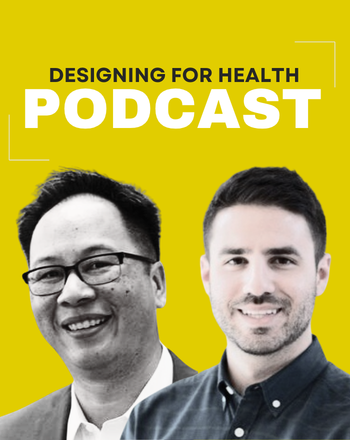
Identity management in healthcare is more complex and more critical than ever. As health systems grow through mergers, expand digital access, and serve diverse user groups, traditional approaches to identity verification are no longer sufficient.
In this episode, we explore how modern identity solutions are transforming both patient and provider experiences. From reducing friction in workflows to strengthening trust and security, the conversation highlights why identity is becoming foundational to care delivery and how health systems can approach it strategically.
The Designing for Health podcast is available on all major platforms including Apple Podcasts, Amazon Music, iHeart, Pandora, Spotify, and more.
Search for “In Network” and subscribe for updates. If you enjoy the episode, please leave a five-star rating and review.
Want to learn more from Dr. Joseph?
Order a copy of his book, Designing for Health.
SHOW NOTES
[00:00] Intros
[03:15] From Hollywood to Healthcare: Surprising Parallels
[08:10] Why Identity Management Is So Complex in Healthcare
[13:45] The Patient & Provider Experience Problem
[19:30] How CLEAR Is Reimagining Identity in Healthcare
[26:10] Balancing Security and Ease of Use
[33:42] Edmund and Alex’s favorite well designed items
[36:43] Outros
TRANSCRIPT
Intro:
Hello and welcome to the Designing for Health podcast. I’m Nordic’s Chief Medical Officer, Dr. Craig Joseph.
In this episode, we tackle one of healthcare’s least glamorous but most consequential problems: identity. Not the philosophical kind, but the very real, very messy challenge of knowing exactly who you’re dealing with: patients, clinicians, staff, and everyone in between.
I’m joined by Edmund Siy, CITO of Bon Secours Mercy Health, and Alex Krinsky from CLEAR to explore why identity management has quietly become foundational to both security and experience. We dig into why healthcare made this more difficult than it needed to be, what happens when you get it wrong, and how newer approaches like biometric identity aim to reduce friction without sacrificing security.
If you’re a health system or physician leader, this isn’t just an IT issue. It’s a workflow, safety, and burnout issue hiding in plain sight.
Let’s plug in.
Craig Joseph MD, FAAP, FAMIA:
So welcome to the podcast, Edmund Siy and Alex Krinsky. I’m excited about this conversation that we’re going to have today because it’s a little different than the normal episodes that we do. But before we get into the conversation, Edmund, why don’t we start with you? Where do we hear from you today? And, give us maybe a little bit of, background of, who you are, what you do, and how you got to this, this current job of yours.
Edmund Siy, CITO BSMH:
Sure. Thank you, Craig, for having me. I serve as the chief information and technology officer at Bon Secours Mercy Health. I’ve had this role for a year. I’ve spent the last dozen or so years in health care. And then the first 15 years of my career were in media and entertainment. So, we can talk movies as well if you like.
Craig Joseph MD, FAAP, FAMIA:
We’re going to talk about that.
Edmund Siy, CITO BSMH:
Absolutely. All right. And I am in, Bridgewater, New Jersey. So, Somerset County kind of Central Jersey.
Craig Joseph MD, FAAP, FAMIA:
Okay. And can you give us your actual address?
Edmund Siy, CITO BSMH:
CLEAR will protect me.
Craig Joseph MD, FAAP, FAMIA:
Let’s hear about something from CLEAR. Alex, you apparently worked for some company named CLEAR. Give it away.
Alex Krinsky, CLEAR:
I do, you find me in Orange County, although I’m typically based in New York City. I’m a proud New Yorker, and CLEAR is headquartered there. My background has been entirely in health care. I started with my tour of duty at Epic and Implementation Services, their focus on their outpatient clinical products, and really loved my time there and loved working with providers through epic that went into the digital health space, and worked at a few startups based in New York City.
I’ve been with CLEAR, three years now, entirely focused on how we bring CLEAR identity product from the airport into the health care market, and have been fortunate to work with some incredible partners like Nordic and like Bon Secours, that help us operationalize this with patients and with providers. And so, happy to delve further into that.
Craig Joseph MD, FAAP, FAMIA:
Oh, and we will all right. Edmund, you kind of you tease this a little bit about coming from the music and, kind of movie industry. So how did your work there, how does it compare to kind of being now in health care at Bon Secours Mercy Health? What’s the is there any difference between, being, kind of, a technical leader in the TV industry and health care or are they exactly the same? Is it just like the pit Edmund? Is it just like maybe.
Edmund Siy, CITO BSMH:
That’s how you know. So I think on one, from one perspective, the technology’s the same. We were an SAP shop, right? We’re an epic shop. And I think it’s these, these big sort of platform plays that, that, that was definitely very similar. I think on the surface, you, you assume the business, the business is different, but it’s actually very similar.
So when I was there, you know, we were the number one provider of primetime television shows, right? You looked at things in sort of in this episodic fashion. Can I get this show on CBS on NBC, on ABC, right. And so that it sounds and feels like kind of fee based care, right. The way, the way we’re in today.
Fast forward to today. We’re all splurging on Netflix or HBO Max watching The Pitt, Warner Brothers show, by the way. And if I think of the Netflix model, it’s, it’s value based care. So there actually are much they’re more parallels than you think. And so if I get stuck, I think of SAP and I think of being in that big room with all these, with all these creative execs who, who are a lot like our wonderful physicians. Right. Just, just trying to do this, this wonderful thing instead of creating content, taking care of patients.
Craig Joseph MD, FAAP, FAMIA:
Okay, I like that. So let’s set the stage, and talk about, what Alex kind of referenced a few minutes ago, identity management. And so from, from your perspective as the, as the, the CIO at a big healthcare system with lots of hospitals and clinics, how does identity management kind of how does it work at the at a typical organization in healthcare?
Craig Joseph MD, FAAP, FAMIA:
Like, I guess what I’m trying to do is say, like before we kind of delve down into what CLEAR does how does how did it work in the past? I just put in my username and password and you assumed it was me.
Edmund Siy, CITO BSMH:
Is that right? We should. I wish it was that easy. I think there’s probably a couple things at play. Healthcare is growing at this tremendous pace that that it probably is, is ahead of, you know, when we were growing, there was no such thing as this enterprise kind of identity management. Right. And so I think that’s part of it, you know, just hanging out with you and hanging out with other the other physicians.
I think I failed to realize how complex our business is. Right. Coming from media and entertainment, everyone’s an employee. Well, we have employee physicians, we have an independent physicians. We have these third parties that we work with, right, that say, help us, say imaging duality. So. Or what about students or residents or volunteers? I mean, this just this gets, there’s all these cohorts and then I think this, this display of sort of everyone’s been trying to grow, right, the mergers and acquisitions.
So then you’re inheriting from this organization, from that organization. And so I think you just get this very complex, wieldy kind of scenario that you’ve got to try to figure out, how can you make this easier for our patients, for our providers, for, for our associates? I think that’s, the hand worked out today.
Craig Joseph MD, FAAP, FAMIA:
Yeah. So it’s a I guess it’s more complicated than when I started practicing medicine, which was, 157 years ago, where, you know, I think I was just I had to get a password into one, one health, into one, you know, app basically to look up lab results. That was it. And now there’s so many things that we are automating that you’re responsible for from the health care system. And it’s not just the electronic health record. You have employees, as you’ve mentioned, and they have software that they need to interact with. And yeah. And so, I do get it.
Edmund Siy, CITO BSMH:
And, and throw in the fact that we are helping people at their most vulnerable. I mean, that’s the one that hits me. So then here we are trying to take care of them. And yeah. And then the provider needs to, you know, MFA is triggered or whatever. Right. We have to make this easy period or easier.
Craig Joseph MD, FAAP, FAMIA:
Yes. I mean, you could just get rid of all of the computers and then we can just. No, that would help. But it might not. I guess that should be a question for Alex. Alex, are you recommending we get rid of all the computers?
Alex Krinsky, CLEAR:
I want to go back to all faxing and all filing cabinets.
Craig Joseph MD, FAAP, FAMIA:
Okay? Okay. Before you were born, I love it.
Alex Krinsky, CLEAR:
No, no, no, absolutely not. But I think I think you both bring up really interesting points is CLEAR was evaluating, you know, its entrance into healthcare and going beyond the airport Edmund. To your point, a health system, a provider, a health plan, you manage the identity. Sometimes you may not think about it as identity, but you are interacting with so many different types of personas, whether that’s your employees, patients, visitors, vendors, and Craig, you brought up the great point that you, as a practicing physician, you want to be fully focused on providing care.
You don’t want to spend time remembering passwords, getting locked out, forgetting your badge and not being able to access your computer. It’s a macro enterprise challenge, but it also comes back to what’s the experience of that patient or provider and what identity looked like in healthcare previously was it was really fragmented. I think that’s a big part of it.
I think each of those individuals that Edmund named, they were verifying themselves through different means. Maybe they were getting asked the credit bureau questions about what street they lived on 20 years ago. Maybe they were receiving a phone call and asking to give their data and their social. Maybe they were signing a clipboard and not being verified at all.
And so I think as we move into the next phase of, you know, healthcare, it we’re going to find identity being foundational, really to enable providers like you both to provide good care and for patients to, you know, have a simple experience when they want to receive care.
Craig Joseph MD, FAAP, FAMIA:
So let’s actually talk about that experience. I, I think a lot of people know about CLEAR at the airport. And because they either they’re CLEAR members and they use CLEAR when they go to the airport or that they’ve seen it and are upset when people who got there later than them through security earlier than they are. I’ve been on both sides of this equation.
Alex Krinsky, CLEAR:
You you’re like, how I was going to admit that you remember.
Edmund Siy, CITO BSMH:
I am not a CLEAR member.
Alex Krinsky, CLEAR:
Okay, well, we’re going to have to.
Craig Joseph MD, FAAP, FAMIA:
Well, we’re going to have.
Edmund Siy, CITO BSMH:
All right. But to your point, though, Alex, I’m TSA, I do the visual check for the TSA and it is a completely different experience. Right. And even when they when we had all those lines a couple weeks ago that that was. So I can only imagine your world being even faster and more consistent.
Alex Krinsky, CLEAR:
And we work, you know, really closely in partnership with the TSA in the airports. And we are we are thrilled to see the technology evolving across the board, you know, CLEAR ones, travelers across the United States to have a simpler time getting through the checkpoint. And so to your point that the new TSA offerings are really great for consumers as well.
Edmund Siy, CITO BSMH:
Yeah. Though, Alex, you know, when I filed my return, my, they did ask. They did. My CPA does use CLEAR. So it did. I did have to authenticate. So. Well yes.
Craig Joseph MD, FAAP, FAMIA:
You’re in Edmund. And so Alex, let’s kind of talk about that. You had mentioned how when CLEAR was kind of looking into health care. And obviously you’ve made that move and you’ve got a health care background from, you know, that working in technology, working for epic, a big electronic health record vendor. So how does, how, how does CLEAR kind of work in the, in the health care space. So if I’m a pharma patient, how does how will I be interacting potentially with CLEAR. And I kind of I guess what I’m looking for is without AD and with like, you know, what’s the what’s the experience like, how do I identify, how do I make sure that my patient is who they say they are without some of this technology? And then with some of the newer technology?
Alex Krinsky, CLEAR:
Yeah, it’s actually a really interesting story. When CLEAR’s co-founders CLEAR out of bankruptcy in 2010, you know, in the initial investor letter, you know, it was it was starting with airports, but they saw a really big opportunity for biometric identity verification. You know, across your day to day, they’re you’re interacting with financial services or your health care provider.
And so we started in the airports, but it’s always been about going beyond airports. And what we found in healthcare especially is that it’s really similar to, you know, a highly regulated, zero fail airport environment in that you want to balance best in class security with a good, simple consumer experience. You want consumers to trust you. You want consumers to be happy.
And so as we’ve expanded into health care, it’s been with a product called CLEAR One, which is a secure identity platform. And what it does is it allows a patient and or provider to verify their identity from a mobile device with, a selfie. It can be that simple. And we have 38 million verified identities on our network.
And so once you’re verified. So Edmund, since you verified when you present at Bon Secours Mercy Health to create a MyChart account, it can be as simple as using a selfie to do so. And so, to your point, Craig, what are we replacing? You know, for patients, we’re replacing the clipboard. We’re replacing all of those screens where you have to type in your demographic data, fill out the Captcha where it like asks you which square the bicycle is in, and you can’t ever tell if it’s actually a bicycle.
The knowledge based, authentic authentication questions based on your credit history, which is very insecure at this point, unfortunately. And so all of that gets eliminated. And with CLEAR you enter some information, you take a selfie and then you can reuse it. And it’s the same for providers as well.
Craig Joseph MD, FAAP, FAMIA:
And so either on the provider side, whether I’m a doctor or nurse, when would I be doing this. Because already I’ve got an ID tag and I’d when would I be kind of interacting with identity management, whether it’s CLEAR or anything else.
Alex Krinsky, CLEAR:
Yeah. So, you know, it kind of starts with onboarding. So the joint Commission actually has kind of processes around how you onboard practitioner is how you verify their identity when they join your organization. I think the use case that’s really become critical over the past several years is account recovery or password resets. This is where organizations are extremely vulnerable.
This is this simple social engineering scam where someone calls Bon Secours Mercy Health says I’m Doctor Krinsky, has some PII or some data about them, and is able to reset a password and get into the system. It’s really simple but unfortunately very effective. And so where a lot of our customers start is enabling CLEAR in those workflows, so that when Doctor Krinsky is requesting access to patient data, they can really know and really know that individual at the device was Doctor Krinsky in that moment. So that’s been a big differentiator for our, our health care partners.
Craig Joseph MD, FAAP, FAMIA:
And so Edmund, I know Bon Secours just starting down this path with was CLEAR. Were some of these the problems that you were trying to solve? Why are you going down this path?
Edmund Siy, CITO BSMH:
I guess we are in the care ministry, right? That’s our that’s our lot in life. And Alex actually said something that was that I can completely align to. But trust is everything right. These as I mentioned earlier, these patients are entrusting us at their most vulnerable. And really they’re only asking us for a couple of things, right to know them, to guide them and ultimately care for them.
That’s what they’re asking for. And so to do that right, to do that in a compassionate way, trust has to be there. And I think you can take that in in every process that Alex just defined. That’s what really drove this. Yes. Like most help desk, we’re getting those calls that Alex described. But I think it’s more than that. This is not just a capability. This is a new way of thinking that that’s how we’ve embraced it.
Craig Joseph MD, FAAP, FAMIA:
Okay. So and what I think I might know the answer, but what happens if you get it wrong.
Edmund Siy, CITO BSMH:
Yeah. Yeah. No, I mean, I think, you know, three of us could spend, probably hours on regulatory. Financial. Right. Reputation. I think I’ll button it down to that patient. Right. I mean, again, I’ll go back to. I’ll go back to what Alex said. Trust. They are entrusting us if we get it wrong. We’re breaking that trust. That is, in my mind, unacceptable. We can’t do that.
Craig Joseph MD, FAAP, FAMIA:
Okay. All right. That’s a, I, I will accept that answer. Edmund. So kind of getting down to how you design these systems, oftentimes it’s do you want security or do you want, you know, lack of friction. It in the past it’s kind of been like you can’t have both of those. If you want it to be easy, then it’s a little less secure.
And if you want high security, then people have to give you their fingerprints and, you know, take a DNA swab before they can prescribe controlled substances. It seems like. How do you and I guess. Is this a question? We’ll start with Alex. Like, you know, how do you find that sweet spot between making it as friction free as possible, yet maintaining the security so that you can maintain the trust of the patients?
Alex Krinsky, CLEAR:
Yeah. I mean, this is what CLEAR obsesses over day to day. And I think what we are, you know, working with partners to bring into the market is a simple consumer experience, something that you would expect in any retail environment or any, you know, people always, you know, talked about the Amazon shopping experience. Simple, easy. You trust it. But best in class security.
So from a security perspective, CLEAR is certified at nest aisle too. And essentially what that means is in real time, we are verifying multiple pieces of evidence. And just to give an example of how we’ve evolved here, you know, historically that evidence could be, you know, uploading documents, uploading bills, uploading statements, things that, you know, take time, minutes, hours.
What we have built is, you know, a real time product where, you know, for a new user to go through a first time flow, it can take a minute. And in that minute, we are combining a biometric, a selfie with their government ID, and then the special sauce is we compare that data from the government ID to other authoritative databases.
And when you string all of that together and layer and different fraud signals, it becomes very challenging and very costly for bad actors to defeat. And so to say it more concisely, it’s that it’s that L2 level of security. But it’s simple for the end user, and they don’t have to be prompted to be a part of all of the, you know, hard work and collaboration that’s going on in the background.
And I think and you brought up a really good point that, you know, I wanted to also highlight is this doesn’t work if people don’t use it. And that also comes back to trust. And so it’s CLEAR whether it’s for a provider or for a patient. It’s opt in. You consent every single time you use CLEAR. And I think as we’ve moved from the airport to health care, that’s been absolutely critical.
Making sure that, you know, a patient understands what they’re going through, why, and can consent to share information with their provider.
Craig Joseph MD, FAAP, FAMIA:
Yeah, that that’s, you know, finding that kind of that sweet spot and making sure that the folks that are using the service understand what the alternatives are. Right. You don’t have to use CLEAR in this instance. There are going to be other ways, but oftentimes they can be a little more onerous. Right. Because you were able to take away some of the friction by, having access to these incredible databases that, like you said, it makes it very difficult and costly for bad actors to, fake it if it’s even possible, they’re going to have to do a lot of work.
Edmund Siy, CITO BSMH:
It’s powerful. Oh, sorry. I say, you know, as powerful as that, that trust. Right. That begets the partnership. Right. And so you can so that it can partner with providers to make this. I love what you said. Easy. Yeah. Secure. And I think you can’t have it. You can have both. Great. I think whether it’s a Hollywood script that I’m going to write or the reality of, hospitals and clinics today, you can have it both. In fact, we should strive for both. It’s like that that airplane. We can do it.
Craig Joseph MD, FAAP, FAMIA:
Yeah. Well it’s yes for sure I it’s funny that you mentioned, you know, with that with the airplane, you know, we’ve, we’ve been focused, I think, in health care a lot. And up until recently it’s been almost just like a laser focused on the patient experience. But now we’re also need to focus and acknowledge that it’s not just the patients, it’s the people who take care of them, from the doctors and nurses to the folks that check them in to to the, you know, every one of those thousands and thousands of employees for a big health care system.
And reminds me of just when because I’m I tend to be I think like Alex, we’re on planes a lot. And every time I get on a plane, I, you know, you hear the same thing, but your own oxygen. If the oxygen mask falls, hopefully it won’t. But if it does, make sure to put yours on before you put that on of someone else, because you’re not going to be able to help them.
And I think that’s true. We’ve seen so much burnout with clinicians. And sometimes that burnout is from exogenous events that we can’t control. For instance. Oh, I don’t know, a pandemic, we can’t do much about that. But if we’re making it difficult to, to write a prescription or to, you know, get information, all these little tiny 1 to 2 second delays, I really do add up.
Craig Joseph MD, FAAP, FAMIA:
And so it’s I’m assuming it’s incumbent upon CIOs and others who are in the health care space to look not only at the patient, but also how their employees are, are dealing with some of these stressors.
Edmund Siy, CITO BSMH:
Yeah. You brought up the pit earlier. I do think the power of the pit, in fact, before the last season finale, they had a they had special screenings for providers. And I think that’s why the show has been so successful, because providers see this and caregivers go, oh, that’s me. That’s what’s happening to me. And so it resonates. Right. And so I agree with you that that we that that’s a that’s a challenge for us, for our industry.
Alex Krinsky, CLEAR:
I have a confession to make. I haven’t seen The Pit, but it sounds like I have some homework to do.
Craig Joseph MD, FAAP, FAMIA:
I don’t even know if we can carry on. So I’ll say this, Alex, like, when I first started, when I watched it, when it first came out, I watched it and I couldn’t get. But I got frustrated on behalf of the of the characters, I think, that I couldn’t watch it like, it just I got it. It made me anxious and irritated. And so it did have to sit with me for many months before I went back and started watching it again. And it was like, oh, it’s a TV show. Oh, it’s you. Okay. That should it stirs that.
Edmund Siy, CITO BSMH:
It stirs that emotion. When again, I don’t want to give away any plot lines, but there’s a, there’s a, there’s a cyber event. I was jumping up and down at home telling my family that’s what we do, right? I mean, to actually see it on TV. You need to watch it.
Alex Krinsky, CLEAR:
Everyone that enters, you know, goes into the health care industry. It sounds like I, I feel like when I started at epic, my, you know, dad as a practicing physician. So I came from a baseline of hearing about in the day to day, being empathetic to how he interacted with his air and or wanted to not interact with his air. I felt like that really informed kind of my day to day. It sounds like this is a good new, calibration to understand what’s going on in the day to day of providers.
Edmund Siy, CITO BSMH:
Yes, Craig and I are going to take you to the Warner Brothers lot so you can see it. That’s all we’re going to do.
Craig Joseph MD, FAAP, FAMIA:
Oh, yeah. Yes. I will take you there, Alex. Having never been there, but, let’s go. Like, this is a madman. We’ve got this on tape obviously, and video. So now you have to do it. All right. Well, well, yeah. So the pit is it is an interesting I think, you know, they put what happens in the emergency department in, you know, one in 1 or 2 years and it gets scrunched down to six hours.
And so it’s not realistic from that standpoint. But, I think each individual piece is, accurate. All right. Edmund question for you, a lot of it or a lot of health care, it actually has a has a reputation of kind of buying some technology and bolting it on and you know, makes it for like, well first you have to go here and then you have to go there, you know, how do you think about kind of designing systems.
And in this case we’re talking about identity verification, but it doesn’t really matter. We could talk about lots of other things where it’s part of the workflow. It’s not a it’s not a detour from the workflow.
Edmund Siy, CITO BSMH:
Sure, sure. I you are right. We are enamored by that shiny object, by that, by that deal of the century that expires at the end of the month or the end of the year. Right. And, and I think, I think it you have to go back to why we’re in this wonderful, care ministry. And so I would go down to it’s the it’s the process.
Right. Really working closely with all the caregivers to really understand the process, to understand the pain points. And ultimately to make their lives easier. I think you have to start with that baseline. And, and, and as you do that, the capabilities, the tech, whatever it is that you’re putting in because not all the solutions may be sort of tech enabled.
I mean, I probably in these in this in this day and age, that’s probably less likely. But it’s really just making their lives simpler. So I think it’s that focus on processing people. You double down on that and really try to find the meaning and the purpose and really maybe ultimately the, the root cause. Right. We got to solve the problem.
Craig Joseph MD, FAAP, FAMIA:
Yeah. No, I love that. I’m sorry. Go ahead. Alex.
Alex Krinsky, CLEAR:
No, I mean, I was just curious, you know, being on the other side of the equation, I see so many digital health offerings and so many organizations that are bringing solutions to provider groups in your seed. How do you how do you evaluate, you know, and it’s like someone selling what are you looking for when you when you go to your team, what are the proof points or things? The questions you ask?
Edmund Siy, CITO BSMH:
Integration. Integration and integration. That that’s the way I would answer. I think, yes, it has to be secure, right? Yes. It has to, to work in that given, you know, whatever, whatever it’s trying to solve. But we’re, we’re looking for this, this end-to-end kind of way to support our caregivers, to, to give the best care that they can.
And so if it’s disjointed, if it’s difficult, that’s the biggest friction point, right? We have to help Craig and his colleagues to be able to give the best care that that that to me that’s paramount. And if we do that, the rest of it kind of just falls in place.
Craig Joseph MD, FAAP, FAMIA:
Alex, first of all, I’m a little irritated that you’re asking questions like, that’s going to.
Alex Krinsky, CLEAR:
Ask if I’m allowed to ask questions.
Craig Joseph MD, FAAP, FAMIA:
And had you asked that question, the answer would have been no. But. And you didn’t and you did. I’m going to throw that a similar question right back at you. Is that that, you know, you you’re in your jobs and past and current. You know, you’ve worked across and seen many EHR vendors and big healthcare systems and smaller healthcare systems and some that are more technically mature than others.
What the. I’ll throw that question back to you. What separates kind of implementations that work that stick versus ones that stall or are completed? But when you go back a year from now, people are like, nah, that we don’t really do that anymore. What’s the what’s the secret sauce? We heard you certainly need to be an integrated system and, understand where data is flowing. But is there is there an easy answer? I suspect there’s not. But I’d love for you to tell us what it is. If it exists.
Alex Krinsky, CLEAR:
Yeah, I think from my time at epic and I was at Flatiron Health where we, I led implementation for an oncology specific EHR, and I think the first thing I would say is turning on any new technology within a provider environment is really challenging, not just the technical lift, but change management is so important. And, you know, Edmund, to your point, whether it’s something new for a provider or for a patient, it’s so critical that they understand it, they trust it, and you’re able and they use it, right.
They adopt it. I think a CLEAR two things have stood out that you know, I think we’ve done well. One is just to echo Edmund. You know, we listen to our health system partners. It was you know, there were some obvious patterns of the systems they use. Right. So epic, Microsoft, Okta, ping, workday. And so we’ve invested a lot in limiting the technical lift for those, those, systems and building integrations that are relatively simple to turn on.
I think the other part and that has been, exciting to watch a CLEAR is really empowering customers to just understand the steps they need to take. I feel like in previous, lives I’ve lived in implementation, it was a lot of a lot of meetings, a lot of hand-holding. And I think it CLEAR we’re able to really effectively lay out how the software works and what decisions would need to be made.
And then little things like what language is helpful. How do you explain selfie based identity verification to, you know, a 67 year old patient, which is different than a 33 year old patient. And so we help with that as well and provide examples that they can use. And, you know, all of that comes together with, you know, resourcing on the on the partner side to make sure it’s rolled out effectively.
Craig Joseph MD, FAAP, FAMIA:
Yeah, I, I love that it reminds me of, a story I read about yonder, the, the yonder bag or pouch that schools and some theaters have used concert halls where they, you know, kind of make you put your phone away so that you can focus on the experience. And, and in schools, they found to your point that it’s not the it’s not the technology.
In this case, it’s a bag. But that’s not what’s you know, the difference maker. It’s how is it implemented. What kind of change management were the parents in case of students? Were the parents involved as well as the students? And you know, it’s that kind of big, that big picture. All right. We’re close to running out of time.
Edmund, I wanted to throw a question to you. About what? Would someone in your shoes, health system leader, or maybe a technology leader? Maybe an operations leader who wants to modernize their identity verification. You know, where do you recommend they start? Or what should they be thinking about?
Edmund Siy, CITO BSMH:
Oh, I love this question. I, I would, I would tell them to go around round with the nurses round on a Friday night in the ER, which I’ve gotten to do a couple times round at the clinics, round with the specialists. I think it’ll give you this, this wide spectrum of not only, I don’t want to call it challenges.
The opportunities to, to really make a difference. I think the fact that you premise the question with a health system leader there, there is I’m, I am biased. There’s no nobler profession at then and health care and the fact that we get to use this, this awesome tech to make a difference, I think, again, I would start with rounding.
I would end with rounding. Rounding is it’s profound experience. So I think, Craig, you need to take Alex and I rounding. That’ll be your take away.
Craig Joseph MD, FAAP, FAMIA:
All right. That’s easy. I got the easy job, I think. All right. Well, I think that is I think that is good advice. Kind of making sure that you understand where the end users, in this case, the doctors and the nurses and the technologists are, you know, seeing their understanding the life that they’re leading day to day does is a good first step for everything.
All right. Well, we are run. We have run out of time. I have one last question. I always ask the same question. So Alex, let me ask this question of you first. What is something that’s so well designed that it brings you joy or happiness whenever you interact with it? And don’t say the CLEAR app like that’s not.
Alex Krinsky, CLEAR:
So I was going to talk about spoiler Craig. Craig told us he was going to ask this question. I was going to talk about my water pitcher, but I heard that was too boring. So I’m going to talk about my favorite watch. I’ve gotten very into watches also. Craig, I know that at the on the Nordic team, you have a lot of practical, interests there that a lot of people on the Nordic side that love you.
Craig Joseph MD, FAAP, FAMIA:
That is accurate. Yes, that is accurate.
Alex Krinsky, CLEAR:
My, my, for my wedding, my wife as a gift got me a grand Seiko with a spring drive. And the spring drive I’m going to be. I’m a half expert on this, but, you know, in the world of mechanical watches, you know, the reason people love these watches is because they have these movements that are handmade and accurate.
Apple watches are more accurate, but they love mechanical watches. Grand Seiko has a technology called a spring drive, which is still a mainspring. So a mechanical movement, but it has, some quartz elements. And basically the result is the second hand moves smoothly around the dial. It doesn’t tick. And it’s so beautiful. And every time I put on the watch I look at it.
And I love looking at it. So maybe it’s because I got married in it that I love it, but maybe it’s because of the spring drive. So I wanted to give a shout out to Grand Seiko.
Craig Joseph MD, FAAP, FAMIA:
That that was. That’s a good answer. And I if your wife happens to be listening, you know you’re going to get extra credit for that before you admit. Now that’s we’ve raised the bar for you.
Edmund Siy, CITO BSMH:
He is. Yeah. He he’s going to beat me okay. Because it’s funny I, I went I started thinking about tech. I’m, I’m a big Apple Watch guy. I’ve got an EV. I love those two. And and I and I’m very planful. That’s my other favorite word. Very planful. So my answer is going to be a little different in that, you know, my family’s really tight, super tight.
We do a lot of things together. We enjoy doing things together. And you ask, the joy part is what pushed me to respond with my family. Because no matter how planful I am or no matter wherever we decide some cool location, it’s actually irrelevant. It’s the joy that those plans fall apart. This thing is closed. It’s raining.
We still have a wonderful time. So I think my answer is going to be this, this, this construct of this thing we call family. And community. That’s what brings me joy.
Alex Krinsky, CLEAR:
Edmund, that’s such a better answer than me. Yeah.
Craig Joseph MD, FAAP, FAMIA:
I feel like Alex needs to reconsider now.
Alex Krinsky, CLEAR:
All of my priorities.
Edmund Siy, CITO BSMH:
You guys are much too kind to me. I guess I’m a little taller than both of you.
Craig Joseph MD, FAAP, FAMIA:
That’s, on behalf of Alex, I have to say that’s not an item. That’s not that impressive. All right, well, Alex Krinsky, and Edmund Siy thank you so much. This was a great conversation, and we ended on a high note, so we should just leave it there. Thank you, guys. Really appreciate it.
Alex Krinsky, CLEAR:
Thank you, Craig thank, you Edmund.
Edmund Siy, CITO BSMH:
Thank you.
Alex Krinsky, CLEAR:
Great to be here.
Outro:
Thanks for tuning in. We hope you enjoyed today’s episode. For more on Edmund and Alex, follow them on LinkedIn.
Check back for more episodes of Designing for Health wherever you listen to podcasts or on NordicGlobal.com. We’ll see you again next time on Designing for Health.
LinkedIn and other web links:
https://www.linkedin.com/in/edmundsiy/