

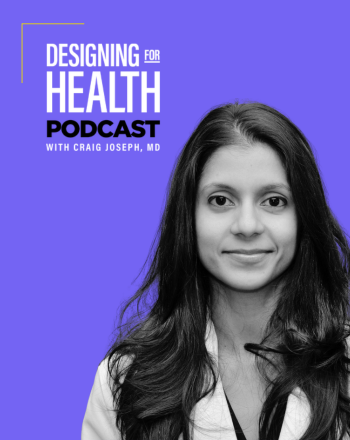
On this episode of Designing for Health, Nordic’s Chief Medical Officer, Craig Joseph, MD, sits down with Carla Haack, MD, VP of Financial Informatics and Perioperative Informatics at Emory, to explore a role that bridges clinical care, healthcare finance, operations, and technology. Together, they discuss how denials, prior authorizations, reimbursement processes, and electronic medical record workflows impact both clinicians and patients.
Dr. Haack also shares her unexpected journey from surgeon to healthcare innovator, offering practical insights into breaking down organizational silos, improving revenue cycle processes, and designing technology that reduces friction across the care continuum. From denials management and revenue cycle optimization to EMR implementation lessons and clinician well-being, Dr. Haack explains how thoughtful process and technology design can alleviate suffering far beyond the bedside.
The Designing for Health podcast is available on all major platforms including Apple Podcasts, Amazon Music, iHeart, Pandora, Spotify, and more.
Subscribe for updates. If you enjoy the episode, please leave a five-star rating and review.
Want to learn more from Craig Joseph, MD?
Order a copy of his book, Designing for Health.
SHOW NOTES
[00:00] Intros
[02:30] From Future Surgeon to Informatics Leader
[04:38] The Pandemic’s Impact
[06:17] Understanding Documentation, DRGs, and Reimbursement
[15:14] Prior Authorizations and Revenue Cycle Frustrations
[17:13] Cracking the CPT Code Mismatch Problem
[24:26] Breaking Down Silos Across the Care Continuum
[37:30] Translating Between Clinical and Administrative Teams
[41:05] Carla’s favorite well-designed thing
[42:18] Outros
TRANSCRIPT
Intro:
Hello and welcome to Designing for Health. I’m Nordic’s Chief Medical Officer Dr. Craig Joseph. In this episode, I sit down with Doctor Carla Haack, arguably the only chief financial informatics officer you’re likely to meet, to explore the surprisingly important intersection of clinical care, revenue cycle operations and technology. Drawing on her journey from surgeon to health system executive, Carla explains why so many healthcare organizations lose revenue despite doing the right thing, and why financial workflows deserve the same attention as clinical workflows.
For healthcare system leaders and physician executives, this conversation offers a practical look at breaking down organizational silos, improving operational efficiency, reducing denials and prior authorization headaches, and designing technology that makes the right thing easier to do. It’s a reminder that improving the health care experience often has less to do with asking clinicians to work harder, and more to do with fixing the systems around them.
Let’s plug in.
Craig Joseph MD, FAAP, FAMIA:
Doctor Carla Haack. How are you today?
Carla Haack, MD:
I am doing very well and I am very grateful to be here. Doctor Joseph.
Craig Joseph MD, FAAP, FAMIA:
I am so excited. Normally people only call me now. Doctor Joseph, I’m not seeing patients now. They call me that when I’m in trouble. So I’m a little…
Carla Haack, MD:
You are not in trouble with me.
Craig Joseph MD, FAAP, FAMIA:
Phew. All right. Thank you. Where do we find you today? Our work. Part of. I think you’re in the United States.
Carla Haack, MD:
I am in Atlanta, at Emory, where I have been since medical school.
Craig Joseph MD, FAAP, FAMIA:
Okay, so you are a stalwart Emory person.
Carla Haack, MD:
Yes, I have been here my whole career. It’s the only place I’ve ever had a real job after school.
Craig Joseph MD, FAAP, FAMIA:
Okay. All right. That’s excellent. And your job is, I believe now your title is chief financial informatics officer.
Carla Haack, MD:
That’s correct.
Craig Joseph MD, FAAP, FAMIA:
And of all the chief financial informatics officers I’ve ever spoken to, you are the only one. So that’s that. You are one of one. So, I.
Carla Haack, MD:
Believe that’s accurate in the current state. Hopefully we can change that.
Craig Joseph MD, FAAP, FAMIA:
Well let’s talk about that. So it sounds like to me that when you were in kindergarten, you said, I want to grow up to be a chief financial informatics officer at a major academic center, which was weird for a five year old to say in kindergarten. But being that about right, or is that did I get that wrong?
Carla Haack, MD:
I think that at the time, maybe the words I was thinking was, I would like to help people feel better, but sure. I mean, you can translate that into I’d like to be a chief financial informatics officer at a major academic center, because at the end of the day, it’s hopefully doing the same thing.
Craig Joseph MD, FAAP, FAMIA:
I love it. All right. So why don’t since that’s probably my the first inaccurate statement I’ve said today. And there will be many let’s be clear, there will be many. Why don’t you tell us the real story? So you clearly we know you went to medical school because you told us that you did. And did you go to medical school? What kind of doctor did you think you were going to be?
Carla Haack, MD:
That’s a really interesting question, actually. How much time do you have? So no, trying to keep it. Keep it tidy. I’ll say that I, I wanted to I got into this business to alleviate suffering. Going into medical school, I thought I wanted to be a surgeon because I’m crafty. I like working with my hands. But I also had been told that I would know when I rotated and it would be impossible to know before I rotated.
Craig Joseph MD, FAAP, FAMIA:
And okay.
Carla Haack, MD:
I had been told to stay differentiated for as long as possible, and I started my clinical rotations, and the very first time I walked into an operating room, I knew I was like, oh yeah, this is it for me now. I didn’t know what kind of surgeon I wanted to be, aside from a good one. I was very clear to me in medical school that I wanted to be a surgeon, and there was no other type of doctor that I wanted to be because I loved working with my hands, and I’m not very patient.
So sort of being able to get in there, make a change and then figure out whether it worked relatively quickly or not, I think was something that attracted me, as opposed to putting somebody on a medication and then waiting until their next appointment to figure out whether it was helping or not. That’s kind of how surgery happened. And then was going about my career, minding my own business, doing the surgery thing and finding great existential satisfaction therein.
And pandemic happened. We received the message that the finances looked bad and that we needed to work harder. And having worked pretty hard throughout the pandemic, I felt like there was something to be understood for me in that space. And that then led to a series of events where I ended up getting very involved in denials, which is work that we’ve already done that we fail to get paid for as a result of some thing happening in the process, and better understanding what was going wrong and designing solutions for what was going wrong felt like a very powerful way to help my organization and help all of my friends who are frontline, patient facing clinicians who are working very hard and making personal sacrifices to take care of other people because we find existential satisfaction and privilege in serving and alleviating the suffering of others, and felt like it would be important to ensure that that work is recognized with the greatest level of integrity possible.
Craig Joseph MD, FAAP, FAMIA:
Seems like a lot more work than just seeing doing an extra case once a week. That would have been a little bit easier for you, but probably would not have solved this bigger problem to walk me down. This this is this is fascinating. I once met when I was in my in my practicing career, I met a physician who was working part time for a big hospital system nearby, and he was going around. This is back in paper charts. He was walking around just and I noticed him walking around and asked him what he was doing and told me. And then I kind of followed him and learned from him. He said, oh, I’m helping the hospital with Dr. James. And I said, I’m like, oh, I’ve heard of that. And a DRG is kind of a grouping for those who don’t know of described. What’s the main reason a patient came into the hospital, and you can’t determine it until they leave the hospital. And then that is the way the hospital, not the doctors and surgeons, but the hospital gets paid based on that DRG. Hey, you’re in this bucket, we’re giving you that much money and you’re in that bucket. We’re going to give you that much money.
We don’t really care how much money you spent on delivering this care, or how long the patient was in the hospital for. We’re just going to give you that because that’s what we agreed on. And I said, so what does that mean? You’re helping? And he said, well, you know, I walk around and I look for things that seem to be happening that everyone knows is happening, but it’s not in the in the progress note, and if it’s not in the note means it can’t be coded. And if it can’t be coded, it can’t go towards the determination of what the DRG was. And, you know, one example was this is actually a more clear cut example that I once helped with the same hospital when I started kind of doing some of his work or similar work is, hey doctor, would you look at this? I’m a pediatrician.
Would you look at this patient who was a baby who got put on nystatin in the middle of the night, an antifungal oral solution. Can you just tell us if the baby had thrush? And now, of course, the baby had thrush, I could already. Why else would someone start nystatin on a on a newborn? Just. And, you know, it’s swabbed in the inner cheek of the baby’s mouth. It’s of course, that. But this doctor didn’t write that down. So what had happened was he had gotten called in the middle of the night, ordered, give a verbal order for some nice statin, and then sent the patient home. And so I looked and of course, it’s documented by the nurses that the patient had this, but the doctor had documented it had just done.
So I said, well, yes, of course this patient does have thrush. It doesn’t matter what I think. But now that kind of gives permission for the hospital to go back to the doctor and say, hey, looks like we maybe thought this patient had thrush. How come you didn’t document it? Can you document a force? But I said, why? Why does it matter? It’s thrush. It’s thrush. It’s a very. And one of the hospital people looked at me kind of like, aren’t you sweet. There’s pro. That’s what I was going to say. This was in the Midwest. So we didn’t do bless your heart. But it was it was the long of the lines of bless your heart.
And she said, yeah, actually, that takes it. The fact that this baby has thrush, which is one of the most minor, inconsequential diagnoses that one could have. It’s certainly not going to do anything to keep this baby in the hospital, or to significantly change the amount of money the hospital is going to spend. However, that diagnosis moved the baby from normal newborn to not normal newborn, which like, doubled the amount of money that the hospital was going to be reimbursed for that baby’s care. Right? Sometimes the hospital wins. That was a win, sometimes they lose. They spend more money than they actually are able to charge for. But that that was an eye opener for me. And it sounds like you had a kind of a similar eye opener when you were told, hey, money’s tight, we need you guys to do more operations or figure out how to how to do better. So like, walk me through that. Like, when did you get to see behind the curtain? Did the people behind the curtain like having you there, or were you an outsider that needed to stick to your own? Just get back in that operating room and operate on a patient.
Carla Haack, MD:
Great question. I would say a couple different things. Number one, part of what you’re getting at in your example and part of what we’re going to talk about is the fact that most patient facing clinically trained people have not been well educated in the structure and function of the health care system. Therefore, we know all about thrush. We get extensively educated about thrush. We get extensively educated on the side effects of nystatin, but we don’t really get a whole lot of education that helps us understand why the hospital needs the chart to say thrush and what that does the way that you had that a ha moment. So I think that’s a really unfortunate and impactful disconnect because you got a lot of really smart, highly trained people working really hard and doing a lot of work to provide high quality care.
And we have this incredibly complicated system around how we’re going to classify and reimburse that, which I think is sort of the crux of the problem. So for me, I was I first dipped my toe into the business side of the health care system back in 2015, when I became the medical director for care coordination at my hospital, which is a role also known as the Physician Advisor for Utilization Review. And that opened my eyes to the different flavors of denials and how it is that the words that we do or don’t put in the chart have bearing on our ability to get recognized for all the things that we did. And on the one hand, it’s painful for clinicians. On the other hand, I kind of understand how it’s a necessary evil, because how are you going to actually tell somebody all the stuff that you did, and how are they going to know what to reimburse?
That’s a fundamental question that needs to be addressed in healthcare. And I think this is sort of what we’ve ended up with. In that particular instance, I was helping with status and denials. So if we said a patient is an inpatient, and this is an example of how it is that this system makes things really confusing.
Craig Joseph MD, FAAP, FAMIA:
Yes.
Carla Haack, MD:
For most of us that are clinical, if this patient is going to spend the night in this bed in my hospital, they’re an inpatient.
Craig Joseph MD, FAAP, FAMIA:
Is that not the case. Are we not done.
Carla Haack, MD:
Oh no we are not done okay. We are not done. Because sometimes the patient’s here for a little bit while we figure out how bad they are or not. And that’s what we’ve decided to call observation. And then it gets even more interesting when somebody comes in to have a thing done that somebody has decided does not belong on a list of things that shall always be inpatient. And so we have this interesting set of procedures where patients going to come in, they’re going to have to have something done, we’re going to have to watch them. But they don’t really actually qualify for inpatient according to a definition that we’ve established and that some have agreed upon. And that definition for CMS is the patient’s going to be here for something that means they need to be here for more than two midnights.
But that’s been an interesting definition. And so at the end of the day, we need to figure out whether or not this person meets the criteria for being a true inpatient, which means you get paid a certain way or we’re still figuring them out, which means you get paid a different way. They’re coming in to have a procedure and they’re just going to spend the night, and then they’re going to come go home, which actually is another bucket of patients, which we are now calling extended recovery. So getting involved in that conversation, understanding the rules that would make somebody an inpatient versus the criteria that would qualify them for a different level of care was an eye opener for me in the sense that, oh, if they’re spending the night, they’re not inpatient. And most of us do not understand the nuances.
Craig Joseph MD, FAAP, FAMIA:
Indeed.
Carla Haack, MD:
And most of us don’t want to try to understand the nuances.
Craig Joseph MD, FAAP, FAMIA:
Indeed.
Carla Haack, MD:
Burden of trying to understand those nuances and understand everything that’s going on clinically with everybody on your service and making sure that you’ve addressed their questions, their families questions, your learners questions, etc. is a heavy burden to put on one relatively small group of people as bright as and hardworking as they may be. So that felt like a first foray into helping to take care of my colleagues, because if I could actually have those peer to peer conversations on their behalf, if somebody was protecting part of my time so that I could have those conversations with those insurance companies, well, then that’s time that my colleagues don’t need to take away from being at their patients bedside or eating, you know, going to the bathroom, meeting with their families, whatever it is that they had to do in their lives. That was something that I could do for them. That then led me to start learning more about the revenue cycle and the business side of medicine, and how we got paid or didn’t get paid.
And then during the pandemic, like many people lost many loved ones, my dad and both of my in-laws died within about six months of each other, and none of them were living in Atlanta, where I was working and going to the operating room. As a result, I needed to take a big step back from my clinical responsibilities so that I could show up for my family where they were. And I had a lot of guilt and shame about not being in the operating room, because that’s where I was indoctrinated to believe that I was contributing to society.
Craig Joseph MD, FAAP, FAMIA:
Sure.
Carla Haack, MD:
Sort of in the spirit of dealing with that guilt and shame, trying to understand what it is that I can do to add value even if I’m not in the operating room or at the bedside. And that was when I started showing up to revenue cycle process improvement meetings that were happening during clinical prime time. And as a surgeon, our prior authorizations had long been a thorn in my side, because there are a few things more frustrating for a busy surgeon than learning at 5:00 that my first case for tomorrow isn’t preserved, and I need to be the one to call the patient to let them know.
Despite the fact that I booked this case six weeks ago and they’ve taken time out of their lives, and their loved ones have taken time out of their lives. And that’s just not a great experience for any party involved in that situation. And I wanted to make that better. So I got really involved with the value stream analysis, and I learned that our team consisted of talented, passionate individuals who wanted very badly to do the right thing for all parties involved, but didn’t have a great process or great tools to provide that high level of service that we were all hoping for. That was an eye opener, and we started talking about all of the times that it didn’t work right. When we got denied what was afoot, what happened, what went wrong. And there was a bucket of denials called CPT code mismatch denials, where the CPT code that we authorized was not the same CPT code that we put on the claim. Now, this is not a situation where we didn’t have enough. We had an oath for something. It just wasn’t the same thing that we ended up trying to bill for.
Craig Joseph MD, FAAP, FAMIA:
All right. Let me let me stop you there because you’re throwing these terms out that I know what you’re saying, but I shouldn’t as a human. I should not know what you’re saying. But unfortunately, I do know what you’re saying. So CPT is a is a procedure code. It’s a five digit number where you say it’s just basically imagine tens of thousands of lists of things, the procedures from, you know, doing open heart surgery to removing a mole to actually just seeing a patient in the clinic. Right. So there’s tens of thousands of these things and you have to tell to get pre certified, you have to tell the insurance company reasonably. So hey, this is what I think I’m going to do. This is my plan I’m going to do this operation 12345.
Carla Haack, MD:
And here’s why. You got to provide medical necessity. Sure. This is what this is what’s wrong with this person. This is what I want to do about it. And these are the codes that correspond to the things that I want to do to help this person.
Craig Joseph MD, FAAP, FAMIA:
So this sounds super easy. I cannot even imagine what you’re how could there be a mismatch? So then when you build the insurance company afterwards you just use the same the same codes. Problem solved.
Carla Haack, MD:
Should be easy. Should be no, it’s not solved. I am confident that that’s what we thought. When we designed this system. We thought this makes so much sense.
Craig Joseph MD, FAAP, FAMIA:
So easy.
Carla Haack, MD:
And the reality is, is I feel like there is a lot of really good intentions, and it’s such a big, complex morass of things that even with the very best intentions, we can end up deeply and unfortunately misaligned. And I think that that’s how we’ve gotten to where we are now. So you are correct in that there are a series of codes that correspond to the things we do from the simplest to the most complex, and we need to tell the insurance company what we’re planning to do and why. And then we need to tell the insurance company what we actually did. And then they’ll be able to say, well, you did what you told me you were going to do. So therefore here you go. Because I agree that that was the thing that you needed to do to fix what ails that person. But if we say we’re going to do ABCd and we put on the claim that we did, if the insurance company is going to say.
Craig Joseph MD, FAAP, FAMIA:
Now, why, why would you do that? Can you give us some explanation as to why you wouldn’t do what you said you were going to do?
Carla Haack, MD:
So great question. Because there are so many reasons that we can end up with mismatches. You can literally go to the operating room and say, I expected to find A, and I found B, so I had to pivot. Yeah. And that happens a nonzero percent of the time. It happens less frequently now with the advances that we have in modern imaging techniques and in, you know, tissue sampling techniques, etc., we can do a lot of preoperative planning. So non-zero incidence of that happening but also not that common. Now you could have a variety of different failures in your process. Most doctors don’t know what the codes that correlate to the plans are. Meaning I can tell you I’m going to do an appendectomy. Most of us don’t know what the CPT code is for an appendectomy.
Craig Joseph MD, FAAP, FAMIA:
But surely there must only be one code for an appendectomy. Is that. Is that not true?
Carla Haack, MD:
It is. Not because you can have an open appendectomy. You can have a minimally invasive appendectomy, which can be laparoscopic or robotic. Nowadays, you can have an appendectomy for a perforated appendix. You can have an appendectomy for a non perforated appendix. You can have an appendectomy for a perforated appendix with an abscess. So you have different codes.
Craig Joseph MD, FAAP, FAMIA:
All of those are different CPT codes.
Carla Haack, MD:
For different types of appendectomy. And it can be really confusing for a physician if you’re just thinking around, how am I going to get this person through this appendectomy safely and navigate their fears and their concerns and their families fears and concerns and educate my team around all of these things. It makes it a lot to hold. And therefore, you can say, I’m going to do an appendectomy and not know what CPT code corresponds to that. You could say, I’m going to do an appendectomy and you could enter the order for the appendectomy, and you may have an error in that order. So if you build orders out and you say, okay, well, my team doesn’t actually know these codes, so I’m going to let them order an appendectomy, and then I’m going to fix the codes on the back end. You could have errors in that process.
Craig Joseph MD, FAAP, FAMIA:
So in that case the surgeon is kind of… Being necessarily blinded to the CPT. Right. Which is what most of us probably would want and just say, hey, I’m doing a deck to me and that’s it. That’s all I know. That’s all I got. And then someone comes behind and says, oh, well, in fact, I’ve read the OP note. And so now I see that you did this and puts a different code or along those lines, right? Is that what’s happening here, or am I.
Carla Haack, MD:
In theory, yes. Now, when I got to this denials meeting, what I found was that they were saying, well, the surgeons are going to the operating room and changing the codes, changing the operation, and they’re not telling anybody. And I was like, well, that’s interesting because I didn’t think like that happened that often. So I took a stack of those charts and I read the notes and I said, well, you know, we can read the note, just like you said. I read your op note, I read your clinic note, I read your assessment and plan of your clinic note and compared it to your operative report and determined whether or not you did what you said you were going to do. Turns out when I said that, they said, no, we’re not reading the chart. I said, what do you mean you’re not reading the chart? They said, we’re not clinical. We can’t read the chart.
Craig Joseph MD, FAAP, FAMIA:
Sure. Why would they read the note that tells them what was done? I mean, it just makes no sense. Doctor Haack, I don’t I don’t even know where you’re coming from here.
Carla Haack, MD:
This is the system that we have designed for ourselves. And so…
Craig Joseph MD, FAAP, FAMIA:
So the answer is right there. But they’re not allowed to look at it.
Carla Haack, MD:
Or they may be allowed. But if they look at it. Do they are they going to understand it. Because one of the things that you and I both know is that our whole first year in medical school is basically learning vocabulary. We’re learning a different language. And we like our language. Our language makes us feel smart. And makes us feel special.
And nobody else understands our language. You know, we love fancy words. And so the result is, is that then even a well-meaning, intelligent individual trying to help us out, if they don’t have that kind of vocabulary training, they’re going to struggle mightily. And I’m going to get to what other problems that causes in a minute here. But the bottom line is I took those charts, I read them, and I made a little spreadsheet, and I came back and I said, in these charts, we actually said we were going to do a and you read the operative note, we, we did a and if those CPT codes don’t match, there’s another reason for it. Let’s find it and fix it. And that was the beginning of my real slide down the slippery slope, because the CFO of our physician group practice basically offered to buy 40% of my FTE. After that one little example, I was doing that type of work looking at those denials, understanding what went wrong, and trying to design and implement solutions to those problems when we implemented a new electronic medical record.
Craig Joseph MD, FAAP, FAMIA:
I’ve heard of those.
Carla Haack, MD:
That’s a thing. They’re a thing. Now, that was an eye opener for me, because I realized that we were going to build a lot of our old problems into our new system, and we did that. We sure did that.
Craig Joseph MD, FAAP, FAMIA:
That’s the best.
Carla Haack, MD:
And it gave me a lot of great stuff to do. After we went live and we were struggling and we were miserable, and I developed an opinion about how we needed to build the different workflows as if it truly was in a continuum. So we exist in a continuum, but we operate in silos, right? Because what registration does impacts what the clinicians office is going to do is going to impact what the precinct team is going to do, is going to impact what the scheduling team is going to do is going to impact and so on. But we’ve built all of these workflows in a in a vacuum, as if they did not interact with each other. So I started having conversations where I said, all right, well, we’re going to get everybody that touches this patient from referral to appeal. And I want everybody to share their screen. And I want you to show me your workflow. And then see if the next person that receives the output from your workflow has all of the pieces of information in the right place. So it became about understanding what information needed to be in the system, at what time, in a technologically agnostic manner, so that then we could design our technology to support the most efficient way of getting what we needed, where we needed it at the time that we needed it.
Craig Joseph MD, FAAP, FAMIA:
Now it looks like you’re being dragged into the technology world, because now you’re seeing that, hey, actually, I might know everything and the right people might know the right answers, but if they’re not given the information at the time that they need that information, or it’s obscure or it’s confusing somehow, then everything gets messed up.
Carla Haack, MD:
Correct. And I think one of the key realizations is I don’t know everything. Let me make sure that I manage everybody’s expectations and letting you know what I do know and what I did go to school for, but I probably know who knows. Different element of the organization. So there’s a lot to be said for blowing up silos and figuring out how it is that we work together to do that thing and technology. I will tell you, I’ve embraced it fully, and the reason I’ve embraced it so fully is the same reason that I became a surgeon. Frankly, it’s because technology is where the rubber meets the road.
Technology is where you can implement a test, a change and test it and see whether it’s helping or not pretty quickly. And it actually is deeply satisfying to my surgical soul to design our technology in a way that makes it easy to do the right thing and hard to do the wrong thing without anybody having to actually think about something that’s outside of the mission that they had when they signed up for their job.
Craig Joseph MD, FAAP, FAMIA:
So I understand that there was a chief information officer at the time who stumbled somehow upon your existence. So why don’t you tell us about this encounter? How did this happen?
Carla Haack, MD:
At the time, after the electronic medical record implementation, the lights came on and we discovered a lot of things about how things were working, many of which were not the way we wanted things to work. And that led to a lot of changes, some of them in leadership positions. And for a minute there, I ended up as the interim corporate director for the Central Department.
I was doing that in the wake of an EMR implementation and our chief, our new chief information and digital officer at the time, found me in one of those revenue cycle EMR optimization meetings, having really strong opinions about the work cues for the central priesthood department, the logic that drove them, and the functionality contained therein that led him to do some digging about me. And he discovered that I was a surgeon, and that I had all this background and wellness and alleviating suffering. And he was like, what are you doing over here? We had a conversation around how this really was aligned in my mind with alleviating suffering, because the other part of all of this is that. So I’ve always been about promoting well-being, and I’ve got an endowment and I pay for a yoga teacher and I pay for a wellness coach. And the message was really clear, hey, yoga is great, but it’s also not enough. If my job, which is always going to be hard, is made harder than it needs to be because the process is inefficient.
So being able to move the needle in the operational efficiency space felt very much aligned with that conversation I had with myself when I was five about helping people feel better and alleviating suffering, and that is really where I fully embraced the idea of being able to help so many more patients by optimizing the structure and function of our technology in the way that we interface with it. Because I wasn’t just helping the individual patients that I interacted with as a physician, I was now helping all of my friends and all of the patients that they were caring for, and all of the people who supported that work, because I think the other part of the misconception that a lot of clinicians carry is that if we provide the highest quality, most peer reviewed, evidence based plan of care, that that was our responsibility.
And if we did that, then we were taking the best care of our patients that we possibly could. And that may be true. However, if we fail to acknowledge the fact that medical debt is the leading cause of bankruptcy in this country, and we don’t actually attend to how our patients are navigating the health care system from a financial perspective, we’re not doing the best job for them.
Craig Joseph MD, FAAP, FAMIA:
Everyone that listens, well, most of our listeners are in health care, but we’re also all patients. More than likely. Right? At least I think we’re all patients. I know I am. We’ve all run across some of these things where the surgeon told me what we were going to do, and then everything worked great. And she did what she said she was going to do.
And then two months later, I get a bill for $40,000, and I was expecting a bill for nothing. Yeah, that’s bad. And this is exactly the problem that you’re talking about, some kind of mismatch where the insurance company says, I’m not going to pay for it, and then the hospital says, well, I guess we’re supposed to build a patient and certainly not the optimal way, but that’s what happens. So I know this particular chief information and digital officer, and I would love to have seen his expression being in the room, hearing a surgeon with strong opinions. Who would have ever thought of that? A surgeon having strong opinions about anything. Again, we have a lot of health care people. Most surgeons are exceedingly easygoing.
Carla Haack, MD:
Very much so. That is very, very mellow, laid back, easily get along with.
Craig Joseph MD, FAAP, FAMIA:
Hey, man, what do you want? I’m here for you. Is your standard your standard surgery or spot? So no, it’s usually if we’re going to stereotype the specialty, it’s the opposite of that. I would have loved to have seen his expression, because I know what my expression would have been is like, wait, who is this person and why are they not working for me? I need them working for me and optimizing this electronic health record. And so that’s kind of is that is that what happened? Am I oversimplifying it?
Carla Haack, MD:
I would say it’s a little bit more complex, but honestly, you’re not oversimplifying it. He was very gracious and invited me to meet and talk to me about the possibility of working together, and offered me the title that I have now, which I balked at. Candidly. The first time he mentioned it because I looked at him and I said, you know what? Like, I’m extensively trained to do surgery. I don’t do operations that I can’t not just get through the operation, that I can’t fix the complications of the operation that I’m doing. And I didn’t go to school for any of the words in that title you are offering me. Therefore, I do not feel privileged or credentialed to take that role on.
However, I see the value in this work and I am committed to working in this space because it helps people and it alleviates pain points that not a lot of us are working on, he said, okay, well, what if we what if we trained you some? What if we gave you some of that education that you say you’d like to have said? He sent me to the Epic Rev Cycle Analytics Summit, where I learned I got an additional template so that I could. I got an SBO template, which I had to, I still have to remind myself, is not a small bowel obstruction. It is a single business office template.
Craig Joseph MD, FAAP, FAMIA:
It is.
Carla Haack, MD:
That’s right. Some of these acronyms I have to translate for myself continuously. And I got this extra template and I learned how to use slicer dicer. And that made me feel like I could look for some of these opportunities myself. I could look under the hood to understand where it is that we were failing to get credit, where credit was due, and I was empowered to partner with others in the organization to figure it out and fix it.
And I want to be really clear about that, because I would say that the biggest impact from this work comes not from a single individual and the work that they do, but rather from the synergies that a role like this creates, cultivates and facilitates in the sense that I want to have all of the different teams that have been silo to actually support each other and work together so we can all have a better day. And that, I think, is one of the key elements in this work, which is that as long as you keep the clinicians over here and the claims people over here and the people over here and the people over here, you’re not going to get that synergy that actually makes this work.
Craig Joseph MD, FAAP, FAMIA:
It just reminds me, I know you’re going to be offended, but I’m going to say it anyway. It reminds me of a radiologist. Hear me out. Hear me out.
Carla Haack, MD:
Not offended.
Craig Joseph MD, FAAP, FAMIA:
Some. You know, it’s again, we like to stereotype the surgical, the specialties inside medicine. One of my closest friends is a radiologist, and I was visiting him at his house, and he had an office where he did, you know, he was reading films a long time ago. It cost a lot of money, I think, to have all that move to his, to his home. But and he’s like, oh, just, you know, sit in the corner because I just got, I have to talk to this neurosurgeon and just, just sit there and then we’ll, we’ll go and do whatever it is we were going to do. We went to medical school together. So I thought, you know, we’re equally smart. Like, I know how smart he is.
He did a radiology residency. I did a pediatrics residency. I’m sitting there listening to him talk to this neurosurgeon for 2 or 3 minutes, and he hangs up and he looks at me and I said, what just happened? I didn’t even understand what you guys were talking about. Like, I couldn’t even I didn’t even know where you were going with any of these terms. And he got he got upset at me. Not really, but he pretended to get upset at me. And he goes, and that’s the problem because you all think, you know, I that I’m the radiologist. And when I talk to you about a PDF, you know, a newborn or something, like I’m using your lingo and you think that’s normal and it is.
But when I talk over here to the neurosurgeon, I got to use their lingo. And then I’m talking to a heart surgeon over here, and they don’t care about the stuff I just told the neurosurgeon I got to use there, and I got to know what they’re looking for when without them asking me, because that’s. And it was I was like, oh my God, you’re like the natural communicator, like you are. And hearing you talk, that’s where I feel like, yeah, you’re able to sit down and understand what that registration person is doing, either with the technology or without, you know, how are you? Okay. You’re taking the card. Okay. Then you’re looking for the ID number and. Oh, look, I see three numbers on this card. Like which of the numbers are you going to use and where are you going to put it.
And then all right, now let’s go over here and see who’s the next person. Now it’s the scheduler. And what are they seeing. And it takes really a big picture kind of person with a, with the communication skills to be able to translate that billing clerk is way deep down into CPT codes. And, and they’re going to speak a language that most of us are uncomfortable with.
Carla Haack, MD:
I am not even a little bit offended at the comparison. I’m actually quite flattered. And I would say this, which is I feel like you’re radiology friend, probably had far better preparation to talk to neurosurgery and cardiology and pediatrics than I did to talk to revenue cycle and finance. I actually spent a lot of time, and I think this helped me a lot, saying, I don’t understand what you do. Please teach me. Help me understand.
And that was really helpful because up until the point that I started approaching this work that way, my interactions with the folks on these teams was largely that of a disgruntled surgeon, which is a very different conversation than I don’t understand your work. Please educate me. It was a lot more like, what the heck is wrong with you people? And what is going on over there?
Craig Joseph MD, FAAP, FAMIA:
Yeah, because. I don’t want to be talking to you right now.
Carla Haack, MD:
And why can’t you just get this right? And when I started saying, help me understand, and I started learning about their workflows and just how we had not thought about them when we were designing some of these workflows. And I’ll give you an example, actually, and this is not an emery specific problem. We have a team that submits our pre certification requests for us. And that involves a lot of demographic information, a lot of sort of putting their name and their address and putting these things into the payer’s portal.
When we finish that initial submission and we say this is the diagnosis and these are the codes we’re requesting, the insurance company portal sends back a questionnaire, a clinical questionnaire about that patient asking all sorts of clinical questions about that patient, so that the insurance company can better decide whether this is the right service for that patient. In that diagnosis. We expect our non-clinical team members in the Central Department to do that. Clinical reading comprehension exercise dozens of times a day and do it quickly and accurately. If you refer back to the beginning of the conversation where we were talking about the fact that we speak a different language, now, we’re asking people who don’t speak our language to not just interpret and copy and reproduce this language, but to actually answer critical thinking questions about documents written in that language, about systems that we spent years studying that they have received no education on.
That’s a huge disconnect, huge disconnect. And how we mitigate that, I think, will speak to our success or failure, because it’s not like you can just take a clinician and ask them to do all their own priests. That’s not the best use of that person’s time, because you actually need those people taking care of people, because now we need people to actually when you need to meet your volumes, right, you need somebody to focus on taking care of the person, and then you need somebody to focus on putting it through the system in a way that makes sense. But you need to give everybody the tools that they or the education that they need to get through that.
Craig Joseph MD, FAAP, FAMIA:
All right. I have bad news. We are running out of time and I have so many more questions I want to ask you. So we might have to have you come back at some for at some time in the future and ask some of those questions. I think a lot of people are going to be interested in knowing that there is such a thing as a chief financial informatics officer, and how do we how do I get one of my at my hospital? But we’ll push that off for now. Let me ask you the question that I ask all of our guests, which is this is there something that is so well designed in your life or that you have used, that it brings you joy when you when you use it or think about it?
Carla Haack, MD:
Thinking about that question, I will tell you that I think that the things that are best designed are the designs that last, the designs that last, and they keep being as functional in the future as they were when they were designed. To that end, this may seem laughable to many, but I’m going to go with things like the blade and the wheel, because those are both things that have not evolved in their design. They might have evolved in what we make them out of, where we put them, what we use them for. But essentially, the design of a blade and the design of the wheel cannot be improved upon because they, they, they, they complete their function by virtue of their shape. And they’re very simple, very, very simple shapes that have function. And I think those are some of the most elegant designs.
Craig Joseph MD, FAAP, FAMIA:
I love it, the wheel. Normally I like to criticize, but I can’t I cannot be critical of that decision, that choice. That’s a great one. Doctor Carla Haack, thank you so much for joining us. This was really good. I hope that there are a lot of people that are listening to this saying, give me one of those doctor Haacks.
Carla Haack, MD:
I’ll say this, which is that I will share what I’ve learned along the way with anybody who’s interested, because at the end of the day, I think it’s important for people in health care to know that by working together, we can make this more sustainable and kinder and more effective for all of us. So if you’ve got questions, hit me up. I’m happy to share what I’ve learned.
Craig Joseph MD, FAAP, FAMIA:
Thank you very much, and I look forward to continuing this conversation at some point.
Carla Haack, MD:
Thank you for having me. It’s been an honor.
Outro:
Thanks for tuning in. We hope you enjoyed today’s episode. For more on Doctor Carla Haack, follow her on LinkedIn. And don’t forget to review the show notes for links to some of Doctor Haack’s presentations and articles. Check back for more episodes of designing for health wherever you listen to podcasts or on global. We’ll see you again next time on designing for health.
If you enjoyed this episode, please leave us a five-star rating and a review. This helps others find the podcast as well.
Links:
LinkedIn: https://www.linkedin.com/in/carla-haack-7996b7150/
2026 AMDIS presentation: https://amdis.org/wp-content/uploads/2026/06/AMDIS-26-Finance-and-Revenue-Cycle-Informatics_HAACK.pdf
Bridging the Gap: How Financial Informatics Improves the Patient and Clinician Experience: https://www.epicshare.org/perspectives/improving-revenue-and-experience-as-cfio
Finding the Right Balance: https://emorymedicinemagazine.emory.edu/issues/2020/winter/whats_up_doc/carla_haack/index.html