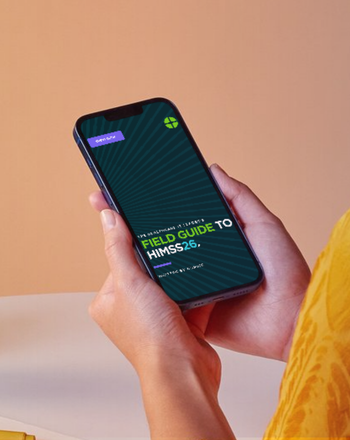
Welcome: why this guide exists
HIMSS26 offers insights, connections, and fresh perspective, but with packed agendas, a crowded exhibit hall, and constant demands on your time, it can be hard to focus on what matters most.
Nordic created this guide to help you spend your time intentionally. It reflects what we’re seeing across hospitals and health systems globally, highlighting sessions, topics, and conversations connected to today’s most pressing IT challenges, such as workforce strategy, EHR optimization, data, security, and operational efficiency.
Designed to be practical and easy to use, this guide is here to support you before the conference, between sessions, and after you return home, helping you turn insight into action.
HIMSS26 at a glance
Dates: March 9 – 12, 2026
Location: Venetian Convention & Expo Center, Las Vegas
Exhibit hall hours:
Tuesday, March 10 (10 a.m. – 5:30 p.m.)
Wednesday, March 11 (9:45 a.m. – 5:30 p.m.)
Thursday, March 12 (9:30 a.m. – 3 p.m.)
Priority themes to follow
This year’s conference unites leaders across healthcare to explore the forces shaping the future of care delivery. With a full agenda and competing priorities, it can be hard to know where to focus. Based on what we’re seeing across health systems worldwide, these are the themes to keep on your radar as you plan your time.
AI and machine learning
Artificial intelligence continues to influence clinical workflows, documentation efficiency, and operational decision making. Leaders are focusing on realistic adoption paths, governance structures, and the impact AI can have on patient outcomes and margins.
Sessions in this area can help clarify what is achievable now versus what is still aspirational.
Related insight: This article explains why richer clinical inputs, such as video, are essential for building AI that supports real clinical decisions and trustworthy outcomes.
Read: If you want AI to think like a clinician, show it what clinicians see
Business and financial management
With health systems balancing financial pressure and operational demands, many conversations this year center on margin recovery, cost optimization, and investments that deliver measurable returns. Content in this theme explores the strategic alignment of technology decisions with system-wide financial goals.
Related insight: This perspective reframes IT from a cost center to an enterprise asset by outlining ways leaders can drive margin, efficiency, and measurable returns.
Cybersecurity
Rising cyber threats and evolving regulations continue to be top concerns for CIOs, CISOs, and clinical leaders. Expect sessions focused on resilience, incident response, zero trust strategies, and protecting clinical operations across hybrid environments. This is a critical area for leaders looking to strengthen system-wide readiness.
Related insight: This piece makes a clear case for identity-first security as the frontline control in today’s healthcare environments, moving beyond device-centric approaches to strengthen resilience.
Read: How identity-first security strengthens healthcare cyber defense
Digital health transformation
Sessions in this track highlight opportunities to modernize digital infrastructure, elevate patient and clinician experience, and scale virtual or connected care models. These discussions will bridge strategy and execution, helping leaders move from pilots to sustainable transformation.
Related insight: This article shows why durable transformation starts with strong clinical governance and clinician engagement, tying strategy to outcomes and value realization.
Read: Why strong clinical governance is essential for successful digital health transformation
Interoperability
Reliable, real-time data exchange is foundational to almost every strategic initiative. This theme includes updates on standards, integration pathways, cross system collaboration, and viable steps toward creating a unified, accessible data environment.
Related insight: This article explains why data quality, governance, and strong integration foundations are essential for both effective interoperability and enterprise-wide AI success, highlighting how the same building blocks underpin every major digital initiative.
Read: AI readiness isn’t a new challenge — it’s a familiar one
Workforce
Staffing pressures, evolving team structures, and new technology-enabled roles continue to shape healthcare IT operations. Sessions here will address skill development, change management, and approaches to supporting clinical and IT teams through modernization and growth.
Related insight: This article outlines human-centered ways to use automation as a true teammate, reducing burnout and improving team performance across clinical and IT workflows.
Read: Can AI be a teammate? Human-centered strategies for health IT leaders.
Can’t-miss sessions
With so many strong sessions on this year’s agenda, choosing where to spend your limited time is no small task. This is a curated set of discussions we think will be particularly useful for healthcare IT leaders navigating rapid change, new technologies, and evolving workforce demands.
Note: Times and locations subject to change; check the official conference website/app for the latest updates.
Workforce and staffing strategy
- How automation and gen AI are changing coding and analytics work
- The skills HIM professionals will need by 2030
- Whether micro credentials or apprenticeships can close gaps Curricular shifts that yield job-ready graduates
- Implications for hiring and role design
Technology modernization and digital infrastructure
Session title: Innovation That Matters: Scaling Healthcare Technology with Purpose
Monday, March 9 — 11:45 a.m. – 12:30 p.m. | Level 3 – Murano 3201B
Speakers: Murat Uralkan (Houston Methodist), Alexander Richter (SciTech Scity), Simon Nazarian (City of Hope)
Why it matters
Thoughtful, human-centered technology integration is becoming essential as health systems look for ways to deploy smarter tools that help improve experiences for patients, clinicians, staff, and caregivers.
What to listen for
- How leading organizations evaluate and scale next generation solutions
- Ways human-centered design strengthens care delivery and team connections
- Practical examples of integrating advanced tools into real workflows
- Approaches that improve experience across the entire care ecosystem
Data, analytics, and AI
Session title: Artificial Intelligence in Action: Clinical Process Maps Get Modern
Tuesday, March 10 — 11 – 11:30 a.m. | Level 5 – Palazzo D
Speakers: Stephen Bognar (Intermountain Health) and Logan Masta (Arcadia)
Why it matters
AI driven automation is making it possible to create and scale clinical process maps (CPMs) faster and more consistently, directly impacting care quality, cost, and readiness for value-based models.
What to listen for
- How AI automates CPM creation and updates
- Real examples of integrating CPMs into provider workflows
- The impact on care standardization, quality, and medical expense savings
- A replicable model for scaling decision support across large systems
Cybersecurity and resilience
Session title: AI vs. AI: How Healthcare is Fighting Fire with Fire in Cybersecurity
Monday, March 9 — 1:55 – 2:40 p.m.| Level 3 | San Polo 3501A
Speakers: Robert Maclay (Stanford Children’s Health), Ryan Kalember (Proofpoint), Dennis Chornenky (Valid AI), and Kristen Ray (Universal Health Services, Inc.)
Why it matters
AI-driven cyberattacks are advancing faster than traditional defenses, putting connected devices, patient data, and clinical workflows at risk. Health systems need feasible ways to use AI to counter these threats and strengthen security without disrupting care.
What to listen for
- Real-world examples of sophisticated, AI enabled attacks
- How health systems are using AI for real-time detection and automated response
- Governance strategies for resource-constrained hospitals
- Ways to secure AI-enabled clinical tools and protect sensitive data
- Clear steps for implementing AI-driven defense models
Financial pressure and operational efficiency
Session title: From Silos to Sustainability: Driving Financial Transformation Through System-Wide Integration
Wednesday, March 11 — 3:15 – 4:15 p.m. | Level 3 | San Polo 3504
Speakers: Michael Allen (Hackensack Meridian Health), Elham Yousef (Hackensack Meridian Health)
Why it matters
Many health systems are under financial pressure, and this model shows how clinical standardization, real-time analytics, and governance can work together to reduce variation, improve outcomes, and deliver meaningful, sustained cost savings.
What to listen for
- How a system-wide integration and sustainability model was built and scaled
- The role of governance, analytics, and workflow embedded tools in driving performance
- Realistic steps for aligning clinical, operational, and financial leaders
- What it takes to deliver measurable ROI through variation reduction and operational efficiency
- A replicable roadmap for implementing similar models across your own organization
Booths worth visiting
The exhibit hall is packed, and your time is limited. These booths represent organizations leading some of the most important priorities for healthcare IT in 2026, from cloud infrastructure and cybersecurity to workforce systems, data platforms, and digital operations. If you only have a few minutes on the floor, these are smart, high value stops to consider.
Booth #433
Strengthen security. Simplify access. Reduce friction. See how high-assurance identity and biometrics make it possible.
Booth #3631
Streamline operations. Strengthen your workforce. Power smarter financial performance. Explore what modern ERP can do.
Booth #4208
Unify HR, finance, and supply chain. Reduce admin drag. Run leaner, more predictable operations.
Booth #1823
Accelerate analytics. Unlock clinical data. Power AI and scalable digital experiences with cloud-native services.
Booth #1058
Unify your data. Strengthen AI readiness. Connect clinical, operational, and financial insights—so everything works smarter together.
Booth #11302
Get clarity on the cybersecurity threat landscape and actionable ways resource-constrained organizations can strengthen identity, device, and network defense.
Booth #2522
Unify engagement. Automate intelligently. Turn real-time data into more connected, patient-centered care.
Booth #3535
Get the real story. Compare vendor performance, track market trends, and see what your peers are actually experiencing.
Booth #2812
Explore cloud capabilities, enterprise AI tools, and security advancements that support clinical teams, operations, and digital modernization.
Booth #631
Get vendor-neutral insight on AI readiness, workforce strategy, data quality, interoperability, cybersecurity, and operational efficiency.
Can’t miss events and networking opportunities
The week moves quickly, and some of the most valuable conversations happen outside the session rooms. These selections highlight opportunities to meet peers, hear fresh perspectives, and make the most of your time without overwhelming your schedule.
Pre-conference forums to consider
If you’re arriving early, these forums offer deeper dives into some of the most important themes advancing healthcare IT in 2026.
AI in Healthcare Forum
Monday, March 9, 8 a.m. – 5 p.m. | Level 5 | Palazzo E
A candid look at AI beyond the hype; this forum focuses on building literacy, confidence, and real-world frameworks for embedding AI into clinical practice. Through case studies and strategies, you’ll learn how health systems are aligning executive ROI goals with frontline needs to deliver measurable impact, improved care experiences, and sustainable value.
Healthcare Cybersecurity Forum
Monday, March 9, 8 a.m. – 5 p.m. | Level 3 | San Polo 3501A
Explore how healthcare organizations are building the workforce, technology, and leadership structures needed to stay ahead of fast evolving cyber threats. This forum highlights collaborative industry efforts, including the Health Industry Cybersecurity Strategic Plan, to equip CISOs and security teams with helpful strategies for strengthening protection, enabling patient care, and driving the future of healthcare cybersecurity.
Interoperability and HIE Forum
Monday, March 9, 8 a.m. – 5 p.m. | Level 5 | Palazzo L
Explore how open standards and seamless data exchange can transform fragmented care into a connected, patient-centered ecosystem. This forum brings leading experts together to examine the technology, policy, and clinical practices needed to enable secure, meaningful data flow across all points of care.
Top picks for HIMSS26
High-impact events with broad relevance for healthcare IT executives
HIMSS opening reception
Monday, March 9, 5 – 7 p.m., Caesars | Forum Event Plaza
Kick off the week at Caesars Forum with a Formula 1–themed reception featuring light entertainment, food, drinks, and easy networking under the stars. Dress warmly, this event is outdoors.
Cybersecurity Command Center
Tuesday, March 10, 4:30 – 5:30 p.m., Level 1 | The Park (Hall G) | Booth 10001
Get a clear view of today’s threat landscape with focused insights, live demos, and sensible strategies for protecting patient privacy and securing healthcare data. This is a smart stop for leaders looking to strengthen defenses and stay ahead of evolving cyber risks.
Women in Health IT networking reception
Wednesday, March 11, 6 – 7:30 p.m., Venetian | Juliet Cocktail Room
Reserve your spot for this high-energy gathering of women leaders and innovators across digital health. This popular event requires advance registration and an additional fee, with tickets expected to sell out. Registration includes two craft cocktails and light appetizers; no onsite signups are available.
Interop + Smart Experience
Tuesday, March 10, 4:30 – 5:30 p.m., Level 1 | The Park (Hall G) | Booth 12511
See interoperability come to life through live, scenario-based demonstrations that follow patient journeys across care settings. Explore next-generation environments and talk directly with solution architects to learn how they’re overcoming integration barriers, security challenges, and system incompatibilities to build a more connected, trusted healthcare ecosystem.
Artificial Intelligence Pavilion
Tuesday, March 10, 4:30 – 5:30 p.m., Level 1 | The Park (Hall G) | Booth 10018
Investigate cutting-edge AI tools and applications designed to improve detection, diagnosis, and patient experience. This central hub enables clinicians, decision makers, and technology leaders to see use cases in action and hear directly from experts.
Also worth checking out
Great options depending on your interests, focus areas, and available time
Cybersecurity meet-up
Thursday, March 12, 12:15 – 1 p.m., Level 1, Marco Polo 702
Connect with peers who understand the unique security challenges facing healthcare systems. These focused discussions offer a chance to dive into cybersecurity governance, awareness training, and effective incident response in a candid, collaborative setting.
Clinicians meet-up
Wednesday, March 11, 12:15 – 1 p.m., Venetian, Level 1 | Marco Polo 702
Connect with peers who understand the realities of delivering care today. This intimate gathering brings together physicians, nurses, and behavioral health professionals for meaningful conversations on patient-centered technology, AI in clinical practice, health disparities, social determinants, the future of health IT, and evolving vendor partnerships.
The Patient Experience & Wellness Pavilion
Tuesday, March 10, 4:30 – 5:30 p.m., Level 2 | Hall B | Booth 3264
Explore innovative telehealth platforms and remote monitoring tools designed to enhance patient experience and support continuous engagement. This pavilion highlights technologies that blend convenience, personalization, and empowerment, showcasing how patient-centered solutions can improve care delivery and outcomes.
HIMSS Blood Drive
Tuesday, March 10, to Wednesday, March 11, 10 a.m. – 2 p.m., Level 1 | The Park (Hall G) Booth 11929
Whether you’re donating for the first time, or it’s been a while, your contribution can make a world of difference to patients in need.
Puppy Park
Tuesday, March 10, and Wednesday, March 11, 10 a.m. – 2 p.m. Thursday, March 12, 10 a.m.-1 p.m. Level 2 | Hall B | Booth 3064
Take a restorative break and spend time with adoptable puppies.

HIMSS chapter events
Regional gatherings that offer a welcoming way to connect with peers in your local health IT community
Mid-Atlantic
Monday, March 9, 8 – 10 p.m., The Yard House
Delaware Valley, Keystone, New Jersey, and New York State
Tuesday, March 10, 12 – 2 p.m., The Palazzo at The Venetian Resort
California
Tuesday, March 10, 7 – 9:30 p.m., Ole Red Las Vegas
Colorado
Tuesday, March 10, 5:30 – 8 p.m., Grand Lux Café
Florida Central/North/South and Puerto Rico
Tuesday, March 10, 4:30 – 6:30 p.m., The Palazzo at The Venetian Resort
Georgia
Tuesday, March 10, 4 – 6 p.m., Booth 4547
Nordic events
If these align with your schedule, we’d love to see you there.
Under the Nordic Star (Hosted)
Tuesday, March 10, 6 – 9 p.m.,
La Cave Bar + Restaurant, Wynn Las Vegas
Unwind and connect at this relaxed evening reception, hosted in collaboration with our sponsors. Enjoy a premium hosted bar, chef curated appetizers, a full dinner, and a comfortable setting designed for easy conversation. This year’s gathering also celebrates the launch of Nordic’s new brand, a moment we’re excited to share with the people who make our work meaningful.
HIMSS chapter reception: Wisconsin, Northern Virginia, and Arizona (Hosted)
Wednesday, March 11, 4 – 5:30 p.m., Booth #631
The Nordic Exchange: FQHC Happy Hour with Workday (Hosted)
Tuesday, March 10, 5 – 6 p.m.,
B Bar at Wynn Las Vegas
This informal gathering brings leaders from Federally Qualified Health Centers (FQHC) together to connect with peers and share ideas on how modern enterprise resource planning strategies can help with navigating the operational, workforce, and financial challenges of today and tomorrow.
Buzzed After Dark (Sponsored)
Monday, March 9, 9 – 11 p.m.,
Venetian, Juliet Lounge – Library
Hosted by The Buzz Podcast, this event brings together innovators, executives, and strategic partners for a relaxed, high-energy evening following the HIMSS opening reception.
Questions worth asking vendors
These questions can help you quickly assess whether a vendor’s solution can meet your organization’s clinical, operational, and financial needs.
Reducing clinician burden
- How does your solution reduce documentation, administrative work, or cognitive load for clinicians, and how do you measure that reduction?
- What workflow changes will our clinicians actually experience on day 1, day 30, and day 180?
Improving data quality and AI readiness
- Does our data need to be clean, structured, or governed before we can see value, and what happens if our data isn’t there yet?
- How does your tool handle inconsistent data across systems, and what safeguards ensure outputs are reliable?
Strengthening security and managing risk
- How do you secure your AI models, integrations, or automations, so we’re not introducing new attack surfaces or identity risks?
- What visibility and control will our security, risk, and compliance teams have into how your system uses and moves data?
Supporting workforce capacity
- Which roles in our organization will this solution meaningfully support or replace, and what training or reskilling assumptions do you make?
- What resources or staffing are required on our side to keep your system running effectively beyond go-live?
Ensuring operational and financial value
- What measurable outcomes have similar-sized health systems achieved, and over what timeline?
- What are the total hidden costs, such as interfaces, modules, staffing, storage, computing power, and ongoing optimization, that aren’t in the base price?
Driving real adoption (not just deployment)
- What does a realistic adoption curve look like for this solution, and what support do you provide to help teams get there?
- How do you ensure that this technology sticks in clinical or operational workflows rather than becoming another unused tool?
After the conference: Turning insight into action
The best conference takeaways are the ones that translate into momentum back home. Use the space below to reflect on what you heard, what resonated, and where small steps could make a meaningful difference for your teams.
- Debrief with your team
Bring your notes, share a few key insights, and ask your team:
– “What problem does this help us solve right now?”
– “What resonates with our priorities? What doesn’t?”
– “Where can we try something on a limited scale to learn what works?” - Identify one or two quick wins
Look for ideas that are achievable without major spending or structural changes, small improvements to workflow, governance, or communication often create the biggest early momentum. - Align insights to your priorities Map what you learned to your broader strategy
– Which sessions reinforced your direction?
– Which surfaced gaps in data, staffing, or readiness that you may need to address? - Clarify next steps and owners
If something is worth pursuing, decide who should explore it, what questions they need to answer, and when you’ll regroup to review findings. - Follow up with people you met
A short message, such as: “I appreciated our conversation; would love to continue it,” can lead to meaningful peer connections long after the conference ends.